

Table of Contents
- Why Black Coffee Unlocks Flavor Appreciation
- How to Taste Coffee Like a Professional
- Understanding the Coffee Flavor Wheel Explained
- The Impact of Milk on Coffee Flavor Compounds
- Palate Adaptation: How Your Taste Buds Adjust to Black Coffee
- Health Benefits Beyond the Cup
- Starting Your Black Coffee Journey
- Conclusion
- Frequently Asked Questions
Last Updated: October 2, 2026
Why Black Coffee Unlocks Flavor Appreciation
Black coffee flavor appreciation removes the flavor mask that hides what's actually in your cup.
Black coffee reveals the true character of the beans: origin, roast profile, and processing method. A medium roast from Colombia tastes completely different from a dark roast from Bali.
How to Taste Coffee Like a Professional
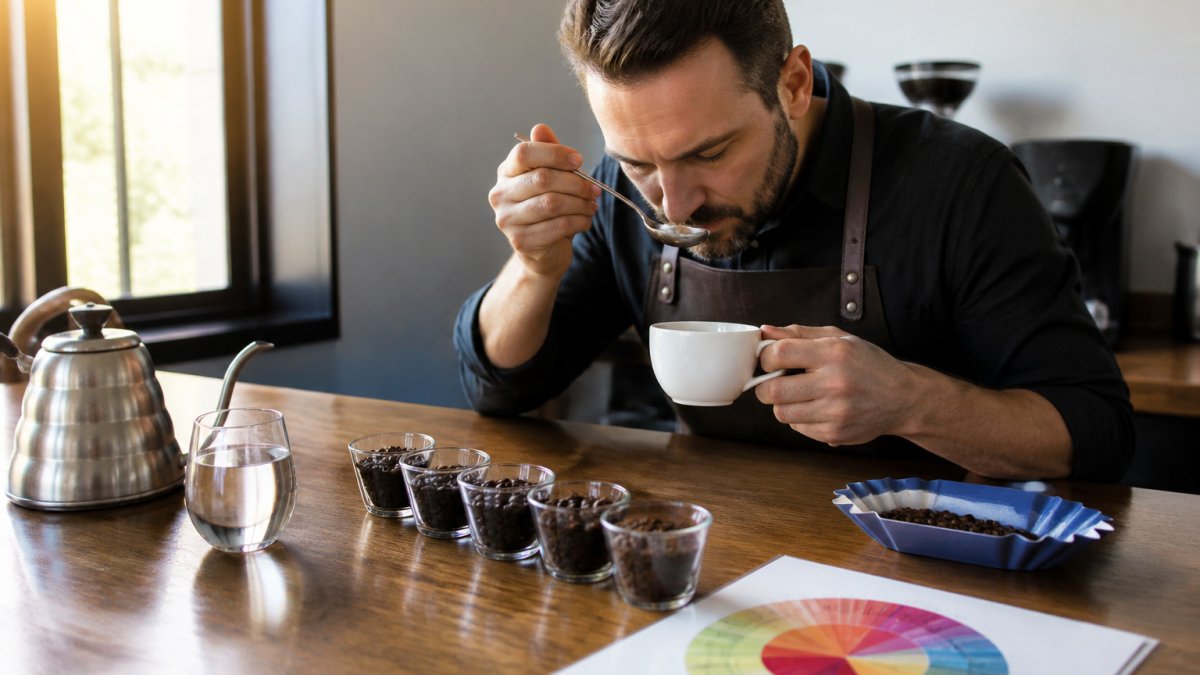
Tasting coffee professionally follows a simple three-step process: smell, sip, and notice.
Step 1: Smell First
Put your nose close to the cup and breathe in fully for 5-10 seconds. You're training your brain to connect aromas with flavor.
Common aromas to listen for:
- Chocolate, cocoa, or cocoa powder
- Fruit notes: berries, citrus, stone fruit
- Nuts: almond, hazelnut, walnut
- Spices: cinnamon, cardamom, clove
- Flowers: jasmine, rose, lavender
Step 2: The First Sip
Take a small sip and let it sit on your tongue for 2-3 seconds. Notice the body (weight and texture) and acidity (brightness or sharpness). Acidity makes coffee taste alive and complex.
Step 3: Swallow and Notice the Aftertaste
The aftertaste lingers for 10-30 seconds after you swallow, where many flavor notes live.
Understanding the Coffee Flavor Wheel Explained
The coffee flavor wheel maps flavors you might find in a cup. At the center are main categories: fruity, sour, bitter, sweet, roasted. From there, it branches into hundreds of specific descriptors.

The Science Behind Flavor Perception
When you taste black coffee, you're experiencing taste and smell simultaneously. Your tongue detects five basic tastes, but complex flavors like chocolate, berry, and floral notes come primarily from your nose.
Coffee contains over 1,800 volatile organic compounds that evaporate and travel to your nasal cavity. Milk fat and proteins bind to some compounds, reducing what reaches your nose. Sugar coats taste receptors, dulling sensitivity.
The flavor wheel categorizes compounds by sensations they trigger. "Fruity" coffees contain esters and aldehydes your brain recognizes as berry or citrus.
How to Use the Flavor Wheel Effectively
Take a sip and ask: which main category fits? Fruity, sour, sweet, roasted, or bitter? Drill down from there. Your first instinct is usually right because your olfactory system processes compounds faster than your conscious mind.
Black coffee flavor appreciation, guided by the flavor wheel, gives you permission to taste things that aren't "coffee." A medium roast from Colombia might taste like dried orange and chocolate. Different altitudes, soil types, and processing methods create different chemical profiles. Black coffee lets you taste all of it.

Flavor Wheel Limitations
The flavor wheel is a tool, not a truth. Not every coffee fits neatly into its categories. The same coffee tastes different depending on water chemistry, brewing temperature, and brew time.
The Impact of Milk on Coffee Flavor Compounds
Milk fat coats your palate and binds to flavor compounds, reducing intensity. Acidity softens, bitterness mellows, and subtle fruit notes vanish. This is why espresso drinks taste similar regardless of the coffee, the milk dominates. Black coffee puts the beans on center stage, keeping every flavor compound intact.
The Chemistry Behind It
Milk proteins bind to flavor compounds, reducing their intensity. Milk fat creates a barrier on your tongue, reducing sensitivity to bitter and sour notes. Once milk is in the cup, those compounds are locked away. Transitioning to black coffee means gaining access to flavors that were always there but hidden.
Palate Adaptation: How Your Taste Buds Adjust to Black Coffee
Your brain and taste receptors adapt through a process called palate adaptation, which happens faster than most people expect.
The Biological Mechanism of Adaptation
The first cup tastes harsh or bitter because bitter compounds bind to taste receptors and your brain interprets this as a warning signal.
By the second week, sensory adaptation occurs: your nervous system stops treating bitterness as an alarm.
Why Water Chemistry Matters During Adaptation
Water chemistry affects palate adaptation. Water with 150-200 ppm of total dissolved solids extracts balanced flavor.
Roast Level and Adaptation Timeline
Dark roasts taste more bitter because roasting longer creates more bitter-tasting compounds (pyrazines and furans).
If you start with dark roast, your palate has to overcome more bitterness.
This is why the roast level you choose for your transition matters.
How to Speed Up Adaptation
Start with medium roasts, not dark roasts. Medium roasts have more sweetness and less bitterness, making the transition easier and faster.
Taste actively. Don't just drink your coffee while working. Sit with it. Notice the flavors.
Taste the same coffee multiple times before switching to a different origin. Repetition is what trains your palate.
Brew at the right temperature. Water that's too hot (over 205°F) over-extracts bitter compounds.
Health Benefits Beyond the Cup
Black coffee delivers benefits that milk-based drinks don't.
Cognitive Function and Mental Clarity
Caffeine blocks adenosine, a neurotransmitter that signals fatigue. This is why coffee makes you feel alert. The effect peaks 30-60 minutes after drinking and lasts 3-5 hours.
Black coffee delivers caffeine without added calories or sugar crashes. A cup contains 95-200 mg of caffeine depending on brew method and roast.
Antioxidants and Free Radicals
Coffee contains polyphenols, a type of antioxidant that neutralizes free radicals in your body. Free radicals contribute to aging and inflammation. Antioxidants help counteract this.
Black coffee has more antioxidants per serving than milk-based drinks because nothing dilutes the coffee. A cup of black coffee contains roughly 200-550 mg of polyphenols.
Metabolism and Weight Management
Caffeine increases metabolic rate slightly, meaning your body burns calories faster after drinking coffee (pubmed.ncbi.nlm.nih.gov). The effect is modest, roughly 3-5% increase, but it's real.
Black coffee has zero calories, while a latte or cappuccino adds 100-300 calories from milk and sugar. Over time, this difference matters for weight management.
Blood Sugar and Metabolic Health
Some research suggests that compounds in coffee, particularly chlorogenic acid, may support healthy blood sugar regulation. Black coffee has no added sugar, so it doesn't spike blood glucose the way sweetened drinks do.
Starting Your Black Coffee Journey
The transition to black coffee doesn't have to hurt. Here's a realistic path forward.
Week 1: Try One Cup
Pick one cup per week and drink it black. Just one. The rest of your coffee stays as usual. This removes the shock of a total switch.
Choose a medium roast. Light roasts taste more acidic and sour. Dark roasts taste more bitter. Medium roasts hit the middle ground.
Start with a single-origin coffee that has clear flavor notes. The Guatemala from Iron Rooster Coffee Co. has dark chocolate, bright fruit, and butterscotch notes. These flavors are pronounced enough that you'll taste them even as your palate adjusts.
Week 2-3: Increase Frequency
Move to two or three cups per week. By now, the first cup should taste less harsh. You might start noticing sweetness.
Try a different origin. The Colombia has dried orange and berry notes. The Bali Blue has dark chocolate and molasses. Tasting different coffees trains your palate faster than drinking the same coffee repeatedly.

Week 4+: Make It Your Default
By week four, most people find black coffee pleasant. Not every cup will be a revelation. Some mornings you'll just want coffee. That's fine.
At this point, you can experiment. Try different brew methods: pour-over, French press, espresso. Different methods highlight different flavor notes in the same coffee.
Conclusion
Drinking black coffee for flavor appreciation isn't about being a coffee snob. It's about accessing flavors that were always there but hidden. Your palate adapts faster than you think.
At Iron Rooster Coffee Co., we've built our entire business around the idea that fresh, carefully roasted beans deserve to be tasted as they are. Our single-origin coffees, from the smooth, chocolate-forward Brazil Santos to the fruity, complex Colombia, are designed to shine black. Start with one of our medium roasts, taste actively, and give your palate time to adjust.
Frequently Asked Questions
How long does it take to adjust to the taste of black coffee?
Most people adapt to black coffee within 2-4 weeks of regular consumption. Your palate gradually becomes accustomed to the natural bitterness and acidity as taste receptors adjust. Starting with medium roasts, which tend to have smoother, more balanced flavor profiles, can speed adaptation. Single-origin coffees like Brazil Santos offer chocolate and cocoa notes that make the transition easier than darker, more bitter roasts.
Does black coffee have more antioxidants than coffee with additives?
Yes. Black coffee contains the full concentration of antioxidants, including polyphenols and chlorogenic acid, which combat free radicals in your body. Adding milk can bind some of these compounds, reducing their bioavailability. Sugar adds empty calories without contributing antioxidant value. For maximum antioxidant benefit, drink your coffee black and fresh-roasted, as antioxidant levels decline over time after roasting.
What is the best way to start drinking black coffee for flavor appreciation?
Begin with medium-roast, single-origin coffees that emphasize sweetness and smoothness over bitterness. Try varieties like Guatemala or Colombia from Iron Rooster Coffee Co., which offer bright fruit and chocolate notes. Use proper brewing technique, consistent water temperature, correct brew ratio, and appropriate grind size, to extract balanced flavors. Start by identifying one or two flavor notes in each cup, then gradually expand your palate awareness over several weeks.
Can drinking black coffee help you identify different coffee origins?
Absolutely. Black coffee reveals the terroir and processing method of beans in ways that milk masks. A Bali Blue's volcanic loam soil creates distinct molasses and brown sugar notes; Colombia's washed process produces dried orange and berry characteristics. As your palate adapts, you'll distinguish these origin signatures more clearly. Tasting black coffee from different regions trains your sensory experience to recognize how altitude, soil, and climate shape flavor profiles.