

Table of Contents
https://ironroostercoffeeco.com
- What Makes Premium Artisan Coffee Beans Worth Buying
- Coffee Bean Roast Profiles Explained
- Benefits of Buying Freshly Roasted Coffee
- How to Store Coffee Beans for Freshness
- Grind Size, Water Chemistry, and Brewing Methods
- Sustainability Beyond Fair Trade Certification
- How to Choose the Right Artisan Coffee Beans for Your Palate
- Conclusion
Last Updated: August 19, 2026
What Makes Premium Artisan Coffee Beans Worth Buying
Most people buying coffee at the grocery store prioritize convenience over quality. Those beans were likely roasted weeks or months ago, packaged in bulk, and shipped through a distribution chain that prioritizes shelf life over flavor. Premium artisan coffee beans represent a different choice: freshness over convenience, small-batch care over mass production.
Artisan coffee beans are specialty-grade, carefully selected, small-batch roasted coffees that prioritize flavor complexity, ethical sourcing, and roast freshness. At Iron Rooster Coffee Co., we focus on quality and care, selecting the finest beans to ensure every cup delivers a smooth, flavorful experience.
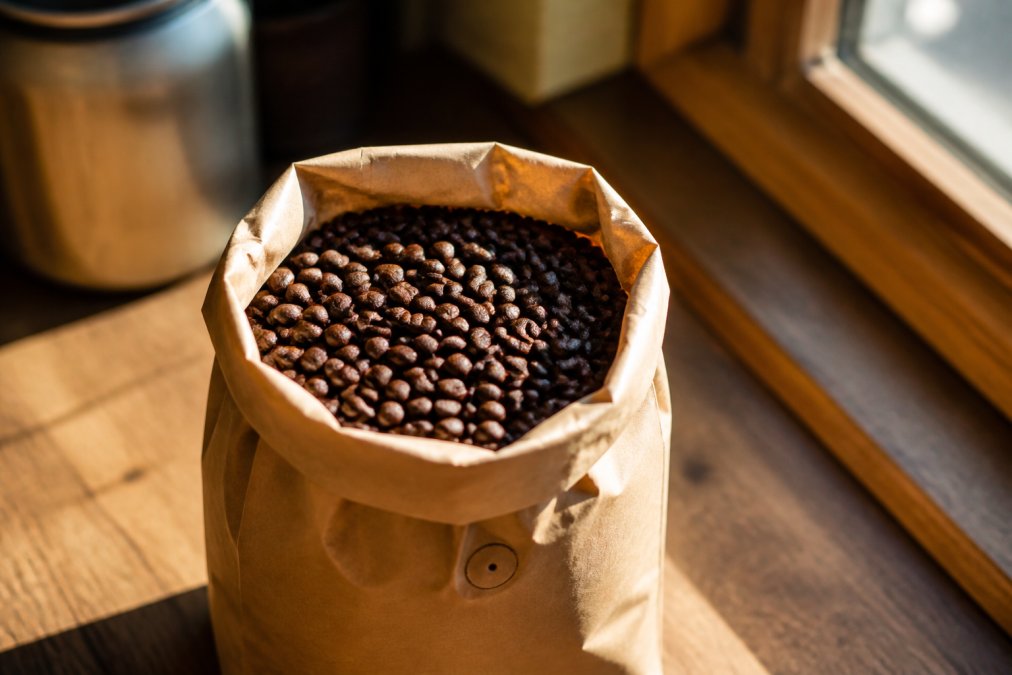
What separates premium beans from generic ones:
- Cupping score: Specialty-grade coffee is scored by licensed Q-graders on a 100-point scale. Beans scoring 80 or above qualify as specialty. Most artisan roasters work exclusively in this tier.
- Roast date transparency: A bag without a roast date is a red flag. Premium coffee should be consumed within 2-6 weeks of roasting for peak flavor.
- Traceability: You should identify the farm, region, or cooperative your beans came from. Vague "South American blend" labeling signals commodity coffee, not artisan.
Freshly roasted, specialty-grade arabica beans carry tasting notes that commodity coffee cannot replicate: bright citrus acidity, floral aromatics, stone fruit sweetness, or deep chocolate mouthfeel, depending on origin and roast profile.
Single-Origin vs. Blends: Which Should You Choose?
Single-origin coffee comes from one farm, cooperative, or defined micro-lot within a specific region. Blends combine beans from multiple origins, typically balanced by the roaster for consistent flavor across seasons.
Single-origin beans express specific terroir, altitude, and processing methods. A washed Ethiopian Yirgacheffe tastes nothing like a natural-process Colombian. If you enjoy exploring flavor, single-origin is the obvious choice.
Blends are engineered for consistency. A well-crafted espresso blend might combine a high-acidity East African bean with a low-acidity Brazilian to produce a balanced shot that holds up well with milk. For everyday drinkers who want reliability over exploration, a quality blend delivers exactly that.
Cupping Scores, Sourcing, and Ethical Trade Practices
A cupping score above 80 is the baseline for specialty coffee, but the sourcing story matters as much as the score. According to Specialty Coffee Association's grading standards, the specialty designation requires sensory quality and freedom from primary defects in the green bean.
Direct trade goes further than fair trade certification. Fair trade sets a floor price and audits cooperatives, but direct trade means the roaster has a direct relationship with the producer, often paying above market rate and investing in farm development. Direct trade relationships tend to produce higher-quality lots because the roaster has skin in the game.
Organic certification matters to many buyers, though small farms in developing countries often use organic practices without formal USDA certification. A roaster who visits source farms and can speak to growing practices is often more trustworthy than a certification label alone.
Coffee Bean Roast Profiles Explained
Roast profile determines how much origin character versus roast development you experience. Understanding roast profiles helps you match a coffee to your actual preferences.
Light Roast: Bright Acidity and Complex Flavor
Light roast preserves the most origin character of any roast level. Beans are pulled shortly after the first crack, retaining higher acidity, lighter body, and complex flavor compounds from growing and processing. Expect tasting notes like jasmine, lemon, peach, or berry depending on origin.
Light roast is best for single-origin coffees from high-altitude origins like Ethiopia, Kenya, or Panama. Light roast also retains more caffeine by volume than dark roast, since extended roasting burns off caffeine. Pour-over and Chemex brewing methods highlight the nuanced acidity and floral notes that make light roast interesting.
Medium Roast: The Balanced Everyday Cup
Medium roast hits the sweet spot between origin character and roast development. Acidity softens, body increases, and flavor rounds into caramel, nut, and chocolate notes that most coffee drinkers associate with a "good cup." This is the most forgiving roast level to brew and most broadly appealing.
If you're new to specialty coffee or prefer a smooth, mellow morning cup, medium roast is your starting point. It performs well across brewing methods: drip, pour-over, French press, and espresso. Most house blends sit in the medium roast range for exactly this reason.
Dark Roast: Bold Body with Low Acidity
Dark roast develops deep, smoky, bittersweet flavors that many espresso drinkers love. Extended roasting breaks down much of the origin character, so dark roasts taste more similar to each other than light roasts. You gain heavy body, low acidity, and caramelized mouthfeel that pairs well with milk and sugar.
A well-executed dark roast from a quality artisan roaster is rich and full-bodied, not acrid.
Roast Level |
Acidity |
Body |
Best Brew Method |
Flavor Notes |
|---|---|---|---|---|
Light |
High |
Light |
Pour-over, Chemex |
Floral, citrus, berry |
Medium |
Balanced |
Medium |
Drip, French press, espresso |
Caramel, nuts, chocolate |
Dark |
Low |
Heavy |
Espresso, French press |
Smoky, bittersweet, cocoa |
Benefits of Buying Freshly Roasted Coffee
The biggest quality gap between artisan and mass-market coffee is freshness. Roasted coffee is perishable. Carbon dioxide released during roasting begins escaping immediately, and oxidation degrades flavor compounds within days. By the time grocery store coffee reaches your cup, it has often been sitting for months.
Freshly roasted coffee, meaning beans roasted within the past week to two weeks, delivers the full spectrum of flavors the roaster intended. The aromatics are vivid. The body is complete. A roast date on the bag signals transparency and accountability that commodity brands cannot offer.
The subscription model solves the freshness problem by shipping fresh beans on a schedule timed to your consumption rate, keeping your supply in the optimal 1-4 week post-roast window consistently.
How to Store Coffee Beans for Freshness
Proper storage is the most overlooked variable in home coffee quality. The enemies of fresh coffee are oxygen, moisture, heat, and light.
The correct approach:
- Store beans in an airtight container, ideally with a one-way valve that lets CO2 escape without letting oxygen in
- Keep the container at room temperature, away from direct sunlight and heat sources
- Buy in quantities you'll consume within 2-4 weeks of the roast date
- Do not refrigerate whole beans. The refrigerator introduces moisture and absorbs odors
- Freezing is acceptable for long-term storage only in airtight, single-use portions
The biggest mistake most people make is storing beans in the bag they came in, left open on the counter. A ceramic or stainless canister with a proper airtight lid is a worthwhile investment.
Grind Size, Water Chemistry, and Brewing Methods
Grinding your own beans immediately before brewing is the single most impactful upgrade most home brewers can make. Pre-ground coffee begins oxidizing the moment it's ground, with volatile flavor compounds escaping rapidly.
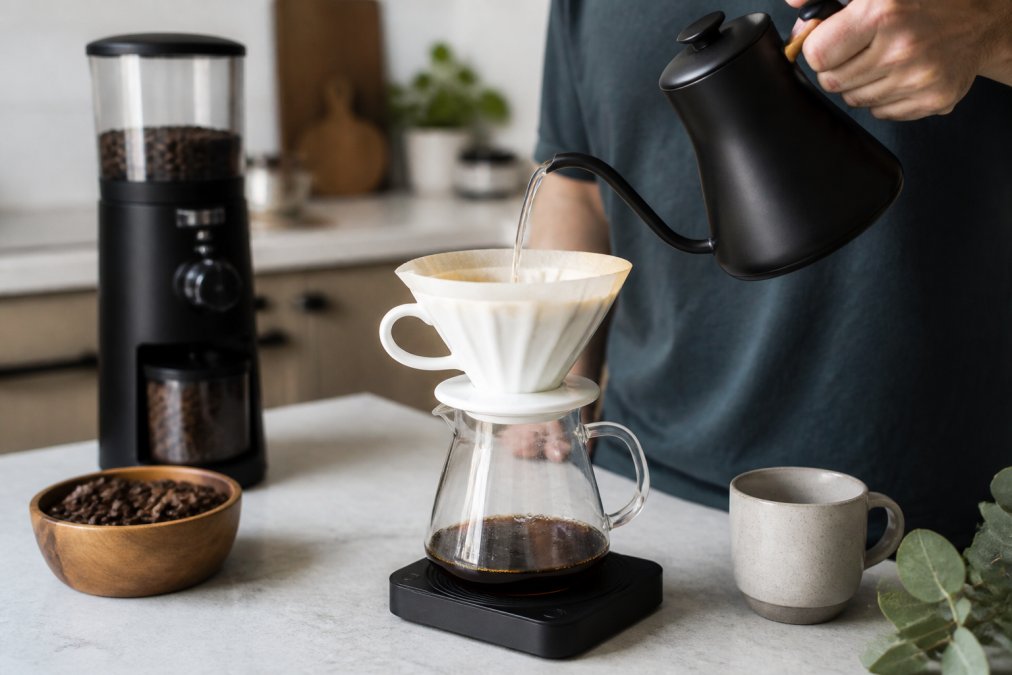
Grind Size Calibration for Each Brew Style
Grind size determines extraction rate. Too fine and you over-extract, producing bitterness. Too coarse and you under-extract, producing sourness and thin body.
- Espresso: Extra-fine, similar to table salt. A shot should pull in 25-30 seconds.
- Pour-over (V60, Chemex): Medium-fine to medium. A 250ml pour should drain in 3-4 minutes.
- Drip machine: Medium. Similar to coarse sand.
- French press: Coarse. Large, uniform particles that don't pass through the metal filter.
- Cold brew: Extra-coarse. Steep for 12-24 hours at room temperature or refrigerated.
A burr grinder produces consistent particle size, essential for even extraction. Blade grinders chop unevenly, producing a mix of fine dust and large chunks that extract at different rates.
Water Chemistry: The Variable Most Buyers Overlook
Coffee is approximately 98% water, and mineral content directly affects extraction chemistry. The [Specialty Coffee(/collections/sample-pack) Association's water quality standards | sca.coffee] recommend a total dissolved solids level between 75-250 ppm for optimal extraction, with a target around 150 ppm. Water that's too soft under-extracts and produces a flat cup. Water that's too hard can over-extract and leave a chalky aftertaste.
A simple fix: use filtered water through a standard carbon filter, which removes chlorine and reduces mineral content. Brew temperature also matters. The National Coffee Association brewing guidelines recommend a brew temperature between 195°F and 205°F for optimal extraction. Let your kettle rest for 30-45 seconds off the boil before pouring.
Sustainability Beyond Fair Trade Certification
Fair trade certification is a meaningful baseline, but specialty coffee has moved beyond it. Direct trade relationships, where the roaster purchases directly from the farm or cooperative without an importer, typically result in higher prices paid to producers and tighter quality control.
Look for roasters who report on:
- Carbon footprint of the roasting process: Some roasters use renewable energy or carbon offset programs.
- Packaging sustainability: Compostable or recyclable bags reduce landfill contribution compared to standard foil-lined bags.
- Seasonal harvest alignment: Buying coffee tied to specific seasonal harvests supports more sustainable farming rhythms and produces fresher, more traceable coffee.
- Shade-grown certification: Shade-grown coffee preserves bird habitat and supports biodiversity in growing regions.
The Rainforest Alliance certification standards provide a comprehensive framework for evaluating environmental and social sustainability in coffee sourcing.
How to Choose the Right Artisan Coffee Beans for Your Palate
The most common mistake when exploring specialty coffee is buying based on origin reputation rather than personal flavor preference. Ethiopia is famous for bright, floral coffees, but if you prefer a smooth, low-acid cup, an Ethiopian light roast will frustrate you.
Start by identifying what you actually want:
If you prefer smooth and mellow: Look for medium-roast coffees from Brazil, Colombia, or Guatemala. These origins tend toward lower acidity, fuller body, and nutty or chocolatey profiles.
If you enjoy brightness and complexity: Light-roast single-origin coffees from East Africa, particularly Ethiopia and Kenya, deliver dynamic flavor. Expect fruity acidity, floral aromatics, and tasting notes that shift as the cup cools.
If you drink mostly espresso: A well-crafted espresso blend designed for milk-based drinks is more reliable than a single-origin. If you prefer straight espresso shots, a medium-roast single-origin with good body and moderate acidity works beautifully.
If you're new to specialty coffee: Start with a medium roast from a trusted artisan roaster and brew it as drip or French press. This gives you the most forgiving entry point.
Iron Rooster Coffee Co. offers both single-origin favorites and carefully crafted blends, roasted to order and shipped with a roast date on every bag.
A practical checklist before you buy:
- Does the bag show a roast date within the past 2-4 weeks?
- Can you identify the origin, region, or farm?
- Does the roaster describe the processing method (washed, natural, honey process)?
- Are the tasting notes specific (e.g., "dark chocolate, orange peel, brown sugar") rather than generic?
- Is the roast level clearly labeled?
- Does the roaster offer a satisfaction guarantee or flexible subscription terms?
If the answer to most of these is yes, you're looking at a legitimate artisan roaster. If the bag is vague on origin, silent on roast date, and heavy on marketing language, it's commodity coffee in specialty packaging.
Frequently Asked Questions
What defines premium artisan coffee beans?
Premium artisan coffee beans are specialty-grade arabica beans, typically scoring 80 or above on a professional cupping scale, sourced from specific farms or micro-lots at high altitudes. What separates them from mass-market coffee is the attention to every stage: the processing method (washed, natural, or honey process), the roast-to-order approach, and a clearly printed roast date on the bag. Flavor profile transparency, direct or fair trade sourcing, and small-batch roasting are the clearest markers of genuine artisan coffee.
Does roast date matter when buying artisan coffee beans?
Roast date matters more than most buyers realize. Freshly roasted coffee releases CO2 for several days after roasting, which is a sign of peak freshness. Most specialty roasters recommend brewing whole bean coffee within 2 to 4 weeks of the roast date for the best flavor profile. Bags without a roast date often contain older inventory. When you buy premium artisan coffee beans online, always check that the roast date is printed on the bag, not just a vague 'best by' window.
How should you store premium coffee beans to maintain freshness?
Store whole bean coffee in an airtight, opaque container at room temperature, away from heat, light, and moisture. Avoid the refrigerator: the temperature fluctuations and food odors degrade flavor faster than room-temperature storage. A sealed bag with a one-way valve works well for short-term storage. For longer shelf life, divide beans into weekly portions and keep the unused portion sealed. Grinding immediately before brewing preserves the most aroma and mouthfeel from your premium beans.
What is the difference between specialty and artisan coffee?
Specialty coffee is a grading term: beans that score 80 or higher on the Specialty Coffee Association's 100-point cupping scale qualify. Artisan coffee is a broader description of how the coffee is produced and roasted, emphasizing small-batch methods, skilled roasters, and careful sourcing. Most artisan coffee uses specialty-grade beans, but not all specialty-labeled coffee comes from small-batch artisan roasters. When you buy premium artisan coffee beans, look for both the cupping score and evidence of hands-on roasting to get the full picture.
This article was written using GrandRanker