

Table of Contents
- Why Describing Coffee Aroma Matters
- Aroma vs. Fragrance: Understanding the Difference Between Aroma and Fragrance in Coffee
- The Coffee Flavor Wheel and Common Aroma Descriptors
- Coffee Tasting Notes Explained: Building Your Sensory Vocabulary
- Coffee Cupping Basics for Beginners: The Professional Technique
- Interactive Sensory Exercises to Train Your Palate
- Frequently Asked Questions
Last Updated: September 25, 2026
Why Describing Coffee Aroma Matters
Learning how to describe coffee aroma like a pro transforms how you taste coffee. It moves you from "this tastes good" to understanding exactly what you're experiencing. That precision matters because it helps you find beans you actually love.
When you can name what you smell, you make better purchasing decisions. You avoid buying coffees that won't suit your palate. You discover new favorites by recognizing aroma patterns. Most importantly, you develop a language that connects you to the people who roasted your beans.
This guide walks you through the exact techniques professionals use.
Aroma vs. Fragrance: Understanding the Difference Between Aroma and Fragrance in Coffee
The terms "aroma" and "fragrance" get used interchangeably, but they describe different sensory experiences. Understanding this distinction sharpens your ability to describe coffee aroma like a pro.
Fragrance is what you smell when you bring your nose close to the coffee. It's the volatile compounds rising directly from the beans or brewed cup. You smell fragrance through your nose. It's immediate and direct.
Aroma is broader. It includes fragrance plus the scent compounds you experience while drinking. These compounds travel up the back of your throat to your nasal passages from inside your mouth. This retronasal pathway creates what most people call "taste," but it's actually smell.
The difference matters because a coffee's fragrance and aroma can vary. Some beans smell fruity in the cup but taste earthy. Others smell mild but develop complex aromatic notes as they cool. When you learn to describe coffee aroma like a pro, you're actually describing both pathways working together.
The Role of Retronasal Olfaction
Retronasal olfaction is the secret behind why coffee tastes the way it does. It's also why you lose taste perception when you have a cold. Your nose isn't actually blocked from smelling, your retronasal pathway is.
Here's how it works: when you sip coffee, aromatic compounds dissolve in your saliva. They travel down your throat and up the back passage connecting your mouth to your nasal cavity. Your olfactory receptors detect these compounds from inside, creating the sensation you call "taste."
This is why professionals slurp coffee loudly. The slurping action draws air across the coffee and up through that back passage. It amplifies the retronasal experience. You're not being rude, you're maximizing aroma perception.
The Coffee Flavor Wheel and Common Aroma Descriptors
The coffee flavor wheel is your reference guide for describing coffee aroma like a pro. It organizes aromatic descriptors into categories, making it easier to find the right words.
The wheel starts with broad categories at the center: fruity, floral, nutty, earthy, smoky, spicy, and chocolaty. Each category branches into specific descriptors. Fruity breaks into berry, citrus, dried fruit, and stone fruit. Floral includes jasmine, rose, and lavender notes.
This structure works because it matches how your brain categorizes smell. You don't jump straight to "blueberry." You first recognize "fruity," then narrow down to berry, then land on blueberry. The wheel formalizes this natural process.
Professional cuppers use the flavor wheel because it creates consistency. When one person says "citrus" and another says "lemon," they're both using the wheel's language. This shared vocabulary prevents confusion across roasters, importers, and coffee shops.
Floral, Fruity, Nutty, and Earthy Notes
Floral notes appear in lighter roasts, especially coffees from East Africa. You'll detect jasmine, rose, hibiscus, or orchid aromatics. These notes are delicate. They fade quickly as coffee cools. Taste floral coffees while they're still warm.
Fruity notes span dried and fresh fruit descriptors. Dried fruit (raisin, fig, date) appears in medium and dark roasts. Fresh fruit (berry, citrus, stone fruit) shows up in light and medium roasts. Fruity coffees often have higher acidity, which brightens the aroma.
Nutty notes include almond, hazelnut, walnut, and peanut aromatics. They're common in medium roasts and coffees with longer fermentation times. Nutty doesn't mean the coffee tastes like nuts, it means the aroma resembles them.
Earthy notes describe soil, wood, leather, and tobacco aromatics. Darker roasts develop more earthy character. Coffees processed with their fruit still attached (natural process) show stronger earthy notes than washed coffees.
Smoky, Spicy, and Chocolaty Aromatics
Smoky notes come from darker roasts where the beans undergo more caramelization. You're smelling compounds created by heat, not actual smoke. Smoky aromatics can range from subtle (toasted grain) to bold (charcoal, ash).
Spicy notes include cinnamon, clove, cardamom, black pepper, and anise aromatics. They're more common in coffees from certain origins and roast profiles. Spicy doesn't mean the coffee burns your mouth, it means the aroma resembles spices.
Chocolaty notes span dark chocolate, milk chocolate, cocoa powder, and fudge aromatics. They develop during the roasting process through sugar browning and enzymatic reactions. Chocolaty is one of the most recognizable aromatics in coffee.
Coffee Tasting Notes Explained: Building Your Sensory Vocabulary
Tasting notes are the descriptors printed on coffee bags. They're not flavor guarantees, they're the roaster's interpretation of what they smell and taste. Learning to describe coffee aroma like a pro means understanding how to read and create tasting notes.
A good tasting note is specific. "Fruity" is too vague. "Berry and citrus" is better. "Blueberry and orange zest" is professional-level specific. The more precise your descriptor, the better you communicate what the coffee actually delivers.
Tasting notes follow a hierarchy. Primary notes appear most prominently. Secondary notes emerge as the coffee cools. Tertiary notes are subtle and might only appear to trained palates. When you read a bag that says "blueberry, chocolate, almond," blueberry is primary, chocolate secondary, almond tertiary.
Building your vocabulary takes practice. Start by smelling known references. Smell actual blueberries, then coffee. Smell cinnamon stick, then coffee. Your brain learns to connect the aroma to the word. Over time, you recognize these patterns instantly in the cup.
The Specialty Coffee Association's cupping protocols standardize how professionals evaluate coffee aroma and flavor, giving you a framework to follow.
Coffee Cupping Basics for Beginners: The Professional Technique
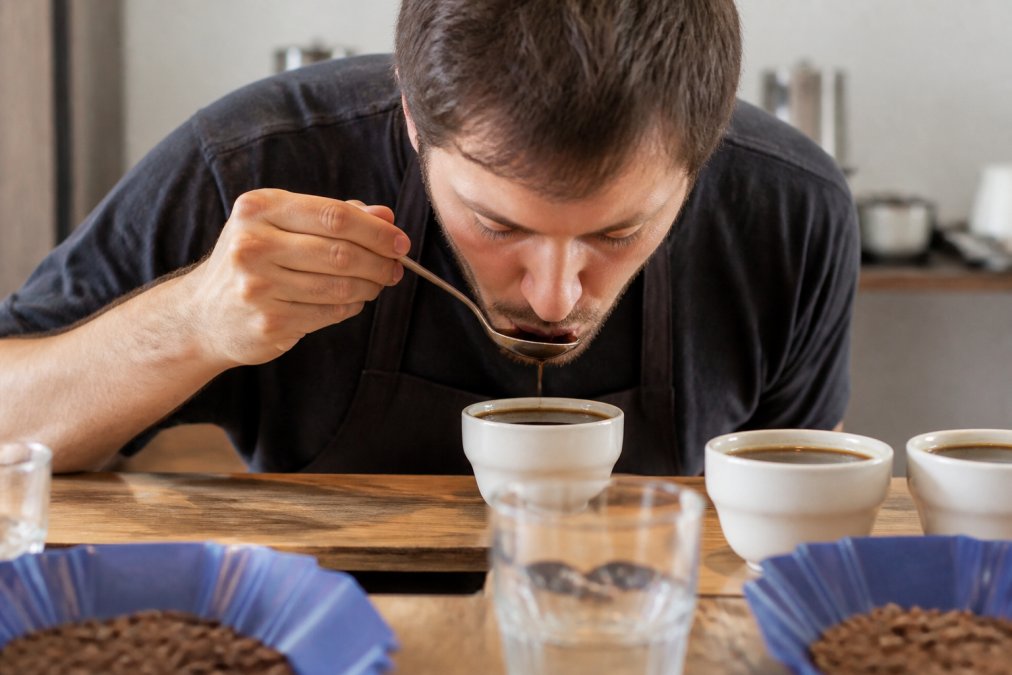
Coffee cupping is the standardized method professionals use to evaluate beans. It's also how you train your palate to describe coffee aroma like a pro. The technique is simple, but the discipline matters.
You'll need:
- Coffee beans (freshly roasted, ideally)
- A grinder
- Hot water (around 200°F)
- White cupping bowls (or regular cups)
- A cupping spoon (or regular spoon)
- Notepaper
Grind your coffee coarse, about the texture of sea salt. Use a 1:6 ratio of coffee to water by weight. Pour hot water over the grounds. Let them bloom for 4 minutes. This initial steeping releases aromatics and begins extraction.
After 4 minutes, break the crust that forms on top. Use your spoon to push the grounds down, then smell deeply. This is where you learn to describe coffee aroma like a pro. The aroma at this moment is pure and concentrated.
The Slurp and Sniff Method
The slurp is the most distinctive part of professional cupping. It sounds loud and deliberate because it is. You're using air and suction to maximize aroma perception.
Dip your spoon into the coffee. Bring it to your mouth.
How Roast Levels Affect Aroma
Roast profile dramatically shapes what you smell in coffee. Light roasts preserve origin flavors, the fruity, floral, and bright aromatics that come from where the beans grew. Medium roasts balance origin character with roasted aromatics. Dark roasts emphasize roasted notes: smoky, earthy, chocolaty aromatics created by heat.
Interactive Sensory Exercises to Train Your Palate
Training your palate to describe coffee aroma like a pro requires deliberate practice. These exercises build your aromatic vocabulary and strengthen your olfactory recognition.
Frequently Asked Questions
What's the difference between coffee aroma and flavor?
Aroma is what you smell from the coffee's surface and during brewing. Flavor is what you taste on your tongue. They work together through retronasal olfaction: when you swallow, aromatic compounds travel from the back of your mouth to your nose, creating the full tasting experience. This is why holding coffee in your mouth before swallowing enhances flavor perception. Many people think they're tasting something bitter when they're actually smelling sharp, acidic aromatics.
How do I improve my sense of smell for coffee tasting?
Practice the cupping protocol regularly: grind fresh beans, pour hot water, let it cool slightly, then perform the slurp technique. Use the coffee flavor wheel as a reference guide, comparing what you smell to specific descriptors like floral, fruity, or earthy. Train with single-origin coffees like our Colombia or Tanzania beans, which have distinct aromatic profiles. Taste multiple origins side-by-side to develop your sensory baseline. Avoid strong scents before cupping, and practice in a quiet environment where you can focus.
What do 'bright' or 'floral' coffee aromas actually mean?
Bright refers to high acidity that feels sharp and lively on your palate, often paired with fruity or citrus aromatics. Floral means the coffee smells like flowers, jasmine, rose, or lavender, typically from specific bean origins and processing methods. These aren't subjective opinions; they're tied to volatile compounds and caramelization levels during roasting. Our Tanzania single-origin, for example, features pear, floral, and jasmine aromatics because of its altitude and fully washed processing, while our Sumatra offers earthy and dark chocolate notes from its wet-hulling method.
Does roast level change how coffee aroma smells?
Yes. Light roasts preserve more fruity, floral, and acidic aromatics from the bean's origin. Medium roasts balance origin characteristics with caramelization, adding chocolate and nutty notes. Dark roasts emphasize smoky, earthy, and bold aromatics while reducing fruity complexity. The roasting process triggers sugar browning and enzymatic reactions that create new volatile compounds. Our medium-roast Colombia highlights dried orange and berry, while our medium-light Tanzania preserves delicate floral and strawberry notes. Choose your roast based on the aromatic profile you prefer.