

Table of Contents
- What Makes Fresh Roasted Beans Worth Ordering Online
- Coffee Roast Date vs Expiration Date: What You Actually Need to Know
- Roast Profiles, Single-Origin, and Blends: Choosing Your Flavor Profile
- Best Coffee Subscription Services: What to Look For
- How to Store Coffee Beans for Freshness After Delivery
- Sourcing, Sustainability, and What It Means for Your Cup
- How to Order Fresh Roasted Beans Online Without Getting Burned
- Conclusion
Last Updated: August 19, 2026
What Makes Fresh Roasted Beans Worth Ordering Online
Most grocery store coffee was roasted weeks or months before reaching the shelf. By then, the volatile aromatic compounds that create a coffee's signature flavor have already begun to fade. This is why so many people order fresh roasted beans online: proximity to the roast date makes a measurable difference in the cup.
At Iron Rooster Coffee Co., we've built our entire fulfillment model around this reality. Fresh roasted beans are roasted close to the ship date, typically within days, rather than sitting in a warehouse. The difference shows up immediately in aroma, body, and aftertaste.
Roasted-to-Order vs. Pre-Packaged: The Real Difference
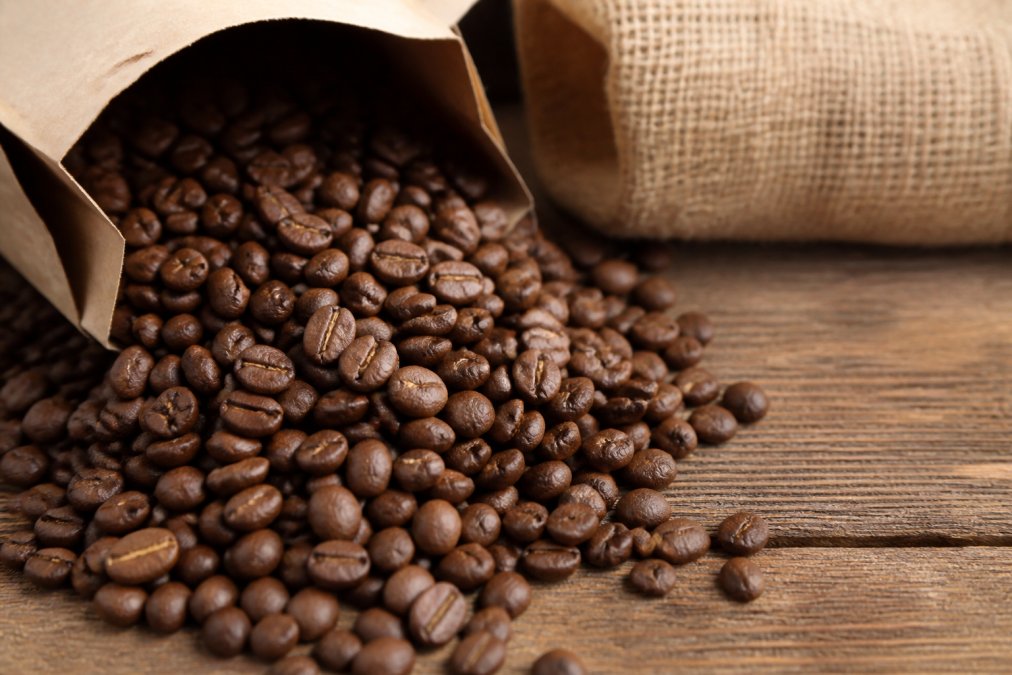
Roasted-to-order means the roaster fires the beans specifically for your purchase, then ships within a short window after roasting. Pre-packaged coffee is roasted in large batches, stored, and distributed through retail channels with no visibility into how long it's been sitting.
Pre-packaged coffee often carries a "best by" date 12 to 18 months out from roasting, which tells you almost nothing about freshness at purchase. Roasted-to-order coffee arrives with a specific roast date, giving you full transparency into exactly how fresh your beans are.
Degassing and Peak Flavor Windows
Freshly roasted beans are not immediately ready to brew. During roasting, coffee beans absorb significant amounts of carbon dioxide. After roasting, they release that CO2 in a process called degassing.
Brewing too soon after roasting, typically within the first 24 to 48 hours, produces sour, uneven extraction because escaping CO2 interferes with water absorption. The peak flavor window for most roast profiles falls between 5 and 21 days post-roast. Light roasts often benefit from a slightly longer rest, while dark roasts degas faster and peak earlier.
Knowing your roast date lets you time your brewing to hit that window precisely.
Coffee Roast Date vs Expiration Date: What You Actually Need to Know
The roast date and expiration date are not the same thing. The expiration date reflects food safety standards for shelf stability. The roast date tells you when the beans were transformed from green to roasted, which is when the flavor clock starts.
A bag of whole bean coffee can be technically safe to drink six months after roasting while tasting almost nothing like it did at peak. Specialty coffee professionals generally treat anything beyond 30 days post-roast as past its prime for espresso, and up to 45 days for filter brewing methods.
According to the Specialty Coffee Association's brewing standards, water temperature, grind size, and bean freshness are the three most controllable variables in extraction quality.
How to Verify Roast Date Transparency Before You Buy
Before committing to a purchase or subscription, look for these signals:
- Printed roast date on the bag, not just a "best by" date
- Roast date listed on the product page
- Small-batch roasting language that implies frequent production runs
- Direct communication from the roaster about typical ship windows post-roast
If a roaster's website doesn't mention the roast date in the product description, that's a meaningful signal. A roaster that prints the roast date prominently is confident in their freshness.
Roast Profiles, Single-Origin, and Blends: Choosing Your Flavor Profile
Choosing between roast levels and bean origins is simpler than the jargon suggests.
| Preference | Roast Level | Bean Type | Tasting Notes |
|---|---|---|---|
| Smooth, mellow mornings | Medium | Blend or single-origin | Chocolate, caramel, mild acidity |
| Bright, complex cups | Light | Single-origin arabica | Fruit, floral, tea-like |
| Bold, full-bodied brew | Dark | Blend | Smoky, bittersweet, low acidity |
| Espresso-forward | Medium-dark | Blend | Rich, syrupy, nutty |
Light, Medium, and Dark Roasts: Matching the Roast to Your Morning
Light roasts retain more of the bean's original character, preserving delicate acidity, floral aromatics, and fruit-forward tasting notes. They're ideal for pour-over and filter methods.
Medium roasts develop sweetness and body while softening sharper acidic edges. If you want smooth, non-bitter coffee that works black or with milk, medium is almost always the right call.
Dark roasts push the bean's natural sugars to the edge of caramelization, producing bold, smoky flavor with lower perceived acidity. Origin character largely disappears, you're tasting the roast more than the bean.
A common mistake is assuming dark roast means more caffeine. Lighter roasts actually preserve more caffeine by volume.
Single-Origin Arabica vs. Artisan Blends
Single-origin coffee comes from one farm, cooperative, or defined growing region, offering traceability and distinct flavor shaped by altitude, processing method, and varietal.
Artisan blends combine beans from multiple origins to achieve consistent, balanced flavor that holds up across different brewing methods. They're engineered for reliability.
Neither is superior. Single-origin arabica rewards curiosity and careful brewing. A well-crafted blend rewards consistency and simplicity.
Best Coffee Subscription Services: What to Look For
The subscription model has transformed how people order fresh roasted beans online. Instead of remembering to reorder, beans arrive on a schedule calibrated to your consumption rate.
The best coffee subscription services share non-negotiable qualities: roast-to-order fulfillment, flexible frequency options, and clear roast date labeling on every shipment.
According to the National Coffee Association's 2025 coffee trends report, specialty coffee consumption continues to grow among home brewers, with convenience and quality cited as the two primary drivers.
Subscription Flexibility, Shipping Frequency, and Freshness Guarantees
Look for these features before committing:
- Pause or skip options without cancellation penalties
- Adjustable delivery frequency (weekly, biweekly, monthly) to match your consumption
- Grind size customization for whole bean or pre-ground
- Freshness guarantee that specifies the maximum days between roasting and shipping
A freshness guarantee is only meaningful if specific. "We ship fresh coffee" is marketing. "We ship within 48 hours of roasting" is a commitment.
How to Store Coffee Beans for Freshness After Delivery
Proper storage is the most overlooked variable in home coffee quality. You can order the freshest small-batch roasted beans available, but poor storage will flatten the flavor within days of opening the bag.
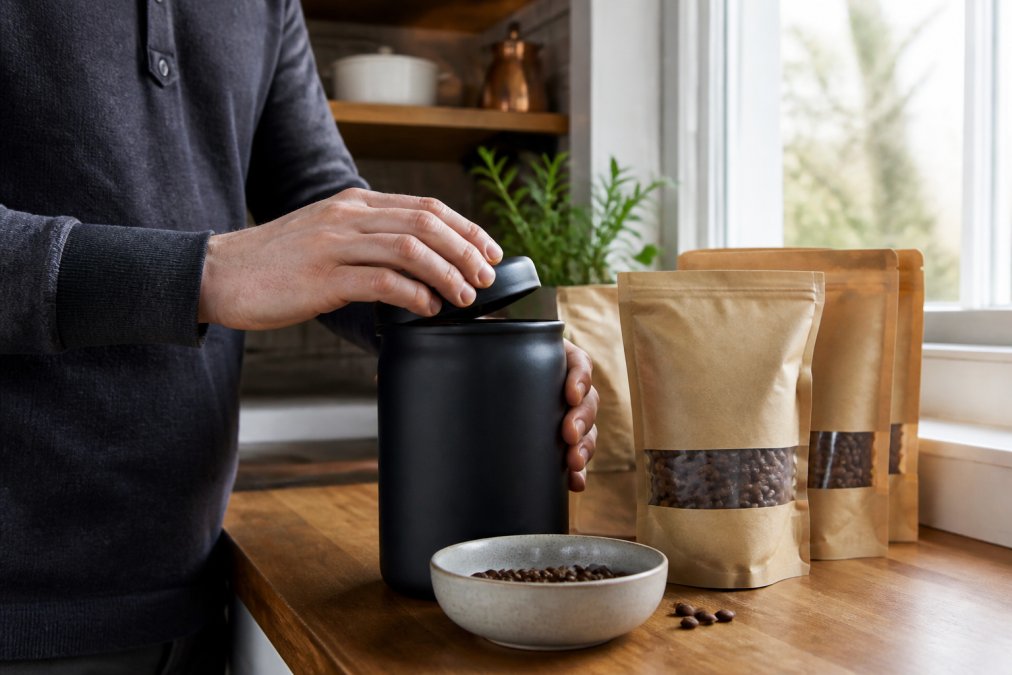
Keep beans away from oxygen, light, heat, and moisture. All four degrade flavor compounds at different rates.
Storage Best Practices for Bulk Orders
For bulk orders of 2 lbs or more, divide the beans into smaller portions immediately upon delivery:
- Portion 1 (current week): Store in an opaque, airtight ceramic or stainless canister at room temperature, away from heat
- Portion 2 (next 1-2 weeks): Store in a sealed, one-way valve bag in a cool, dark pantry
- Portion 3 (beyond 2 weeks): Freeze in airtight, portioned bags. Remove portions as needed and allow to reach room temperature before opening
The freeze-and-portion method preserves whole bean coffee beyond the 3-week window, provided you never refreeze a portion after thawing.
As documented in research from the University of Bath on coffee storage and extraction, freezing coffee beans at consistent temperatures can preserve volatile aromatic compounds that would otherwise degrade at room temperature.
Water Chemistry and Brewing Method: Getting the Most from Fresh Beans
Fresh beans deserve water that won't fight them. Water that's too soft produces flat, under-extracted coffee. Water that's too hard can produce bitter, chalky results.
The Specialty Coffee Association's water quality standards for brewing recommend water with a total dissolved solids level between 75 and 250 ppm for optimal extraction.
Fresh beans, especially light roasts, perform best with pour-over or Aeropress methods that give you control over contact time. Dark roasts hold up well in a French press or espresso machine.
Sourcing, Sustainability, and What It Means for Your Cup
Direct trade means the roaster works directly with the farm, often visiting in person and paying above commodity prices for specific lots. This creates an incentive for farmers to invest in quality, including better processing methods and altitude-appropriate varietals.
Fair trade certification operates through a third-party certification body that sets minimum price floors for farmers. It's a meaningful baseline but doesn't guarantee the quality focus that direct trade relationships often produce.
Sustainably sourced coffee from high-altitude growing regions tends to offer more complex flavor profiles. Arabica beans grown above 1,500 meters develop slower, concentrating sugars and aromatic compounds that lower-altitude commodity beans lack.
Organic certification matters primarily for those concerned about pesticide residue. It doesn't directly correlate with cup quality, though many high-quality farms pursue organic practices as part of their overall quality focus.
How to Order Fresh Roasted Beans Online Without Getting Burned
The biggest mistake first-time buyers make is treating online coffee like any other commodity purchase. The lowest price and fastest shipping are not the right filters.
Here's a practical checklist for evaluating any roaster before you order:
- Does the product page show a specific roast date or roast-to-ship window?
- Is the coffee described as small-batch or roasted-to-order?
- Are tasting notes and roast profiles clearly described?
- Does the subscription offer pause and skip options without penalty?
- Is there a satisfaction policy if beans arrive outside the expected freshness window?
- Does the roaster communicate bean origin, altitude, and processing method?
Iron Rooster Coffee Co. checks these boxes with carefully selected beans, fast automated fulfillment, and a focus on smooth, flavorful profiles that work for morning coffee drinkers who don't want harsh acidity or bitter aftertaste.
Yes, freshly roasted specialty coffee costs more than grocery store alternatives. What you're paying for is the difference between coffee at peak flavor and coffee that's been sitting in a supply chain for months.
| Factor | What to Check | Why It Matters |
|---|---|---|
| Roast date | Printed on bag or listed on product page | Determines your flavor window |
| Roast-to-ship window | Stated in days, not vague language | Confirms actual freshness on arrival |
| Subscription flexibility | Pause/skip without cancellation | Fits real-life schedules |
| Origin transparency | Farm, region, altitude listed | Signals quality sourcing |
| Satisfaction policy | Clear, accessible terms | Reduces purchase risk |
The online specialty coffee market has made it easier than ever to get genuinely fresh beans delivered to your door. The roasters worth your money are transparent about every step between the farm and your cup.
Ordering specialty coffee online sounds simple until you realize how much variation exists in what "fresh" actually means. The difference between a roaster that ships within 48 hours of roasting and one that ships from aging warehouse inventory is the difference between a cup that stops you mid-sip and one you finish out of obligation. Iron Rooster Coffee Co. was built around the conviction that your morning coffee should be the first thing that works well in your day. With carefully selected beans, fast automated fulfillment, and a range of roast profiles designed for smooth, approachable flavor, getting started is straightforward. Visit Iron Rooster Coffee Co. and find the roast that fits your morning.
Frequently Asked Questions
How can I tell if coffee beans are truly fresh when ordering online?
Check for a printed roast date on the bag, not just a vague 'best by' date. Fresh roasted beans should arrive within one to two weeks of the roast date. Reputable roasters print the exact roast date and roast small batches to order. Avoid any retailer that only lists an expiration date or shows no date at all, that usually signals pre-packaged, sitting inventory rather than freshly roasted beans shipped directly to you.
What is the difference between roasted-to-order and pre-packaged coffee?
Roasted-to-order means the roaster processes your beans after you place the order, typically within 24 to 72 hours, then ships them directly. Pre-packaged coffee is roasted in large batches, warehoused, and shipped on a retail timeline that can add weeks or months between roasting and your first brew. The practical difference shows up in the cup: roasted-to-order beans retain more of their aroma, acidity, and flavor complexity than beans that have been sitting in a distribution center.
How should I store fresh roasted coffee beans after they arrive?
Keep whole beans in an airtight, opaque container at room temperature, away from heat, light, and moisture. Avoid the refrigerator, temperature swings cause condensation that accelerates staling. If you order in bulk, divide beans into smaller portions and seal the rest. Most specialty coffee stays at peak flavor within two to four weeks of the roast date. Grind only what you need immediately before brewing to preserve the aroma and flavor profile as long as possible.
Does ordering coffee online save money compared to local cafes?
Ordering fresh roasted beans online typically costs less per cup than buying prepared drinks at a cafe, though it costs more per bag than mass-market grocery store coffee. The value difference is quality: small-batch, sustainably sourced arabica beans with a verified roast date deliver a specialty coffee experience at home. Subscription models can also reduce per-bag costs compared to one-off orders. Visit Iron Rooster Coffee Co.'s website for current pricing on bags and subscription options.
This article was written using GrandRanker