

Table of Contents
- Why Buying Whole Bean Coffee Online Beats the Grocery Shelf
- Whole Bean vs Ground Coffee: What You Lose When You Grind Early
- The Coffee Bean Roast Date Is the Only Freshness Label That Matters
- How to Store Whole Bean Coffee So It Stays Fresh
- Coffee Subscription Benefits: Recurring Delivery Without the Stale Bag Problem
- How to Assess an Online Seller's Freshness and Sourcing Claims
- Shipping, Fees, and Packaging: The Hidden Costs of Ordering Online
- Matching Beans to Your Brew Method and Taste
- Frequently Asked Questions
Last Updated: October 8, 2026
Why Buying Whole Bean Coffee Online Beats the Grocery Shelf
The benefits of buying whole bean coffee online start with one hard truth: most grocery store coffee is already weeks or months old by the time it reaches your cart.
Freshness You Can Actually Verify
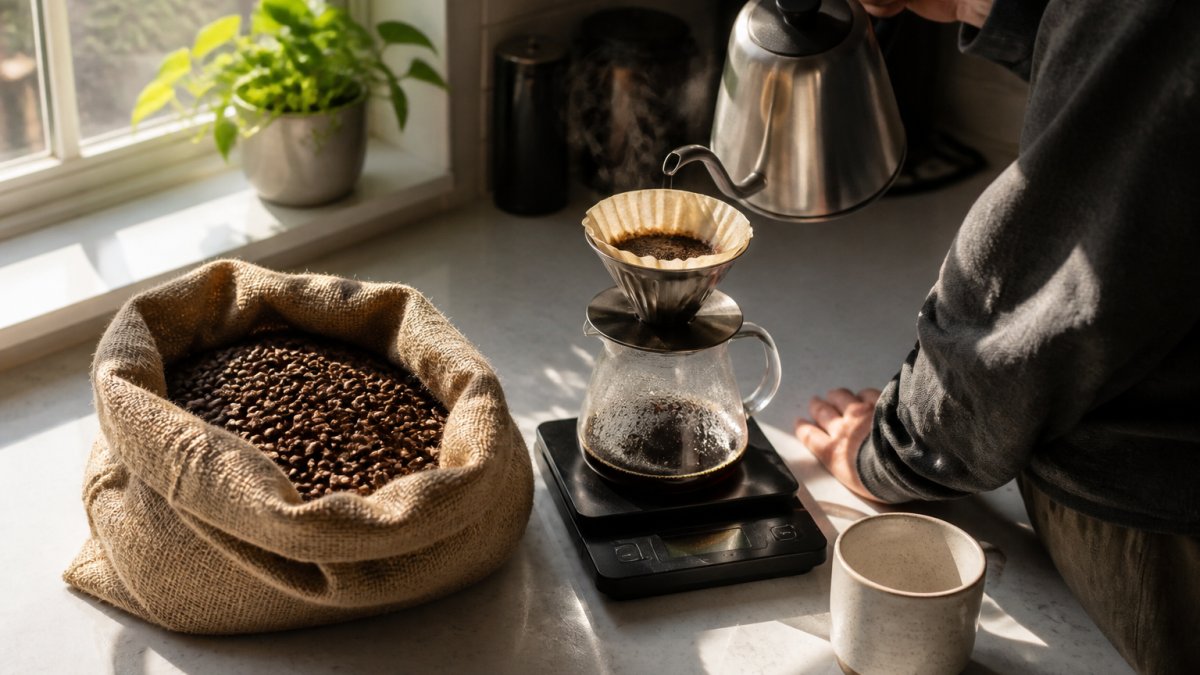
Freshness in coffee is a function of time since roast, not time since purchase. A roast date printed on the bag is the only figure that matters. Grocery shelves rotate slowly, and distribution adds days before a bag even arrives. Online roasters who ship within days of roasting give you a shorter gap between the roaster and your grinder, which is the whole point of ordering fresh roasted beans online.
Selection and Origin Access
A typical grocery aisle carries a handful of blends from a few large producers. An online coffee retailer can stock single-origin lots from specific farms, regions, and processing methods that never make it to mass retail. That access is one of the clearest benefits of buying whole bean coffee online: you can buy a washed Ethiopian and a wet-hulled Indonesian in the same order and taste the difference side by side.
Whole Bean vs Ground Coffee: What You Lose When You Grind Early
Whole bean coffee stays fresher longer than pre-ground coffee because the flavor compounds are locked inside the bean until you grind it. Grinding exposes far more surface area to oxygen, and oxidation starts stripping aroma and flavor within hours, not weeks. That is the core case for whole bean over ground, but the difference is bigger than most buyers realize, and it shows up in ways you can taste and measure.
The Surface-Area Math
A whole bean has a small exterior surface. Grinding it into a typical drip grind shatters it into hundreds of particles, multiplying the exposed surface area many times over. Every one of those new surfaces is a doorway for oxygen, moisture, and heat. That is why a bag of pre-ground coffee can smell flat within a week of opening while whole beans in the same conditions still smell sweet and roasty.
What Actually Degrades, and in What Order
Here is what happens when you grind early:
- Aroma compounds escape first. The volatile oils that carry floral, fruity, and citrus notes are the lightest and most fragile. They leave before the taste does, which is why stale coffee often smells worse than it tastes.
- Oxygen attacks the exposed oils. The remaining oils oxidize, producing the papery, cardboard, and rancid notes people describe as "stale."
- Moisture and heat accelerate the decline. Once the bag is opened, humidity in the air and warmth in the kitchen speed up the same reactions.
The Grinder Math
A basic burr grinder costs less than a few months of stale coffee, and it pays for itself in flavor long before it pays for itself in dollars. Blade grinders are cheaper but produce an uneven particle size that brews inconsistently, some grounds over-extract and turn bitter while others under-extract and taste sour. A burr grinder gives you a consistent particle size, which is the single biggest upgrade most home brewers can make after switching to whole beans.
When Pre-Ground Makes Sense
Pre-ground is not always wrong. If you do not own a grinder, if you are traveling, or if you are brewing at the office with no equipment, pre-ground is better than no coffee. In those cases, buy the smallest bag you can finish in about a week and store it sealed and cool.
The Cost-Per-Cup Reality
The real comparison is not bag price versus bag price, it is cost per fresh cup. A slightly more expensive whole-bean bag that you grind fresh delivers more drinkable cups than a cheaper pre-ground bag that goes flat halfway through. Once you factor in the grinder, the break-even point is usually a few months of daily brewing. After that, whole bean is both cheaper per good cup and better tasting.
The Coffee Bean Roast Date Is the Only Freshness Label That Matters
The roast date is the single most useful number on a coffee bag. "Best by" dates are set by the seller and say nothing about when the beans were roasted. A roast date tells you exactly how many days have passed since the beans left the roaster.
Look for these signals when you order fresh coffee online:
- A printed roast date, not just a best-by date
- Roast-to-order or small-batch roasting language
- Shipping that happens within days of the roast, not weeks
If a listing hides the roast date or buries it behind vague freshness claims, treat that as a warning. According to U.S. Department of Agriculture food storage guidance, proper storage slows quality loss but cannot reverse it, which is why the clock starts at roast, not at purchase.
How to Store Whole Bean Coffee So It Stays Fresh
Storing whole bean coffee well comes down to four enemies: oxygen, moisture, heat, and light. Beat all four and your beans hold their flavor far longer.
The practical routine:
- Keep beans in an airtight container, not the rolled-down bag
- Store in a cool, dark cabinet, not the fridge or freezer door
- Buy bag sizes you can finish in two to four weeks
A common mistake is transferring beans to a pretty glass jar on the counter. The U.S. Food and Drug Administration food storage guidance makes the same point about heat and moisture accelerating quality loss in stored foods.
Coffee Subscription Benefits: Recurring Delivery Without the Stale Bag Problem
Coffee subscription benefits center on timing. A recurring delivery sends fresh coffee on a schedule you set, so you are not buying a large bag that sits for a month. Instead, smaller shipments arrive as you need them. The real advantage is not the discount, it is that the roast-to-cup gap stays short without you having to remember to reorder.
What a Good Subscription Actually Gives You
- Consistent supply without reordering. You stop running out mid-week and stop panic-buying stale bags at the grocery store.
- Freshly roasted beans arriving close to the roast date. The best programs roast to order and ship within days.
- Flexibility to pause or adjust. Life changes, travel, guests, a new brewing habit, and a good subscription lets you skip, pause, or change frequency without penalty.
Matching Cadence to Actual Consumption
The key is matching order frequency to your real consumption, not your aspirational consumption. A two-person household drinking a pot a day burns through beans far faster than a single occasional drinker. Pick the cadence that fits, then adjust after the first month.
| Situation | Best Bag Size | Order Frequency |
|---|---|---|
| Single daily drinker | Small bag | Every 3-4 weeks |
| Two-person household | Medium bag | Every 2 weeks |
| Office or heavy use | Large bag | Weekly |
| Exploring new origins | Sample pack | Monthly |
The Cost-Per-Cup Calculation
Subscription value is not about the sticker price of the bag. Divide total cost, including shipping, by the number of cups you actually brew. A subscription that delivers a slightly smaller bag more often can beat a bulk order that goes stale before you finish it. The math favors freshness: coffee you drink is cheaper per cup than coffee you throw away.
Personalization by Brew Method and Taste
For a smooth, mellow morning cup, our Brazil Santos is a medium roast with cocoa notes that suits daily drinking. If you want to explore before committing, the Single Origin Favorites Sample Pack includes six 2-ounce packs so you can taste across origins first.

How to Assess an Online Seller's Freshness and Sourcing Claims
Judging a seller's claims takes five minutes and saves you from stale coffee. Most guides skip this, but it is where the real difference shows up.
Run this check before you buy:
- Does the listing show a roast date or roast-to-order promise?
- Does the seller name the farm, region, or cooperative?
- Is the processing method stated, such as washed or natural?
Sellers who name the grower and the process are usually the ones who care about what is in the bag. Our own Ethiopia Natural lists the Sidama zone, the heirloom varieties, and the natural process, so you can see exactly what you are buying.
Shipping, Fees, and Packaging: The Hidden Costs of Ordering Online
Shipping costs and packaging decide whether ordering online is worth it. A low bag price can be erased by high shipping, and poor packaging can let beans arrive crushed or exposed.
Weigh these trade-offs:
- Flat-rate or free shipping thresholds reward larger, less frequent orders
- Bulk buying lowers the per-bag cost but risks staleness if you cannot finish it
- Vacuum-sealed or valve bags protect freshness in transit better than thin pouches
The value calculation is simple. Divide total cost, including shipping, by the number of cups you actually get. A slightly higher bag price with fast, protective shipping often beats a cheaper bag that arrives stale.
Matching Beans to Your Brew Method and Taste
Matching the bean to your brewer and your taste prevents the harsh, acidic cup many people blame on "artisan" coffee. Roast level and origin drive flavor far more than brand.
Use this guide:
- Pour-over and drip: medium roasts with balanced sweetness, like our Colombia with dried orange and chocolate notes
- Espresso: medium-dark roasts that hold up to pressure, like our Bali Blue with molasses and brown sugar
- Smooth and mellow mornings: medium roasts low in acidity, such as our Peru with salted caramel and citrus
- Decaf without compromise: our Peru Decaf, Swiss Water processed for a clean cup
If you are not sure where to start, the Single Origin Favorites Sample Pack includes six 2-ounce packs so you can taste across origins before committing to a full bag.


Frequently Asked Questions
Is it worth buying whole bean coffee online?
Yes, if freshness matters to you. Whole bean coffee bought online typically ships within days of roasting, while grocery store bags can sit on shelves for months after their roast date. Grinding right before brewing preserves the flavor compounds that give coffee its aroma and sweetness. The trade-off is waiting a few days for delivery, but a coffee subscription can make that automatic.
Does whole bean coffee stay fresher than ground coffee?
It does, and the difference is significant. Grinding exposes the bean's surface area to oxygen, which speeds up the loss of flavor and aroma. Whole beans in an airtight container keep their character far longer than pre-ground coffee. That is why buying whole bean coffee online and grinding at home gives you a noticeably better cup than the same beans ground at the store.
How long do whole coffee beans stay fresh after roasting?
Most roasters suggest using whole beans within two to four weeks of the roast date for peak flavor, though they remain drinkable for several weeks beyond that. Store them in an airtight container away from light, heat, and moisture. Buying from a seller that prints the coffee bean roast date on the bag, rather than a generic best-by date, is the simplest way to know what you are getting.
What should I look for when buying coffee beans online?
Check four things: a printed roast date, the origin and processing method, and the roast level. A roast-to-order model or small-batch roasting usually means your bag was roasted after you ordered. Also confirm the bag size and shipping cost so you can calculate value per cup rather than just per bag.
Choosing fresh coffee online comes down to one habit: check the roast date, match the bean to your brewer, and buy on a schedule that keeps your supply fresh. Iron Rooster Coffee Co. roasts in small batches from carefully selected beans and ships with fast, automated fulfillment, so the coffee that reaches your door is closer to the roast date than anything on a grocery shelf. Start with a single-origin bag or the sample pack, and taste what fresh actually means.