

Table of Contents
- What Are Subscription Coffee Services and How Do They Work?
- Is a Coffee Subscription Worth It? Breaking Down the Real Value
- How to Choose a Coffee Subscription That Fits Your Routine
- Coffee Subscription Frequency Guide: Finding Your Shipping Cadence
- Why Freshly Roasted Beans Beat Shelf-Stable Alternatives
- Managing Subscription Fatigue and Environmental Impact
- Frequently Asked Questions
Last Updated: September 16, 2026
What Are Subscription Coffee Services and How Do They Work?
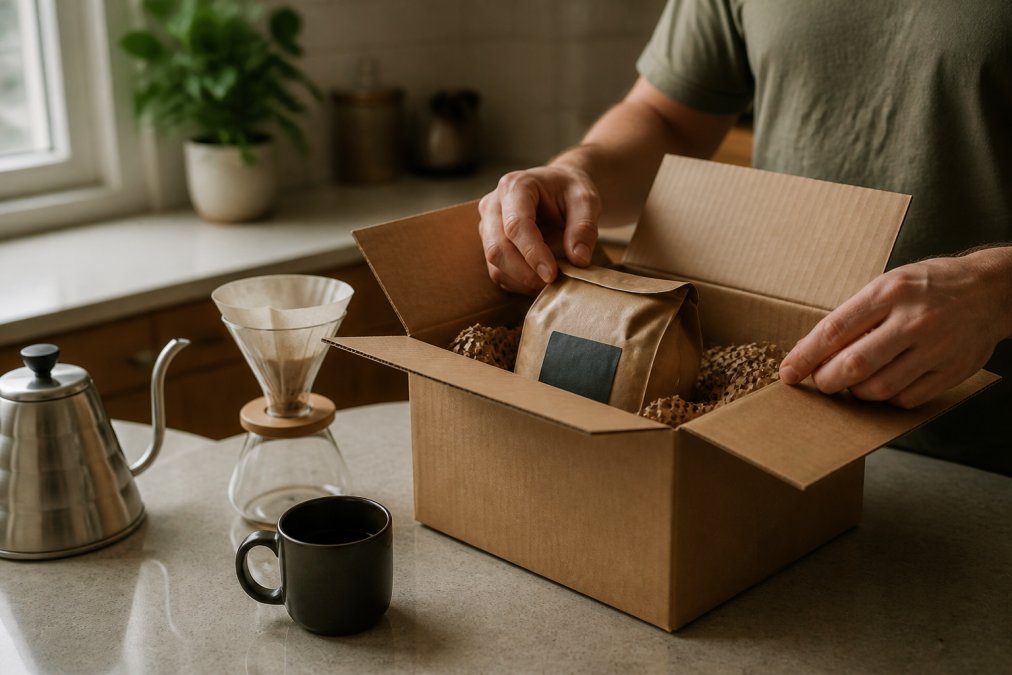
Subscription coffee services are recurring delivery programs that send freshly roasted beans to your door on a schedule you set, typically every one to four weeks. You choose a roast, a grind, and a frequency, and the roaster ships on a recurring order.
The Roaster-to-Door Model Explained
The roaster-to-door model cuts out the warehouse middle step: beans are roasted in small batches, packed, and shipped directly to the customer, shortening the gap between roast date and brew date.
Is a Coffee Subscription Worth It? Breaking Down the Real Value
A coffee subscription is worth it if you drink coffee daily and value freshness, variety, or convenience over the lowest price per bag. The value comes from bean quality and roast timing, not from beating grocery pricing.
Cost-Per-Cup vs. Grocery Store Bags
Cost-per-cup is the honest way to compare. A premium bag looks expensive next to a mass-market one, but the gap narrows once you divide by the cups each bag produces.
Freshness You Can Taste: Roast Date and Small-Batch Quality
Freshness is the biggest reason people stay subscribed. Small-batch roasting moves beans from roaster to box quickly, and a printed roast date tells you exactly how old your coffee is.
How to Choose a Coffee Subscription That Fits Your Routine
Choosing a subscription coffee plan comes down to four variables: what you brew, how much you drink, how much billing control you want, and how adventurous your palate is.
Match Grind Size and Brewing Method
Grind size should match your brewer. Too fine for drip and the coffee turns bitter and over-extracted; too coarse for espresso and it runs thin and sour. This is the most common reason a subscriber blames the roaster when the real problem is the grind.
| Brewing Method | Grind Size | Typical Roast That Shines | Why |
|---|---|---|---|
| Drip machine | Medium | Medium | Even extraction across a large batch |
| Pour-over (V60, Chemex) | Medium-fine | Light to medium | Highlights acidity and origin character |
| French press | Coarse | Medium to dark | Full immersion needs a coarse bed to press cleanly |
| Espresso | Fine | Medium to dark | Pressure needs resistance to build crema |
| Cold brew | Coarse | Medium to dark | Long steep rewards low surface area |
| Moka pot | Fine-medium | Medium to dark | Stovetop pressure sits between drip and espresso |
Roast Level, Origin, and Flavor Profile
Roast level changes what you taste more than origin does for most drinkers. Light roasts keep natural acidity and fruit notes; dark roasts push toward chocolate, caramel, and smoke. If you drink with milk or cream, a medium or dark roast holds up better than a delicate light roast.
Flexible Billing, Pausing, and Cancellation Policies
Flexible billing and a clear cancellation policy matter more than most buyers expect. Life changes: travel, a slow month, a stocked pantry. A plan that lets you pause without penalty keeps a good subscription from becoming a burden.
Bag Size and Format
Bag size affects cost per ounce and freshness. Slow drinkers do better with smaller bags more often; heavy drinkers win on cost and freshness with larger bags and a tighter cadence.
Coffee Subscription Frequency Guide: Finding Your Shipping Cadence
The right shipping cadence keeps beans fresh without piling up bags. Most daily drinkers land on every two to four weeks; lighter drinkers do better monthly or every six weeks.
| Your Coffee Habit | Bags Per Month | Suggested Frequency | Why It Works |
|---|---|---|---|
| 1 cup per day | 1 | Monthly | Beans stay fresh, no clutter |
| 2-3 cups per day | 2 | Every 2 weeks | Matches roast-to-drink timing |
| 4+ cups per day | 3-4 | Every 2 weeks | Keeps pace without overstocking |
| Occasional drinker | Under 1 | Every 6 weeks | Avoids stale inventory |
| Two-person household | 3-4 | Every 2 weeks | Splits cost, keeps variety |
Why Freshly Roasted Beans Beat Shelf-Stable Alternatives
Freshly roasted beans win on flavor, aroma, and brewing behavior. Shelf-stable bags are built to survive long distribution, and that trade-off shows up in the cup.
Managing Subscription Fatigue and Environmental Impact
Subscription fatigue is real, and recurring shipping has an environmental cost. This section covers a framework for keeping recurring coffee from piling up and a practical way to weigh a plan's shipping footprint.
A Framework for Avoiding Coffee Backlog
Coffee backlog, stale bags stacking up because you ordered faster than you drank, is the most common subscription failure. It happens for predictable reasons: an aggressive starting cadence, a household that drinks less than expected, or two overlapping plans never consolidated.
- Start one step slower than you think you need. It's easier to increase a delivery than to work through aging bags.
- Keep one active coffee plan, not two. Overlapping subscriptions are the fastest route to a shelf of stale beans.
- Use a first-in, first-out shelf. Move older bags to the front and brew them before opening new ones.
- Store beans properly. An airtight container in a cool, dark cabinet slows staling; the freezer works for longer storage if beans are sealed and thawed without opening until room temperature.
- Track your real consumption for one month. Most people overestimate how much coffee they drink at home.
Weighing the Environmental Impact of Recurring Shipping
Recurring shipping has a footprint, and the honest answer is that it depends on how the roaster ships and how often. The biggest levers are shipment frequency, packaging material, and order consolidation.
- Fewer, fuller shipments. Extending your cadence from every two weeks to monthly roughly halves the number of boxes and trips per year for the same volume of coffee.
- Larger bag sizes. A 2-pound bag uses less packaging per ounce than four 8-ounce bags, and it ships in one box instead of four.
- Recyclable or compostable packaging.
- Consolidated orders. If you buy other items from the same roaster, combining them into one shipment avoids a second delivery.
- Whole bean over capsules. Capsules use more packaging material per cup than loose beans, though some programs offer recyclable capsule formats.
Technical Brewing Compatibility: The Overlooked Third Issue
A subscription only pays off if the beans suit your equipment. Before committing, confirm grind size (or order whole bean), roast level (light roasts can under-extract in a drip machine set for dark roasts), and bag format. A light-roast single origin shipped to an espresso-only drinker will disappoint, no matter how good the bean is.
Frequently Asked Questions
Are coffee subscription services actually cheaper than buying at the store?
It depends on what you compare. A 12-pack of single-serve capsules from Iron Rooster costs $16.99, which works out to about $1.42 per cup. Grocery store bags often look cheaper upfront, but you may brew weak cups to stretch them, or toss stale grounds. Subscriptions also reduce waste from unused bags and impulse buys. The real savings show up in cost-per-cup and consistency, not just the sticker price.
How do coffee subscription services ensure freshness?
The best services roast to order and ship within days. Iron Rooster seals each single-serve capsule with no oxygen inside, which keeps coffee fresh without slowing brew time. Sample packs like the Best Sellers Sample Pack include 2oz portions so you can taste before committing to a full bag. Look for a visible roast date and small-batch language, not vague 'fresh' claims.
Can I customize my coffee subscription frequency?
Yes. Most subscription coffee services let you set shipping cadence based on how fast you drink. A coffee subscription frequency guide helps here: one cup a day means a slower cadence, while two cups daily may need more frequent delivery. If you travel or work odd hours, choose a plan that lets you pause or skip a shipment without penalties.
What are the main advantages of artisan coffee subscriptions?
Artisan subscriptions give you access to single-origin and blend variety you will not find on most grocery shelves. You get freshly roasted beans, tasting notes that guide your choice, and the ability to explore origins like Ethiopia or Peru without buying full bags blind. Iron Rooster's Single Origin Favorites Sample Pack includes six 2oz packs, so you can compare cupping profiles before reordering.
Is it easy to cancel or pause a coffee subscription?
It should be, but check the cancellation policy before you sign up. A good subscription coffee service lets you pause, skip, or cancel from your account dashboard without calling support. If a roaster locks you into a multi-month commitment, that is a red flag. Flexible billing and no long-term contracts are standard for direct-to-consumer coffee brands that trust their product.
How do I choose the best coffee subscription for my brewing method?
Start with grind size. If you use a drip machine, ask for a medium grind; espresso needs fine; French press needs coarse. Whole bean is best if you grind at home. Then match the roast to your taste: medium roasts are smooth and balanced, dark roasts are bolder. Iron Rooster's sample packs let you test different roasts with your setup before committing to a recurring order.
The challenge with any recurring delivery is keeping it useful: fresh beans, right cadence, no waste. Iron Rooster Coffee Co. addresses that with freshly roasted coffee, carefully selected beans, and fast, automated fulfillment that ships straight to your door, plus premium branded gear for the mornings you want to slow down. Start with a sample pack, find your roast, then set a cadence you'll actually drink through.