

Table of Contents
- Why Coffee Filter Alternatives Matter for Flavor
- Metal Coffee Filter vs Paper: What Changes in Your Cup
- Cloth Coffee Filter Options and Their Flavor Profile
- Ceramic and Glass Filters for Clarity and Richness
- French Press Coffee: A Different Brewing Approach
- Cleaning, Care, and Compatibility for Reusable Filters
- Lifespan:
- Lifespan:
- Which Filter Material Fits Your Flavor Preference
- Frequently Asked Questions
Last Updated: October 5, 2026
Why Coffee Filter Alternatives Matter for Flavor
The filter you choose changes everything about your cup, which is why understanding coffee filter alternatives matters for flavor. Paper filters remove coffee oils. Metal filters let them through. Cloth filters sit somewhere in between. Each one creates a different flavor experience, body, and aroma.
Most people stick with paper for convenience, but the filter material directly affects extraction yield, sediment, and how much of the coffee's natural character reaches your cup.
Here's what changes:
- Flavor clarity: Paper filters brighten acidity. Metal filters deepen body and richness.
- Mouthfeel: Oils in your cup create fuller texture. Paper removes them. Reusable filters preserve them.
- Sediment: Paper and cloth trap fine particles. Metal mesh lets some through, creating a grittier cup.
- Aroma: Oils carry volatile aromatics. More oils mean more fragrance in your cup.
The best filter for you depends on your flavor preference, brewing method, and how much cleanup you're willing to do.
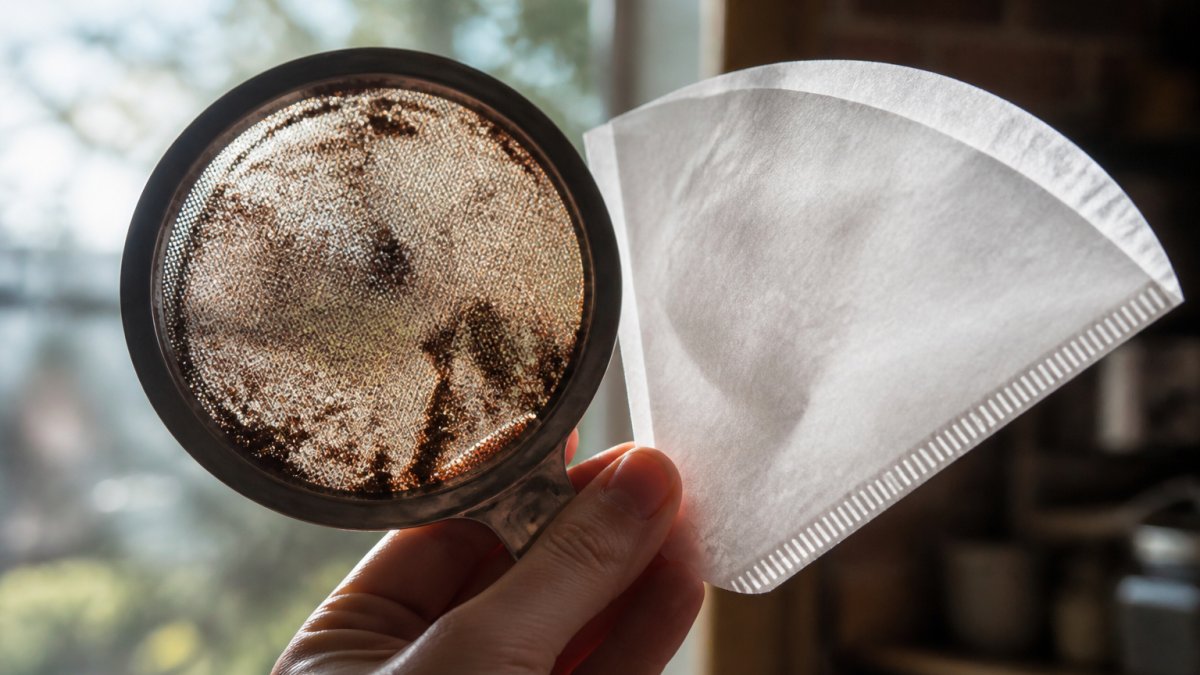
Metal Coffee Filter vs Paper: What Changes in Your Cup
A metal filter lets coffee oils pass through while trapping grounds; paper absorbs those oils, creating a cleaner, brighter cup with less body.
Side-by-Side Flavor Comparison
When you brew the same coffee through both filters, these changes occur:
| Flavor Dimension | Paper Filter | Metal Filter | Why It Happens |
|---|---|---|---|
| Body & Mouthfeel | Thin, crisp, tea-like | Full, heavy, syrupy | Paper absorbs oils; metal lets them through |
| Acidity | Bright, pronounced, sharp | Softer, blended with sweetness | Oils buffer acid perception |
| Sweetness | Clean, isolated | Rich, complex, caramel-forward | Oils carry fat-soluble flavor compounds |
| Aroma | Lighter, more delicate | Intense, aromatic, fragrant | Volatile aromatics travel with oils |
| Sediment | None visible | Fine particles at cup bottom | Mesh size (typically 100-150 microns) lets some fines through |
| Finish | Quick, clean | Long, lingering, oily | Oils coat the palate longer |
Why the Shift Matters
Paper's cellulose fibers absorb roughly 99% of coffee's oils, while metal mesh (100-150 microns) lets oils pass through. This cascades across flavor: oils soften acid perception and allow sweetness and body to come forward, creating a less sour, more balanced cup.
Metal Filter Material Grades
Compatibility and Sizing
Metal filters work best with pour-over drippers (Melitta, Chemex, Kalita Wave, Hario V60, Cone-style brewers) and some automatic coffee makers. Verify your dripper's filter basket diameter before purchasing, common sizes are #2 (small, 2-4 cup brewers) and #4 (large, 8-12 cup brewers). French press brewers come with their own integrated metal mesh and cannot use aftermarket metal filters.
The Downside: Sediment and Cleanup
You'll get fine sediment in your cup (typically 0.5-1 teaspoon). Some enjoy the texture; others find it gritty. Cleanup requires immediate rinsing; dried grounds need soaking and scrubbing.
Cloth Coffee Filter Options and Their Flavor Profile
Cloth filters occupy the middle ground between paper and metal, trapping more sediment than metal but letting more oils through than paper. They produce balanced flavor with good body and minimal sediment, lasting months or years with proper care.
Cloth filters need rinsing after each use and wet storage in the fridge to prevent mold. Organic cotton is preferable to conventional cotton because it's free from pesticide residue.
Ceramic and Glass Filters for Clarity and Richness
Ceramic filters trap sediment while allowing oils through, producing a clean, balanced cup. Glass brewers use paper filters but the narrow hourglass shape slows water flow, deepening extraction. Both are durable, dishwasher-safe, and reusable indefinitely, though they cost more than standard drippers.
French Press Coffee: A Different Brewing Approach
A French press steeps grounds directly in hot water, then presses a mesh filter down to separate them. Extended contact time pulls more oils and soluble compounds, creating a full-bodied, rich cup with visible sediment. Fresh, high-quality coffee shines; stale or low-grade coffee's flaws become obvious.
Use coarse grounds, 195-205°F water, and 4-minute brew time. The advantage is simplicity; the disadvantage is cleanup and sediment. Some love the richness; others find the grit off-putting.
Cleaning, Care, and Compatibility for Reusable Filters
Reusable filters require proper maintenance to last, perform consistently, and avoid off-flavors. The good news: it's simple once you understand what degrades filters and how to prevent it.
Metal Mesh Filters: Immediate and Long-Term Care
After each brew: Rinse under hot running water and gently agitate with a soft brush. Hold to light to check for trapped grounds. If grounds dry: Soak 10-15 minutes, scrub gently, and rinse. Weekly: Soak in hot water with 1 tablespoon white vinegar for 20 minutes, rinse, and air dry.
Storage: Store completely dry with air circulation. Replace when sediment increases, metallic taste appears, or visible pitting develops.
Cloth Filters: Storage and Mold Prevention
Cloth filters are more delicate than metal and require different care because fibers degrade over time and mold grows quickly in damp fabric.
After each brew: Rinse thoroughly, gently squeeze, and inspect for trapped grounds. Storage: Store wet in the refrigerator, changing water every 2-3 days. Never store dry.
Weekly: Soak in hot water with 1 tablespoon white vinegar for 20 minutes, rinse, and return to wet storage. Never use soap; it affects flavor.
Lifespan:
- Replace when you notice increased sediment in your cup or when the cloth becomes thin or fragile.
Mold prevention:
- If you see black or green spots on the cloth, the filter is contaminated. Discard it and replace.
- Mold can impart off-flavors that survive rinsing. Prevention is easier than remediation.
Ceramic Filters: Durability and Crack Monitoring
After each brew:
- Rinse under hot running water.
- Gently wipe with a soft cloth or sponge.
- Inspect for cracks or chips. A damaged filter will not hold grounds properly and sediment will increase.
Storage:
- Ceramic is durable and can be stored dry.
- Dishwasher-safe, but hand washing preserves the finish longer.
- Store in a clean, dry place away from impact.
Lifespan:
- Check before each use. If you find a crack, replace the filter immediately.
Compatibility: Matching Filters to Brewers
Filter size and shape must match your dripper. Using the wrong size creates gaps where grounds escape into your cup.
Metal mesh filters:
- Fit most cone-shaped drippers: Melitta, Hario V60, Kalita Wave, Chemex (though Chemex typically uses paper).
- Common sizes: #2 (small, 2-4 cup) and #4 (large, 8-12 cup).
- Measure your dripper's filter basket diameter before buying.
Cloth filters:
- Fit dedicated cloth-filter drippers or universal cone drippers.
- Some cloth filters are brewer-specific (e.g., Chemex cloth filters are larger than standard cone filters).
- Check the product description or measure your dripper before purchasing.
Ceramic filters:
- Brewer-specific. Ceramic filters are not universal.
- Verify compatibility before buying. A ceramic filter designed for a Melitta dripper will not fit a Hario V60.
French press:
- Comes with an integrated metal mesh filter. No alternatives are needed or compatible.
Which Filter Material Fits Your Flavor Preference
The right filter depends on what you want in your cup. Here's how to choose:
Choose paper if:
- You prefer bright, clean flavors with crisp acidity.
- You want minimal sediment.
- You value convenience and simplicity.
- You're brewing lower-quality beans and want to mask harshness.
Choose metal if:
- You want full body and richness.
- You enjoy complex flavor notes and natural sweetness.
- You don't mind sediment.
- You're brewing premium, single-origin beans.
Choose cloth if:
- You want balance between body and clarity.
- You want a reusable option that's easy to maintain.
- You prefer minimal sediment but fuller flavor than paper.
- You're environmentally conscious and want zero waste.
Choose ceramic or glass if:
- You value aesthetics and durability.
- You want a balanced, clean cup from a beautiful brewer.
- You're willing to invest in quality equipment.
| Filter Type | Flavor Profile | Sediment | Reusable | Best For |
|---|---|---|---|---|
| Paper | Bright, clean | None | No | Convenience, clarity |
| Metal mesh | Rich, full-bodied | Visible | Yes | Complex flavors |
| Cloth | Balanced, smooth | Minimal | Yes | Sustainability |
| Ceramic | Clean, refined | Minimal | Yes | Durability |
| Glass brewer | Clean, refined | None | Yes (with paper) | Aesthetics |
The filter you choose shapes the experience. If you're investing in fresh, artisan-roasted coffee like Iron Rooster Coffee Co. offers, the filter material deserves as much thought as the beans themselves. Experiment. Try a metal filter with your favorite blend, then switch to cloth. Notice how the same coffee tastes different. That's the filter at work.
The goal isn't to find one "best" filter. It's to find the one that delivers the flavor you love in the cup you're holding right now.
The coffee you brew at home can be a premium experience. The filter you choose is one of the biggest factors in making that happen. Whether you prefer the brightness of paper, the richness of metal, or the balance of cloth, the key is using fresh, quality beans and keeping your equipment clean. At Iron Rooster Coffee Co., we've selected and roasted beans designed to shine through any brewing method. The filter is just the final piece of the puzzle. Start with great coffee, choose the filter that matches your flavor preference, and you'll notice the difference immediately. The Specialty Coffee Association's brewing standards provide guidance on filter materials and their impact on cup quality. For more on extraction and flavor, check resources from coffee professionals who test these variables systematically.
Frequently Asked Questions
What can be used instead of filter paper?
Metal mesh filters, cloth filters, ceramic filters, and glass devices all work as coffee filter alternatives. Metal filters allow more coffee oils through, creating a fuller body. Cloth filters offer a middle ground between paper and metal. Ceramic and glass filters provide clarity similar to paper but are reusable. Your choice depends on whether you prefer a lighter, cleaner cup or a richer, more textured flavor profile.
Do metal coffee filters make coffee taste different?
Yes. Metal filters have larger pores than paper, allowing more coffee oils and fine sediment to pass into your cup. This creates a fuller-bodied, richer flavor with more complexity. Some coffee enthusiasts prefer this approach because it preserves aromatic compounds that paper filters trap. Others find the extra sediment creates a heavier mouthfeel. The difference is most noticeable when brewing high-quality, freshly ground coffee.
Which reusable coffee filter gives coffee the best flavor?
The best reusable filter depends on your taste preference. Metal mesh filters deliver the most robust, full-bodied flavor by allowing coffee oils through. Cloth filters balance flavor richness with some sediment reduction, offering a smooth cup. Ceramic filters provide clarity close to paper while being reusable. If you prioritize smooth, mellow coffee without harshness, cloth or ceramic work well. For maximum flavor extraction and body, metal is the choice.
Can you use a French press instead of a paper coffee filter?
Yes. A French press is a complete brewing method that eliminates the need for separate filters. The built-in metal mesh screen allows coffee oils and fine particles into your cup, producing a full-bodied, rich brew. French press coffee typically has more sediment and heavier mouthfeel than filtered methods. It requires a coarser grind and longer steep time (around 4 minutes). This method works well if you enjoy bold, textured coffee and don't mind cleaning the mesh screen thoroughly after each use.