

Table of Contents
- What Actually Makes Artisan Coffee Taste Better?
- The Benefits of Freshly Roasted Coffee Beans: Flavor You Can Smell
- How to Identify High Quality Coffee Beans Before You Buy
- How to Store Coffee Beans for Maximum Freshness
- Why Your Home Brew Doesn't Match the Coffee Shop (Yet)
- Is Artisan Coffee Worth the Higher Price?
- Conclusion: Taste the Difference in Your Morning Cup
- Frequently Asked Questions
Last Updated: September 7, 2026
What Actually Makes Artisan Coffee Taste Better?
The short answer is that artisan coffee tastes better because it is roasted in small batches, sold close to the roast date, and sourced from specific farms where the beans are handled with care at every step. Mass-market coffee, by contrast, often sits in warehouses for months and is blended for uniformity rather than flavor. At Iron Rooster Coffee Co., we roast fresh and ship fast because the gap between the roaster and your cup is where most coffee loses its character.
That freshness directly changes what you taste. Coffee beans contain volatile oils and aromatic compounds that carry the flavors you recognize, and those compounds begin fading the moment roasting ends. The difference between a bean roasted last week and one roasted six months ago is the difference between a ripe peach and a canned one.
The Benefits of Freshly Roasted Coffee Beans: Flavor You Can Smell
Freshly roasted coffee beans deliver a flavor profile that stale beans simply cannot reproduce. The benefits of freshly roasted coffee beans come down to chemistry: roasting creates hundreds of aromatic compounds, and degassing releases carbon dioxide for the first few days after roasting. That gas is what gives fresh coffee its bloom when you pour hot water over it, and it carries the volatile oils responsible for aroma and taste.
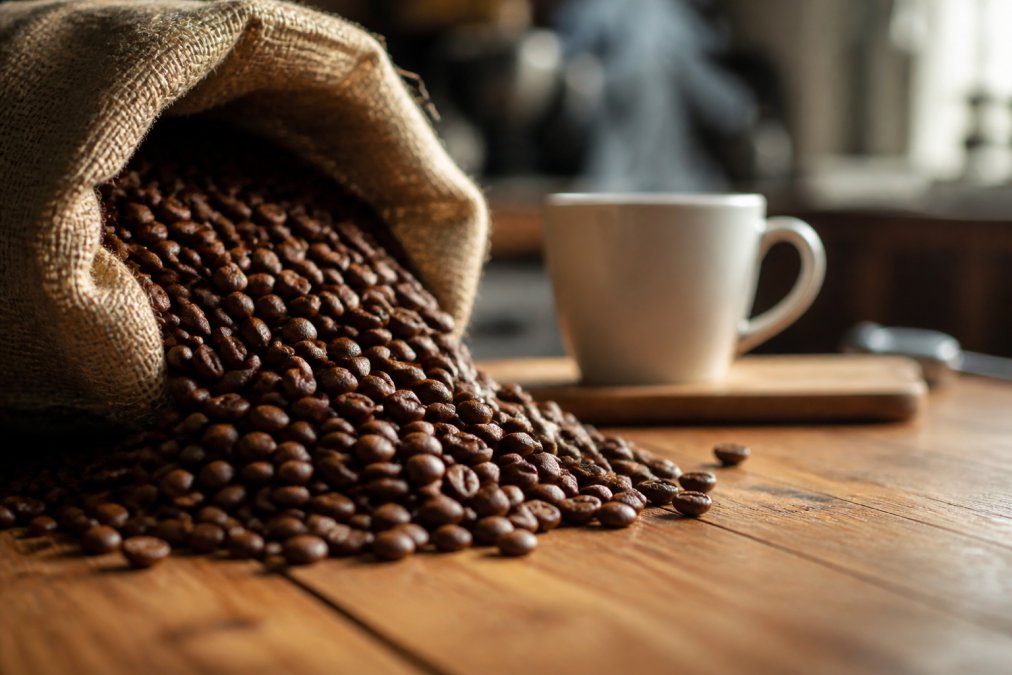
When those compounds oxidize over weeks and months, the coffee flattens. The bright acidity dulls, the sweetness turns bitter, and the distinctive flavor notes fade into a generic roasty taste. Specialty coffee roasters publish roast dates for this exact reason, and the Specialty Coffee Association's guide to freshness recommends using beans within a few weeks of roasting for the best cup. A bean from a single-origin lot, like our Bali Blue with its dark chocolate and molasses profile, only makes sense if you can actually taste what the farmer grew.

But fresher is not always better. Coffee needs time to degas after roasting. In the first 24 to 72 hours, the beans are still releasing large amounts of carbon dioxide, and that gas actively interferes with extraction. Brew a coffee that was roasted yesterday, and you will often get a cup that tastes muted, slightly flat, or even a bit "green", not because the beans are bad, but because the gas is pushing water away from the grounds and preventing even saturation.
Most specialty roasters and competition baristas agree that the peak flavor window opens around day 4 to day 7 after roasting and holds through roughly day 14 to day 21, depending on the roast profile and the bean. Light roasts tend to peak a bit later because they are denser and degas more slowly. Dark roasts are more porous and can hit their peak earlier, sometimes by day 3, but they also fade faster. This is why a roaster's "resting" recommendation matters: a bag that arrives two days after roasting may actually taste better on day 6 than on day 2.
What this means practically is that the "roast date freshness" story is really a story about a peak window, not a race against the clock. A coffee roasted 10 days ago is often at its best. A coffee roasted 10 months ago is almost certainly past it. The curve is not a straight line down from day one, it rises briefly, holds, and then declines.
That decline is driven by oxidation and the loss of volatile aromatic compounds. The compounds responsible for floral, fruity, and sweet notes are the most fragile. They evaporate or chemically break down first, which is why old coffee tastes increasingly roasty, bitter, and flat.
Storage slows this decline but does not stop it. Whole beans in an airtight, opaque container at room temperature will hold their peak for the full two-to-three-week window. Grinding accelerates the loss dramatically: ground coffee can lose a meaningful portion of its aromatic compounds within 15 minutes of grinding.
How to Identify High Quality Coffee Beans Before You Buy
High quality coffee beans are identifiable before you ever brew them by checking the roast date, the origin, and the physical appearance of the bean itself. A bag without a roast date is a warning sign that the coffee may have been sitting on a shelf for months.
Beyond the date, look for specific origin information. A bag that says "Colombia" is a start, but a bag that names the region, the farm, and the variety shows traceability. Our Colombia offering, for example, comes from smallholder farmers in Medellin and lists both the altitude and the processing method. Beans should also look uniform in size and color, which indicates careful sorting after harvest.
How to Store Coffee Beans for Maximum Freshness
How to store coffee beans for maximum freshness comes down to three rules: keep them whole, keep them airtight, and keep them away from light and heat. Ground coffee loses its aromatic compounds much faster than whole beans because grinding exposes far more surface area to oxygen. For the same reason, buy whole beans and grind only what you need for each brew.
An airtight, opaque container in a cool cabinet is the right home for your beans. The refrigerator is a common mistake, since the moisture and odors inside will degrade the coffee, and the freezer is only useful for long-term storage of beans you do not plan to use soon. Coffee is a dry product that acts like a sponge for ambient smells, so a sealed container matters more than the material it is made from. If you finish a bag within two to three weeks of the roast date, you are getting the coffee at its peak.
Why Your Home Brew Doesn't Match the Coffee Shop (Yet)
The gap between your home brew and the coffee shop usually comes down to grind consistency and water quality, not the beans. The single biggest variable at home is the grinder. A burr grinder produces uniform particle sizes, while a blade grinder shatters beans into a mix of fine dust and coarse chunks that extract unevenly.
Water chemistry also plays a larger role than most home brewers realize. Coffee is roughly 98 percent water, and the mineral content of that water determines how well it extracts the soluble flavors from the grounds (ncausa.org). If your tap water is heavily softened or has a strong mineral taste, it will mask the delicate flavor notes in a light roast.
The National Coffee Association's brewing guidelines recommend a specific ratio of coffee to water and a consistent grind size as the foundation of a good cup. Once you control those two variables, you can start adjusting brew ratio and contact time to match your taste. The equipment does not need to be expensive, but it does need to be consistent.
But consistency alone won't fix a bad cup. Most home brewers make the same handful of mistakes, and the symptoms are predictable. The table below maps the most common failures to their causes and the fix that will get you closer to shop-quality results.
| Symptom in Your Cup | Likely Cause | The Fix |
|---|---|---|
| Sour, sharp, or tangy flavor | Under-extraction: water moved through the grounds too fast, or the grind was too coarse | Grind finer, increase brew time, or use hotter water (195-205°F) |
| Bitter, astringent, or drying finish | Over-extraction: water sat too long, or the grind was too fine | Grind coarser, shorten brew time, or lower your water temperature slightly |
| Weak, thin, or watery body | Wrong coffee-to-water ratio (too little coffee) | Use a scale: start with 1:16 (1 gram of coffee to 16 grams of water) and adjust from there |
| Muddy, gritty sediment in the cup | Blade grinder produced fine dust, or paper filter tore | Switch to a burr grinder; check that your filter is seated properly |
| Flat, dull, or "baked" flavor | Water temperature too low (under 195°F) | Heat your water to just off the boil, roughly 200°F, and preheat your brewer |
| Chlorine or plastic taste | Tap water with high chlorine or sitting in a plastic kettle | Use filtered water; descale your kettle monthly |
One variable home brewers rarely consider is water temperature stability. A shop-grade machine holds water within a degree or two of the target temperature for the entire brew. A pour-over kettle, by contrast, loses heat continuously. If you brew with a gooseneck kettle, preheat your brewer and your mug, and consider that the slurry temperature in your V60 or Chemex will drop 10-15°F over a three-minute pour.
The other hidden variable is your grinder's condition. Burrs dull over time, and a dull burr produces more fines, the fine particles that over-extract and create bitterness. Most home burr grinders need replacement burrs after roughly 500 pounds of coffee, but a quick check is to grind a few beans and look for uniform particle size. If you see a visible cloud of dust, your burrs are likely past their prime.
Finally, remember that your palate adapts. If you drink the same coffee brewed the same way every day, you will stop noticing its flaws, and its strengths. At home, the most practical habit is to brew one cup with your normal recipe, then adjust one variable (grind size or ratio) and taste side-by-side. That single practice will teach you more about extraction than any equipment upgrade.
Is Artisan Coffee Worth the Higher Price?
Artisan coffee costs more because you are paying for traceability, careful processing, and freshness, none of which are cheap to produce. A typical single-origin bag from Iron Rooster Coffee Co. runs about $20.99. What that price buys is a bean grown at altitude by smallholder farmers, picked by hand, processed with intention, and roasted days before it reaches your door.
Mass-market coffee is often a blend of commodity beans roasted dark to hide defects, which produces that bitter, harsh cup many people try to mask with sugar and cream. A well-roasted artisan bean, by contrast, is naturally sweet and smooth. If you are someone who adds sweetener just to make coffee drinkable, the higher price of better beans often pays for itself by removing the need for everything else in your mug.
Conclusion: Taste the Difference in Your Morning Cup
The reasons artisan coffee tastes better are grounded in freshness, sourcing, and careful roasting, all of which are within your control once you know what to look for. Start by checking roast dates, buy whole beans, and store them properly, and you will notice the difference within the first bag. At Iron Rooster Coffee Co., we roast our single-origin offerings fresh and ship them fast, with automated fulfillment that gets coffee to your door while it still has its full flavor. Explore our Bali Blue, Brazil Santos, or Ethiopia Natural, and add a bag to your next order to taste what fresh roasting actually delivers.

Frequently Asked Questions
What does artisan coffee mean?
Artisan coffee refers to beans roasted in small batches by roasters who prioritize quality over volume. Unlike mass-market brands that roast thousands of pounds per hour, artisan roasters often source single-origin beans, roast to a specific profile, and ship within days of roasting. This hands-on approach preserves the volatile oils and aromatic compounds that create complex flavor notes like chocolate, fruit, or caramel. The result is a fresher, more flavorful cup than what you typically find on grocery store shelves.
Does the freshness of the roast really impact coffee flavor?
Yes, freshness dramatically impacts flavor. Coffee beans release carbon dioxide for days after roasting in a process called degassing. Mass-market coffee can sit in warehouses and on shelves for months, losing the volatile oils responsible for aroma and taste. Freshly roasted beans, like those from Iron Rooster Coffee Co., are shipped soon after roasting, preserving those oils. You'll notice a brighter, more complex flavor with less bitterness. This is one of the key benefits of freshly roasted coffee beans that regular brands simply can't match.
Why does coffee shop coffee taste better than home-brewed coffee?
Coffee shops control three variables most home brewers ignore: water chemistry, grind consistency, and brew ratio. They use commercial burr grinders for uniform particle size and filtered water with the right mineral content for proper extraction. At home, a blade grinder creates uneven grounds that cause channeling and bitter or sour flavors. The good news? You don't need a $3,000 machine. Start with freshly roasted beans and a decent burr grinder, and you'll close most of the gap immediately.
Is artisan coffee worth the higher price point?
For most coffee drinkers, yes. A bag of Bali Blue from Iron Rooster Coffee Co. costs $20.99, which breaks down to roughly $0.87 per 12-ounce cup. That's comparable to a basic latte at a coffee shop, but you're getting a single-origin bean from smallholder farms in Kintamani with tasting notes of dark chocolate and molasses. You're paying for higher-quality beans, careful roasting, and freshness. If you drink coffee every morning, the daily cost difference versus mass-market brands is small, but the flavor difference is substantial.