

Table of Contents
- What Makes Coffee Beans Artisan
- Specialty Coffee vs Artisan Coffee: Understanding the Difference
- The Role of Bean Origin, Terroir, and Single-Origin Selection
- Small-Batch Roasting Techniques and Roast Profiles
- Processing Methods: Washed, Natural, and Honey Process
- How to Identify High Quality Coffee Beans
- Best Practices for Brewing Artisan Coffee
- Artisan vs Specialty vs Gourmet: Terminology Explained
- Frequently Asked Questions
Last Updated: September 3, 2026
What Makes Coffee Beans Artisan
Artisan coffee represents a deliberate commitment to quality at every stage: from the farmer's harvest decisions to the roaster's precise temperature control to your brewing method. It rests on three pillars: traceability, intentionality, and craft. You can trace artisan beans back to specific farms, sometimes even specific plots of land. The roaster knows the altitude where those beans grew, the processing method used, and the exact day they arrived, knowledge that informs every roasting decision.
At Iron Rooster Coffee Co., we define artisan coffee by the relationships built into every bag. Our single-origin selections like Ethiopia Natural and Bali Blue come from smallholder farmers. We roast to order, which means your beans are roasted fresh within days of shipment. The difference between artisan and mass-market coffee comes down to decisions: a commodity roaster makes one decision per day, while an artisan roaster makes dozens, bean density, ambient humidity, roast profile adjustments, cooling strategy. Each shapes flavor.


Specialty Coffee vs Artisan Coffee: Understanding the Difference
These terms get used interchangeably, but they describe different things. Specialty coffee is a category defined by scoring standards. According to the Specialty Coffee Association's grading system, beans that score 80 points or higher on a 100-point scale qualify as specialty. This is measurable. Any roaster can purchase specialty-grade beans and sell them.
Artisan coffee is a philosophy applied to specialty beans. An artisan roaster takes specialty-grade beans and treats them as raw material for craft. They study bean characteristics, experiment with roast profiles, and adjust based on what they discover. The roaster's skill becomes part of the product.
Here's the practical distinction: all artisan coffee is specialty coffee, but not all specialty coffee is artisan. A large roastery might buy specialty beans and roast them on an automated schedule. That's specialty coffee. Iron Rooster Coffee Co. takes specialty beans, roasts them in small batches, and ships within days of roasting. That's artisan coffee. The sensory difference is real, specialty beans give you a foundation of quality, while artisan roasting transforms that foundation into complexity and balance.
The Role of Bean Origin, Terroir, and Single-Origin Selection
Where coffee grows shapes everything about how it tastes. Altitude, soil composition, rainfall patterns, and seasonal timing all influence the bean's chemistry before a roaster ever touches it.
Terroir, borrowed from wine terminology, describes how geography influences flavor. Coffee grown at 1,700 meters in Ethiopia tastes different from coffee grown at 1,200 meters in Indonesia. Higher elevation means slower maturation, denser beans, and more complex sugars. Single-origin coffee means all beans in the bag come from one specific region, farm, or harvest. This traceability is central to artisan coffee. When you buy single-origin, you're buying a specific terroir expression.
How Altitude and Soil Affect Flavor
Altitude is the primary factor shaping coffee flavor. Beans grown above 1,500 meters develop higher acidity and more floral or fruity notes. Beans between 1,200 and 1,500 meters tend toward balanced acidity with chocolate or nutty undertones. Below 1,200 meters, you get lower acidity, heavier body, and earthy characteristics.
Soil type matters equally. Volcanic loam, common in Indonesia and parts of Central America, produces beans with syrupy body and dark chocolate notes. Nitisols, found in Ethiopia's Sidama region, yield beans with bright acidity and fruity characteristics. Our Bali Blue grows in volcanic loam at 1,200-1,600 meters, producing dark chocolate and molasses profiles. Our Kenya comes from Nyeri County at 1,700-1,890 meters, yielding bright acidity with orange and floral notes.
Direct Trade and Fair Trade Sourcing
Direct trade means the roaster buys directly from the farmer or farming cooperative, cutting out middlemen and creating accountability. Fair trade certification ensures farmers receive a minimum price that covers production costs plus a premium. The Fair Trade USA certification standards set specific price floors and require environmental stewardship. Artisan roasters typically use one or both approaches, supporting sustainable farming practices.
Small-Batch Roasting Techniques and Roast Profiles
Small-batch roasting is where artisan coffee gets its character. A small-batch roaster typically works with 5-25 pound batches, giving them precision that industrial roasters can't match.
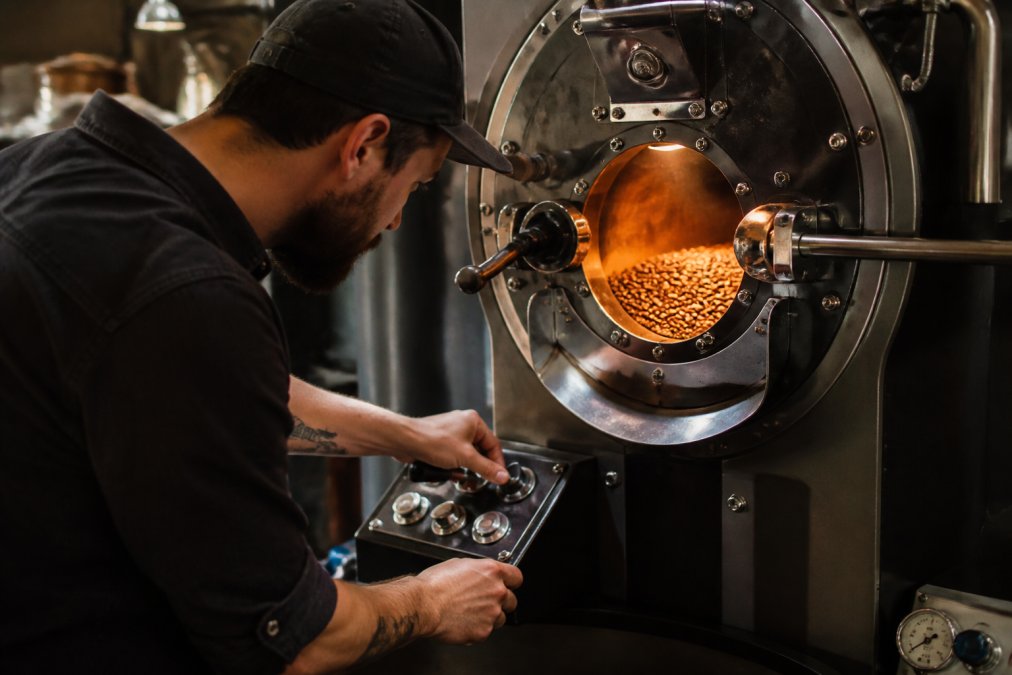
The roast profile is the roadmap: starting temperature, rate of temperature rise, time at each stage, and cooling strategy. Different beans need different profiles. Small-batch roasters adjust profiles based on bean moisture content, density, and desired flavor outcome. They listen to the beans, coffee makes audible cracks during roasting, first crack around 350-400°F and second crack around 400-430°F. Light roasts preserve origin flavors and acidity. Medium roasts balance origin characteristics with roast-developed flavors. Dark roasts emphasize body and reduce acidity.
The Chemistry of Roasting Artisan Beans
Roasting is a chemical transformation. Heat triggers reactions that create the flavors, aromas, and body you taste. The Maillard reaction creates roasted flavors and brown color. Caramelization of sugars produces sweetness and body. Pyrolysis breaks down larger compounds into volatile aromatic compounds. All of this happens within 12-16 minutes in a small-batch roaster.
The roaster's job is controlling these reactions. Too fast, and you get sour, grassy flavors. Too slow, and you get flat, over-roasted bitterness. Artisan roasters understand that bean density affects how heat penetrates and that moisture content influences reaction timing, allowing them to adjust profiles mid-roast based on how the beans are responding.
Processing Methods: Washed, Natural, and Honey Process
How coffee cherries are processed after harvest dramatically shapes the final cup. Washed process removes the fruit before drying the bean, producing cleaner, brighter flavors with more acidity and clarity. Natural process dries the entire cherry intact, then removes the dried fruit, producing fruitier, fuller-bodied coffee with lower acidity. Honey process removes the skin but keeps some mucilage on the bean during drying, balancing between washed and natural with moderate acidity and some fruit sweetness.
The Specialty Coffee Association's processing standards recognize all three methods as valid for specialty-grade coffee. Our Ethiopia Natural uses full natural processing, producing fruity and caramel notes. Our Kenya is fully washed, producing bright acidity and floral characteristics.
How to Identify High Quality Coffee Beans
Identifying quality requires knowing what to look for. Visual inspection, cupping scores, freshness markers, and sensory evaluation all contribute to the picture.
Reading Cupping Scores and SCA Standards
Cupping is the standardized tasting protocol used across the coffee industry. Trained cuppers evaluate beans on 10 criteria: fragrance, aroma, flavor, aftertaste, acidity, body, balance, sweetness, defects, and overall impression. A score of 80-84 qualifies as specialty coffee. 85-89 is excellent. 90+ is rare and commands premium prices.
When you see a cupping score on a bag, that's verification. It means someone trained in the Specialty Coffee Association standards evaluated the beans and documented the result. However, cupping scores don't tell the whole story, two beans might both score 85 but taste completely different. Cupping measures consistency and absence of defects, not the subjective experience of flavor complexity.
Evaluating Freshness and Degassing Timelines
Look for a roast date on the bag. Coffee is freshest 5-14 days after roasting, when carbon dioxide has mostly released but volatile aromatic compounds haven't oxidized. Coffee is still excellent 14-30 days after roasting. Beyond 30 days, flavor degradation accelerates. After 60 days, most artisan coffee tastes noticeably stale.
Whole beans stay fresh longer than ground coffee. Ground coffee oxidizes faster due to increased surface area, use it within 2 weeks. Opaque bags with one-way valves preserve freshness better than transparent bags. The valve is essential, preventing pressure buildup while blocking oxygen.
Sensory Evaluation Techniques for Consumers
You don't need to be a trained cupper to evaluate coffee. Smell the grounds, fresh coffee smells complex with fruit, chocolate, or floral hints. Stale coffee smells flat. Observe the bloom, pour hot water over grounds and wait 30 seconds. Fresh coffee blooms dramatically as carbon dioxide escapes. Stale coffee barely blooms. Taste for balance, good artisan coffee has acidity, body, and sweetness in harmony. Notice the finish, fresh, well-roasted coffee leaves a pleasant aftertaste.
Best Practices for Brewing Artisan Coffee
Quality beans deserve proper brewing. Use the right water temperature (195-205°F), the right ratio (roughly 1:16 coffee to water by weight), and the right contact time (3-4 minutes for most methods). Grind size matters too, finer grinds for shorter contact time, coarser grinds for longer contact time.
Water quality affects extraction. Hard water with high mineral content extracts differently than soft water. Coffee made with filtered water tastes noticeably better than coffee made with tap water. Consistency matters more than perfection, using the same ratio, grind size, water temperature, and contact time every morning creates predictable results.
Equipment Requirements for Artisan Brewing
A burr grinder is non-negotiable. Blade grinders produce inconsistent particle sizes, causing uneven extraction. Burr grinders produce uniform particles. You don't need an expensive grinder, a mid-range burr grinder at $30-60 outperforms a $200 blade grinder.
Your brewing method shapes everything else. Pour-over methods (Chemex, Hario V60, Melitta) give you control and clarity. Immersion methods (French press, cupping bowl) produce fuller body. Espresso machines extract quickly under pressure. A gooseneck kettle helps with pour-over methods by letting you control water flow precisely. A kitchen scale helps you dial in the coffee-to-water ratio accurately. The most important equipment is your grinder, invest there first.
Artisan vs Specialty vs Gourmet: Terminology Explained
Specialty coffee is a defined category, beans that score 80+ on the 100-point cupping scale. It's measurable and verifiable. Artisan coffee describes the roaster's approach, not the bean grade. An artisan roaster applies craft, skill, and intentionality to specialty beans, roasting in small batches and prioritizing freshness. All artisan coffee is specialty coffee, but the roaster's skill is the differentiating factor. Gourmet coffee is a marketing term with no official definition, typically meaning "expensive" or "premium." The term tells you nothing about actual quality or roasting approach.
When you buy from Iron Rooster Coffee Co., you're getting specialty-grade beans roasted with artisan care. We source directly from farmers, roast to order in small batches, and ship within days. Start with any of our single-origin selections and taste the difference that intentionality makes. Our Whiskey Barrel Aged single-origin Guatemalan beans spend 30 days aging in bourbon barrels before roasting to order, that's artisan craft applied to exceptional beans. Get started with Iron Rooster Coffee Co. and experience coffee roasted with care, delivered fresh to your door.

Frequently Asked Questions
Q: How does artisan coffee differ from regular coffee?
A: Artisan coffee is roasted in small batches by skilled roasters who carefully monitor temperature and timing to bring out each bean's unique flavor. Regular mass-market coffee is roasted in large volumes with standardized processes, often prioritizing consistency over flavor complexity. Artisan beans are typically sourced from specific origins with documented terroir, while commercial coffee often blends beans from multiple sources. The result is that artisan coffee delivers distinct flavor notes, smoother body, and fresher taste because it's roasted to order rather than sitting in inventory.
Q: What is specialty coffee vs artisan coffee?
A: Specialty coffee is a classification based on quality standards set by the Specialty Coffee Association (SCA), requiring a cupping score of 80 or higher on a 100-point scale. Artisan coffee refers to the roasting method and philosophy, small-batch, careful temperature control, and attention to flavor development. All artisan coffee aims to be specialty grade, but not all specialty coffee is artisan-roasted. Some specialty-grade beans are roasted commercially in larger batches. The distinction matters: artisan roasting unlocks the potential of high-quality beans through intentional craftsmanship.
Q: How do I know if coffee beans are truly fresh and artisan?
A: Look for a roast date on the bag, not just an expiration date. Artisan beans should be roasted within 1-2 weeks of purchase for optimal flavor. Check for certifications like Fair Trade or organic labels, and look for the roaster's name and location. Single-origin beans with specific details about altitude, region, and processing method indicate artisan sourcing. Read the tasting notes and cupping score if available. Finally, smell the beans when they arrive, fresh artisan coffee has a vibrant, complex aroma. If beans smell flat or taste bitter, they've likely been sitting too long or weren't roasted with care.
Q: What makes one roast profile better for artisan coffee than another?
A: Artisan roasters choose roast profiles based on the bean's origin and desired flavor outcome. A light roast preserves origin flavors and acidity, ideal for beans with complex fruit or floral notes. Medium roasts balance origin characteristics with roasted flavors, creating versatility for most palates. Dark roasts develop deeper chocolate and molasses notes but can mask origin complexity. The skill lies in hitting the right temperature and duration so the beans develop full flavor without becoming bitter or flat. Artisan roasters taste-test and adjust for each micro-lot, rather than applying one standard profile to all beans.
Q: Does artisan coffee always cost more, and is it worth the price?
A: Artisan coffee typically costs more than mass-market alternatives because of careful sourcing, small-batch roasting, and faster delivery to preserve freshness. Iron Rooster Coffee Co.'s single-origin artisan beans are $20.99 per bag, higher than grocery store coffee but reflective of direct trade relationships, hand-picked beans, and roasting to order. The price difference funds sustainable farming practices, fair wages for growers, and the expertise of skilled roasters. You're paying for flavor complexity, freshness, and the craftsmanship that prevents the harsh, bitter taste common in stale commercial coffee. For remote professionals and coffee enthusiasts who value smooth morning coffee, the quality difference justifies the investment.
Q: What is the 15-15-15 rule for coffee?
A: The 15-15-15 rule is a guideline for optimal coffee freshness and storage. Coffee reaches peak flavor 15 days after roasting (allowing CO2 to release), stays fresh for about 15 days after opening the bag, and should be consumed within roughly 15 weeks of roasting. This timeline is especially important for artisan coffee, which is roasted fresh and designed to be consumed at its best. After 15 days post-roast, the beans begin losing complexity and vibrancy. Storing opened bags in an airtight container away from light and heat extends freshness. Iron Rooster Coffee Co.'s roast-to-order model ensures your beans arrive within this optimal window.
Q: What equipment do I need to brew artisan coffee properly?
A: Quality equipment matters because artisan beans deserve brewing precision. A burr grinder (not blade) ensures consistent particle size, which is critical for extraction. A gooseneck kettle helps control water temperature and pour rate, especially for pour-over methods. For espresso, a machine with stable temperature and pressure is essential. French press, pour-over, AeroPress, and Moka pots all work well for artisan coffee if you control water temperature (195-205°F) and brew time. Start with fresh, filtered water and grind immediately before brewing to preserve the complex flavors you paid for. Even a simple pour-over setup with good technique will reveal more flavor in artisan beans than a standard drip machine.
This article was written using GrandRanker