

Table of Contents
- Understanding the Four Enemies of Coffee Freshness
- Why the Original Bag Often Works Best
- Best Coffee Storage Containers and Materials
- How Long Does Coffee Stay Fresh
- The Freezer Debate: Storage Temperature Explained
- Order Fresh Roasted Beans Online and Keep Them That Way
- Troubleshooting Stale Beans and Common Storage Mistakes
Last Updated: August 24, 2026
Understanding the Four Enemies of Coffee Freshness
Coffee freshness depends on protecting beans from four primary threats: air, light, heat, and moisture. Each degrades the volatile compounds that create flavor and aroma, turning fresh roasted coffee stale within weeks.
Oxygen is the most aggressive enemy. Once roasted, coffee releases carbon dioxide through degassing. The one-way valve on quality bags allows this gas to escape while preventing oxygen from entering. Without that protection, oxidation breaks down delicate flavor compounds. Whole bean coffee stays fresher longer than ground coffee because grinding dramatically increases surface area exposed to air.
Light, particularly direct sunlight, accelerates staling by breaking down oils and aromatic compounds. Heat amplifies this effect. Coffee stored near a stove, in direct sun, or in a warm pantry loses peak freshness much faster than beans kept cool.
Humidity is the silent saboteur. Moisture causes beans to absorb odors and can promote mold growth. Lighter roasts are more susceptible to moisture damage than darker roasts, which have already lost more water during roasting.
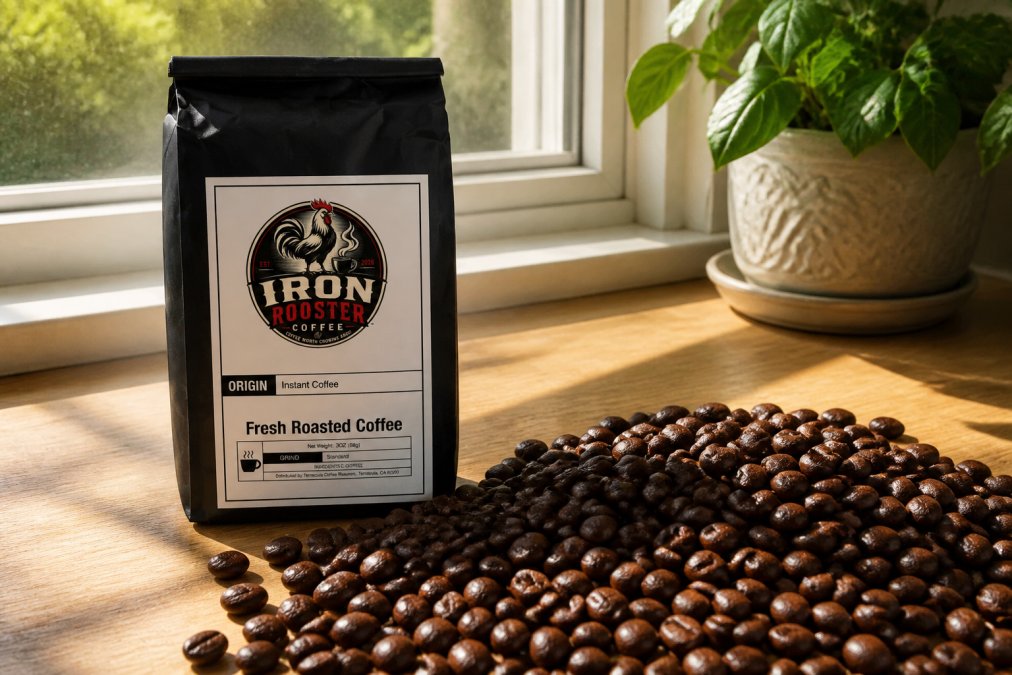
At Iron Rooster Coffee Co., our packaging is designed to combat all four enemies. Our bags include a one-way valve for degassing, opaque material to block light, and a resealable seal to minimize oxygen exposure once opened.
Why the Original Bag Often Works Best
The coffee bag your beans arrive in is specifically designed to protect freshness. Most specialty roasters use multilayer construction: an opaque outer layer blocks light, an inner foil barrier prevents oxygen and moisture penetration, and the one-way valve lets carbon dioxide escape without allowing oxygen in.
Many people assume they need to transfer beans to a fancy container immediately. This is often a mistake. Once you open that original bag, you've started the staling clock. The resealable closure on quality coffee bags is engineered to create an effective seal, often better than hastily sealed jars or containers.
The one-way valve is critical. During the first 24-48 hours after roasting, coffee releases significant carbon dioxide. A one-way valve allows this gas to escape without letting oxygen back in. If you transfer beans to a regular airtight container too early, pressure from degassing can force the seal open or create an environment where oxygen seeps in around the edges.
Keep beans in the original bag for the first month. Only transfer to a secondary container if storing beyond that window. The original bag often outperforms most home storage solutions because it was engineered by the roaster specifically for this purpose.
Best Coffee Storage Containers and Materials
If you transfer beans to a secondary container, material choice matters. Glass, ceramic, and stainless steel each have different strengths for protecting freshness.
Glass containers are popular because they're transparent, but transparency is their weakness. Glass provides no protection from light, which degrades flavor compounds. If you use glass, store it in a dark cabinet or opaque bag away from windows.
Ceramic canisters offer better light protection if opaque and provide moderate insulation against temperature swings. However, ceramic is somewhat breathable, which can be problematic in humid environments. High-quality ceramic with a good seal works reasonably well, but it's less reliable than metal options.
Stainless steel containers are most effective for serious coffee storage. Steel blocks light completely, provides excellent insulation against temperature fluctuations, and resists moisture penetration. Stainless steel vacuum canisters offer the best protection available for home storage.
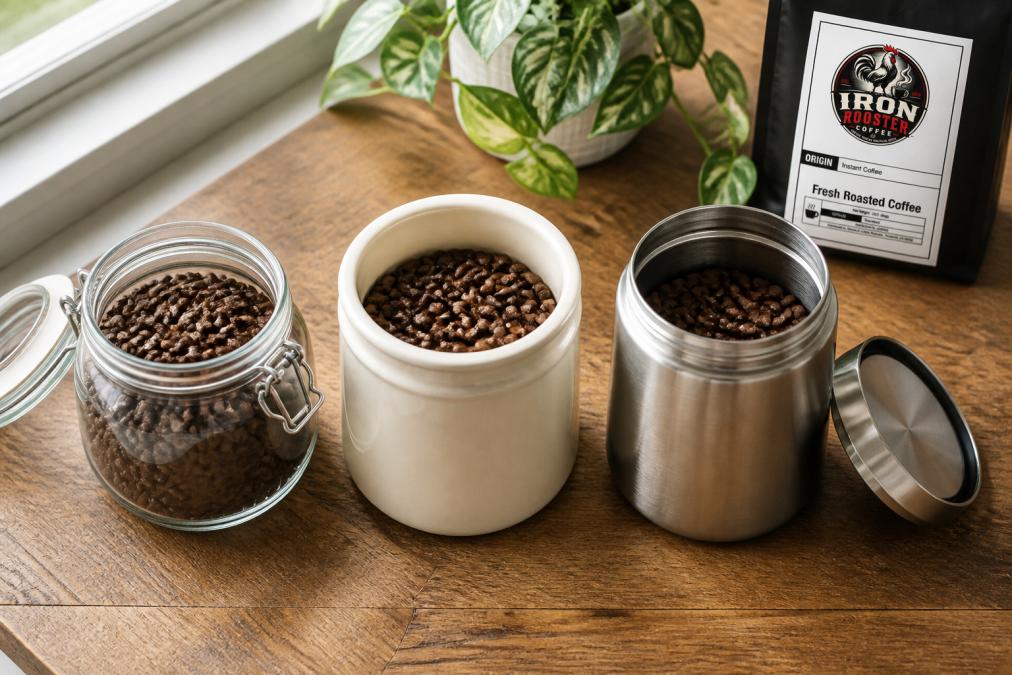
For most home use, an opaque stainless steel container with an airtight seal is the best balance of protection and practicality. The seal should be tight enough that you need slight pressure to open it.
Store containers in a cool, dark place. A pantry away from appliances is ideal. The kitchen counter, near the stove, or above the refrigerator are poor choices due to heat and light exposure.
How Long Does Coffee Stay Fresh
Shelf life depends on whether you're storing whole beans or ground coffee, plus your storage method. Whole bean coffee stays fresh significantly longer because the intact bean protects the interior from oxidation and moisture.
Properly stored whole bean coffee remains at peak freshness for 2-4 weeks after roasting (scaa.org). After 4 weeks, beans are still drinkable but noticeably less flavorful. They can remain acceptable for up to 12 weeks if stored in an airtight container in a cool environment, though quality continues declining.
Ground coffee loses freshness much faster. Grinding increases surface area exposed to oxygen by roughly 1,000 times (peer-reviewed research). Ground coffee is best used within 15 minutes of grinding, but if stored, use it within 3-5 days for good flavor. After a week, ground coffee tastes noticeably stale.
Buying whole beans and grinding at home just before brewing produces dramatically better coffee than pre-ground options. Fresh-ground beans from a 3-week-old bag will taste noticeably better than pre-ground coffee that's been sitting for two weeks.
The Freezer Debate: Storage Temperature Explained
Whether to freeze coffee is debated among enthusiasts. Freezing works, but only if done correctly.
Freezing slows oxidation dramatically. Coffee stored in a properly sealed container in the freezer can maintain acceptable flavor for several months, far longer than room-temperature storage.
However, freezer storage creates a specific problem: condensation. When frozen coffee is removed and exposed to warm air, moisture condenses on the beans. This condensation introduces water, which accelerates staling once beans warm up. Repeated thawing makes this worse.
The correct approach requires commitment. Store beans in an airtight, opaque container, a vacuum canister is ideal. Keep them frozen and remove only what you need for a few days at a time. Let the container come to room temperature before opening to prevent condensation.
Many coffee professionals recommend against freezing for casual home use. The risk of condensation damage often outweighs the benefit of extended shelf life. For most people, buying smaller quantities more frequently and storing beans at room temperature in an airtight container produces better results.
If you freeze coffee, use it within 2-3 months. Freezer burn can occur, creating off-flavors. Frozen coffee also becomes more fragile and can crack during grinding, increasing surface area and accelerating staling once thawed.
For routine coffee storage, keep beans in a cool, dark pantry in an airtight container. This is simpler, safer, and produces better results for most people.
Order Fresh Roasted Beans Online and Keep Them That Way
Buying fresh roasted beans online offers a significant advantage: you can receive coffee days after roasting, at peak freshness.
Iron Rooster Coffee Co. ships beans with fast, automated fulfillment, ensuring they arrive with maximum flavor potential. Our packaging includes a one-way valve and opaque material specifically designed to protect freshness during transit and storage. When your order arrives, the roast date will be recent.
Upon arrival, store the sealed bag in a cool, dark place. The pantry is ideal. Resist opening multiple bags at once. Once a bag is opened, oxygen exposure accelerates staling. Use one bag at a time, keeping others sealed and stored properly.
Match your order frequency to consumption. If you drink one bag per week, order weekly. If you drink one bag every two weeks, order every two weeks. This ensures you're always using coffee within its peak freshness window.
For those interested in exploring single-origin and flavored varieties, Iron Rooster Coffee Co. offers curated selections designed for different brewing preferences. Our instant coffee option, available at https://ironroostercoffeeco.com/products/instant-coffee for $19.99, provides 30 servings in a resealable pouch, convenient for travel or office use while maintaining freshness through sealed packaging.

Troubleshooting Stale Beans and Common Storage Mistakes
Even with good intentions, coffee can go stale. Recognizing the signs helps you identify what went wrong.
Stale coffee exhibits telltale signs: muted or flat aroma (fresh coffee has vibrant, complex smell), thin and bitter flavor lacking brightness and nuance, and thin or absent crema on espresso. Drip coffee tastes watery or one-dimensional.
Common storage mistakes and fixes:
Storing beans on the counter in a clear container exposes them to light continuously. Move beans to an opaque, airtight container in a dark cabinet or pantry.
Storing beans near heat sources (above the stove, near the oven, in direct sunlight) accelerates staling. Move storage to a cool location away from appliances and windows.
Opening the bag repeatedly without resealing properly introduces oxygen each time. If your bag doesn't seal well, transfer beans to a container with a proper airtight seal.
Grinding all beans at once and storing ground coffee is a significant mistake. Grind immediately before brewing. The flavor difference justifies the effort.
Storing beans in the refrigerator (not freezer) is worse than room temperature. Refrigerators have moisture and temperature fluctuations that accelerate staling. Use the freezer with proper technique or keep beans in a cool pantry.
If you're consistently experiencing stale coffee, the issue is almost always storage method rather than bean quality. Evaluate your container (is it truly airtight?), location (is it dark and cool?), and consumption rate (are you keeping beans too long?). Adjusting one of these factors usually solves the problem.
Keeping coffee fresh starts with understanding what degrades it, oxygen, light, heat, and moisture, and choosing storage that minimizes exposure to all four. The original bag often works best, but if you transfer beans, choose an an opaque, airtight container and store it in a cool, dark place. Whole beans stay fresh longer than ground coffee, and roast date matters more than packaging date.
When you order fresh roasted beans online from Iron Rooster Coffee Co., you're starting with a significant freshness advantage. Our fast, automated fulfillment delivers beans, packed in protective bags with one-way valves. Proper storage from that point forward ensures every cup delivers the smooth, flavorful experience our beans are crafted to provide. Learn more about coffee storage best practices from specialty coffee organizations
Challenge: Many coffee drinkers accept stale, flat-tasting coffee as normal because they've never experienced truly fresh beans stored properly.
Solution: Iron Rooster Coffee Co. delivers freshly roasted artisan blends designed to showcase peak flavor when stored correctly. Our beans arrive with recent roast dates, packed in protective packaging with one-way valves that preserve freshness for weeks. Pair our fresh beans with the storage techniques covered in this guide, cool, dark location in an airtight container, and you'll experience the smooth, vibrant coffee that makes your morning routine genuinely better.
Get started with Iron Rooster Coffee Co. today and discover the difference fresh, properly stored beans make in your daily brew.
Frequently Asked Questions
Q: Is it okay to store coffee beans in a Ziploc bag?
A: Ziploc bags are not ideal for long-term storage. While they provide some protection, they don't block light and allow gradual oxygen exposure over time. If you must use a Ziploc, remove as much air as possible and store it in a cool, dark place. For best results, transfer beans to an airtight container with an opaque exterior to minimize oxygen exposure and protect against light degradation.
Q: How long does coffee stay fresh after roasting?
A: Whole bean coffee typically stays fresh for 2-4 weeks after the roast date when stored properly in an airtight container away from heat and light. Ground coffee has a shorter shelf life of 1-2 weeks due to increased surface area and faster oxidation. Always check the roast date on your bag, it's the best indicator of freshness. When you order fresh roasted beans online from Iron Rooster Coffee Co., you receive beans at peak freshness.
Q: Should you store coffee beans in the freezer or pantry?
A: A cool, dark pantry is the best choice for most home storage. Freezers introduce condensation risk when beans are removed and thawed, which damages flavor. If you must freeze, use an airtight, vacuum-sealed container and avoid repeated temperature fluctuations. For bulk buying or long-term storage beyond one month, freezing whole beans in a vacuum-sealed container can work if done correctly, but a consistently cool pantry remains the superior option.
Q: What makes the one-way valve on coffee bags important?
A: The one-way valve allows carbon dioxide (CO2) released during the degassing process to escape without letting oxygen back in. This protects the beans from oxidation during storage and shipping. When beans are freshly roasted, they release volatile compounds and CO2 for several days. The valve maintains freshness by preventing oxygen from entering while allowing natural degassing to occur, which is why the original bag with an intact valve is often the best storage option.
This article was written using GrandRanker