

Table of Contents
- Why Your Coffee Delivery Frequency Matters More Than You Think
- How to Calculate Coffee Consumption Per Month for Your Household
- Matching Delivery Frequency to Your Brewing Method
- Weekly, Bi-Weekly, or Monthly: Pros and Cons
- Roast Date vs. Delivery Date: What Freshness Window Are You Aiming For?
- Best Practices for Storing Roasted Coffee Beans to Extend Freshness
- How to Pause or Skip Coffee Subscription Deliveries When Life Changes
- Conclusion
- Frequently Asked Questions
Last Updated: September 5, 2026
Why Your Coffee Delivery Frequency Matters More Than You Think
The right coffee subscription delivery frequency guide is the difference between stale beans and a bag that hits peak flavor as you open it. Most coffee drinkers pick a schedule by guesswork, leading to running out mid-week or throwing away half a bag that went flat.
At Iron Rooster Coffee Co., we roast in small batches and ship fast, but no amount of careful roasting survives a bag sitting open for three weeks. Coffee is perishable, yet most subscriptions run on rigid calendars.
How to Calculate Coffee Consumption Per Month for Your Household
Most frequency guides stop at "count your cups," but your brewing method changes how much coffee you use per cup. A 12-ounce bag yields roughly 20 to 24 cups only with a standard 2-tablespoon (10-gram) dose per 6-ounce cup (sca.coffee).
Here is the actual consumption math by brewing method, based on standard Specialty Coffee Association dosing guidelines:
- Drip coffee maker: 10 grams per 6-ounce cup. A 12-ounce bag (340 grams) yields about 34 cups. A two-cup-a-day household burns a bag in roughly 17 days.
- French press: 15 grams per 8-ounce cup. That same bag yields about 22 cups. Two cups a day means a bag lasts 11 days.
- Pour-over (V60, Chemex): 15 grams per 8-ounce cup. Same yield as French press: about 22 cups per bag.
- Espresso: 18 grams per double shot. A 12-ounce bag yields roughly 18 double shots. Two double-shot lattes a day means a bag lasts 9 days.
- Cold brew concentrate: 100 grams per liter of water. A 12-ounce bag makes about 3.4 liters of concentrate, which stretches to 10-14 servings depending on your dilution ratio.
The 7-Day Consumption Audit
Before you set any delivery schedule, run this one-week audit:
- Weigh your bag on day one. Note the exact gram weight.
- Brew as you normally do for seven days. Do not change your routine.
- Weigh the bag again on day seven. Subtract to find your weekly gram usage.
- Divide 340 (grams in a 12-oz bag) by your weekly usage. That is your bag-per-week rate.
Example: You start with 340 grams. After seven days, you have 190 grams left. You used 150 grams per week. You will finish a bag every 2.26 weeks, which means you need roughly 1.3 bags per month.
The Household Multiplier
Add a second drinker and the math compounds. Two people each drinking two cups of drip coffee daily consume about 40 grams per day, or 280 grams per week, a bag every 8.5 days.
The Buffer Rule
Add one extra bag per month as a buffer for guests or a second pot. But do not over-buffer: more than one extra bag per month creates the backlog that leads to stale coffee.
The Interactive Shortcut
For a faster answer than the week-long audit:
Daily grams = (cups per day) × (grams per cup for your method)
Bags per month = (Daily grams × 30) ÷ 340
For a pour-over drinker having 2 cups daily: 2 × 15 = 30 grams per day. 30 × 30 = 900 grams per month. 900 ÷ 340 = 2.65 bags per month. Round up to 3 bags on a monthly delivery, or order 1 bag on a weekly cadence and skip every fourth week.
This method-specific math is what separates a frequency guide that works from one that leaves you guessing. The National Coffee Association's brewing guidelines confirm that grind size and brew ratio directly affect coffee usage per serving, which is why your gear matters more than any generic "cups per bag" estimate.
Matching Delivery Frequency to Your Brewing Method
Your equipment determines how much coffee you burn through, which should dictate your shipping schedule. A single-serve capsule machine uses one pod per cup, making consumption easy to predict.
Here is a practical way to frame it:
- Single-serve capsule drinker, one cup daily: one 12-pack per week, delivered monthly in a 60-pack
- Drip coffee household, two to three cups daily: one 12-ounce bag every 7 to 10 days
- Espresso or French press enthusiast: one 12-ounce bag every 5 to 7 days
- Occasional weekend brewer: one bag every 3 to 4 weeks
For capsule users, Iron Rooster Coffee Co. offers a 12 Pack Single Serve Coffee Capsules for $16.99 and a 60 Pack Single Serve Coffee Capsules for $61.99. The 60-pack suits a daily single-cup routine on a monthly delivery cycle, while the 12-pack works for sampling or lighter weeks.


Weekly, Bi-Weekly, or Monthly: Pros and Cons
| Frequency | Best For | Freshness | Risk |
|---|---|---|---|
| Weekly | Heavy households, 3+ cups daily | Peak freshness always | Frequent shipping, more packaging |
| Bi-Weekly | Moderate drinkers, 1-2 cups daily | Good balance of fresh and convenient | Timing can drift off your routine |
| Monthly | Light drinkers, capsule users | Requires proper storage | Risk of staleness by week three |
Weekly deliveries keep beans within their prime freshness window but mean more shipments to track. Bi-weekly is the sweet spot for most one-to-two-cup households. Monthly works only if you store beans properly and consume them steadily.
A common mistake is ordering monthly while drinking enough to finish a bag in ten days. You run out, buy grocery store coffee as a stopgap, and your subscription loses its purpose.
Roast Date vs. Delivery Date: What Freshness Window Are You Aiming For?
Roasted coffee needs time to degas, but that window closes faster than most realize. The ideal drinking window for whole bean coffee starts about 3 to 5 days after the roast date and extends through roughly day 21 to 28.
Your delivery date matters less than your roast date. A bag shipped the day after roasting needs resting time before brewing, while a bag roasted three weeks before arrival is already past its prime.
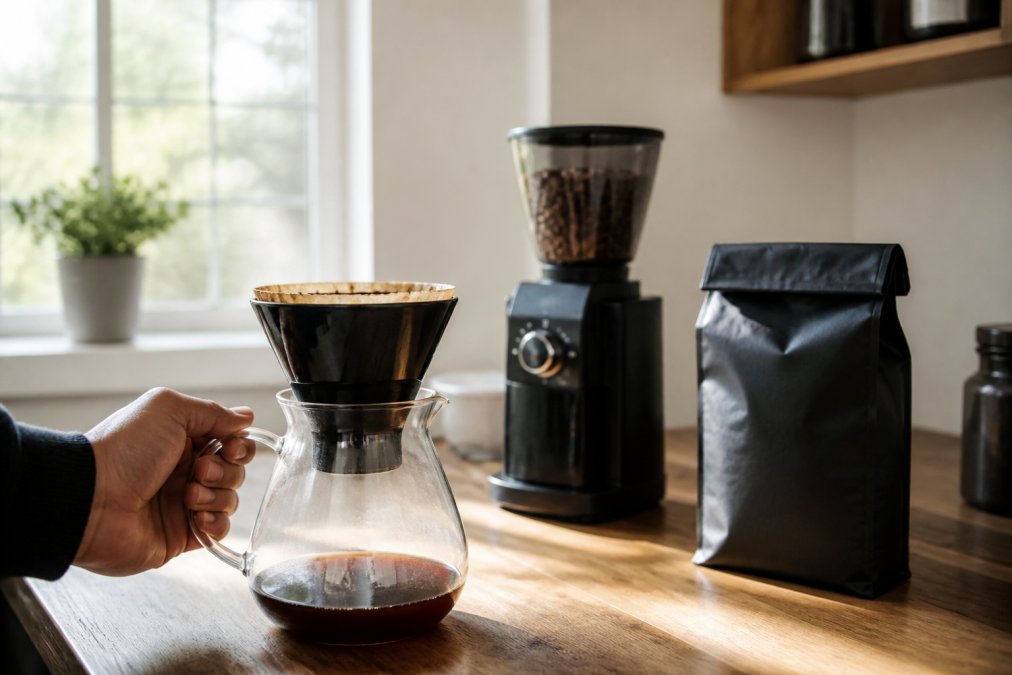
If you drink one cup daily, aim for a delivery cadence that lands a fresh bag on your doorstep every two to three weeks. Coffee enthusiasts who track tasting notes and bean origin will notice the difference between a bag opened on day 5 versus day 20. The Specialty Coffee Association's freshness research emphasizes that proper storage and timely consumption preserve the volatile compounds responsible for flavor and aroma.
Best Practices for Storing Roasted Coffee Beans to Extend Freshness
Storage is not just about keeping beans fresh; it is about making your delivery frequency work. If your cadence and consumption rate are misaligned, you will end up with surplus beans.
The Freshness Timeline by Storage Method
Whole bean coffee's flavor compounds degrade at different rates depending on storage. Here is what actually happens:
- In the original bag with one-way valve, at room temperature: Beans stay at peak flavor for 2-3 weeks after the roast date. The valve releases CO2 while blocking oxygen, which is why roasters ship this way.
- In an airtight, opaque canister at room temperature: Extends peak freshness by 3-5 days compared to the original bag, but only if the canister is truly sealed. A ceramic canister with a rubber gasket outperforms a metal can with a loose lid.
- In a vacuum-sealed container: Slows oxidation significantly. Beans stored this way can stay drinkable for 4-5 weeks past the roast date, though some volatile aromatics are lost.
- In the freezer (whole beans only): Properly frozen beans in an airtight, moisture-proof container can last 2-3 months. The key is portioning: freeze in single-week batches so you never thaw and refreeze the same beans.
The Backlog Problem: What to Do When You Have Too Much Coffee
The most common subscription failure is the backlog: you skip a delivery, then skip another, and suddenly you have three bags past their prime. Here is a workflow to manage surplus:
- When a new bag arrives, check the roast date. If it is within 5 days of roasting, it needs rest time anyway. Store it sealed and start on your older bag first.
- If you have more than one unopened bag, freeze the surplus. Unopened bags in their original packaging freeze well for up to 8 weeks. Thaw overnight in the cabinet, not on the counter, to avoid condensation.
- If you have opened bags that are going stale, repurpose them. Stale whole beans still work for cold brew, which is forgiving of age because of the long steep time. They also work for baking, as a meat rub, or in compost.
- Adjust your next delivery before the billing cycle. If you realize you are accumulating surplus, skip one delivery rather than letting it arrive. Most roasters let you skip a shipment without canceling your subscription.
The One-Week Portioning Method
For bi-weekly or monthly deliveries, portion your beans into weekly airtight containers immediately upon arrival. This prevents daily oxygen exposure and protects the beans you are not currently using:
- Week 1 container: Leave in the original bag or transfer to a canister. This is what you will brew first.
- Week 2 container: Transfer to an airtight, opaque container and store in a cool, dark cabinet.
- Week 3+ surplus: Vacuum-seal or freeze in a single-week portion.
Why Pre-Ground Changes Everything
Pre-ground coffee has dramatically more surface area exposed to oxygen, collapsing its freshness window to about 5-7 days after grinding, regardless of storage. On a monthly delivery cycle with pre-ground, you are drinking stale coffee for three out of four weeks.
The Storage-Frequency Alignment Rule
Your storage method should match your delivery interval.
- Weekly delivery: Store in the original bag or a simple canister. No special handling needed.
- Bi-weekly delivery: Portion into two weekly containers. The second week's beans stay protected.
- Monthly delivery: You must freeze or vacuum-seal at least half the shipment, or switch to a roaster that ships closer to your consumption rate.
Iron Rooster Coffee Co. roasts in small batches and ships within days of roasting, so your beans arrive with a full freshness window ahead of them. But even the freshest beans will not survive poor storage.
How to Pause or Skip Coffee Subscription Deliveries When Life Changes
Every subscription needs an escape hatch. Vacations, business travel, or a sudden surplus should not force you to accept shipments you do not need. Look for a customer portal where you can pause subscription, skip delivery, or modify your next order.
Most reputable roasters let you shift a shipping interval by a week or two rather than cancel outright. Check your account before the next billing cycle triggers, since most orders process a few days ahead of the scheduled ship date.
If you are new to a service, start with a sample pack to gauge your consumption before committing to a larger recurring order. Iron Rooster Coffee Co. offers a Best Sellers Sample Pack: 6Bean, Cowboy, Breakfast, Peru, Mexico, Bali for $22.99 and a Flavored Coffees Sample Pack for $22.99, both with 2-ounce packs that let you test several blends before choosing your delivery frequency. Roasters that roast to order and ship quickly, like Iron Rooster Coffee Co., make it easier to align your delivery cadence with genuine freshness rather than warehouse inventory.

Conclusion
Choosing a coffee delivery frequency is not about following a one-size-fits-all chart. It requires an honest look at how much coffee your household drinks, which brewing method you use, and how quickly you go through a bag.
The right subscription keeps fresh, flavorful coffee flowing without waste or staleness. Iron Rooster Coffee Co. roasts in small batches and ships fast, so your beans arrive close to the roast date rather than after months in a warehouse. Explore our coffee subscription options and set a delivery cadence that fits your routine. Get started with Iron Rooster Coffee Co. and taste the difference that properly timed, freshly roasted coffee makes every morning.
Frequently Asked Questions
Should I choose weekly, bi-weekly, or monthly coffee deliveries?
Choose based on your weekly consumption. If you drink one 12-ounce bag per week, a bi-weekly delivery of two bags or a weekly single-bag delivery works best. Monthly delivery suits households that go through three or more bags in that time. The goal is to empty your current supply within two to three weeks of the roast date, which is the peak freshness window for whole bean coffee.
Can I change my coffee subscription delivery frequency after I sign up?
Yes. Most roasters, including Iron Rooster Coffee Co., let you adjust your delivery cadence through your account portal. You can typically switch between weekly, bi-weekly, or monthly schedules without penalty. If you find your coffee is running out early or you're accumulating extra bags, simply log in and update your shipping interval to match your actual household consumption.
Does coffee go stale if I receive too much at once?
Yes, coffee starts losing its aromatic compounds and flavor after about two to three weeks post-roast. If a monthly delivery of four bags means your last bag sits for three weeks before you open it, you'll notice a flatter, less vibrant cup. Proper storage in an airtight container away from light and heat slows oxidation, but the best defense is matching your delivery frequency to your actual consumption rate.
How do I calculate the right coffee delivery frequency for my household?
Track your usage for one week. A standard cup uses about 10 grams of beans, so a 340-gram bag yields roughly 30 cups. If two people each drink two cups daily, that's about 120 cups per month, or four bags. Ordering four bags monthly or two bags bi-weekly keeps a steady supply without letting beans sit past their freshness window. Adjust based on your brewing method and daily intake.
This article was written using GrandRanker