

Table of Contents
- Cold Brew vs Iced Coffee: Core Differences
- Brewing Methods and Extraction Process
- Cold Brew Brewing Time and Flavor Development
- Acidity Levels: Why Cold Brew Tastes Smoother
- Low Acidity Coffee Benefits for Your Morning Routine
- How to Make Cold Brew at Home
- How to Make Iced Coffee at Home
- Which One Should You Choose?
- Frequently Asked Questions
Last Updated: September 23, 2026
Cold Brew vs Iced Coffee: Core Differences
When you're deciding between cold brew vs iced coffee, you're likely choosing between two very different beverages. Cold brew and iced coffee look similar in a glass, but they're created through completely different brewing methods that produce distinct flavor profiles, acidity levels, and caffeine concentrations. Understanding the difference matters if you care about smoothness, taste complexity, or how your morning coffee affects your digestive system.

The core distinction comes down to extraction. Cold brew steeps coarse coffee grounds in room temperature water for an extended period, while iced coffee is hot-brewed coffee that's then chilled over ice. This single difference in the brewing process creates a cascade of flavor, texture, and chemical differences that go far beyond temperature.
Brewing Methods and Extraction Process
Cold brew relies on time rather than heat to extract flavor from coffee grounds. Coarse grounds steep in room temperature water for 12 to 24 hours, allowing water to slowly dissolve the soluble compounds from the beans. This extended contact time at lower temperatures extracts fewer bitter compounds and creates a smoother, naturally sweet concentrate.
Iced coffee takes the opposite approach. Hot water extracts flavor quickly through thermal energy, pulling out a full range of aromatic compounds, oils, and dissolved solids in minutes. Once the brewing cycle completes, the hot coffee is poured over ice, which rapidly cools it. The thermal shock of hitting ice stops the extraction process immediately, freezing the flavor profile in place.
The difference in extraction process directly affects what ends up in your cup. Cold water immersion extracts differently than hot water, pulling certain flavor notes while leaving others behind (Checking your browser). The cold-water extraction process tends to emphasize natural sweetness and chocolate or caramel notes while minimizing sharp, acidic characteristics. Hot-brewed coffee extracted quickly delivers a brighter, more complex flavor profile with pronounced aromatic compounds.
Cold Brew Brewing Time and Flavor Development
The extended steeping time in cold brew is what sets it apart. Most cold brew recipes call for 12 to 24 hours of contact between grounds and water. Some coffee enthusiasts steep for even longer, pushing toward 36 hours, to develop deeper flavor notes.
This long brewing window allows the cold water to gradually dissolve soluble compounds from the beans. The process is slow and steady. You're not fighting against heat, which means the extraction is gentle and controlled. The result is a concentrate that's typically smooth, naturally sweet, and less sharp on the palate.
The flavor development in cold brew tends toward certain characteristics. Chocolate notes emerge clearly. Toffee undertones become prominent. Floral or fruity notes can develop depending on the bean origin and roast level. The smoothness comes from the absence of certain bitter compounds that hot water would pull out during rapid extraction.
Acidity Levels: Why Cold Brew Tastes Smoother
The smoothness you notice in cold brew isn't just perception. It's chemistry. Cold water extraction pulls fewer acidic compounds from the coffee grounds compared to hot water extraction. This lower acidity is one of the most significant differences between the two brewing methods.
Hot-brewed coffee has a lower pH, meaning it's more acidic (Checking your browser). The high temperature of hot water efficiently extracts organic acids from the beans, including chlorogenic acid and quinic acid, compounds that create brightness and sharpness. These acids contribute to the flavor complexity of hot coffee, but they also create a sharper mouthfeel and can irritate sensitive digestive systems.
Cold brew's extended steeping in cool water extracts fewer of these acidic compounds. The result is a naturally smoother beverage with less bite. The mouthfeel is rounder, creamier, and gentler on the palate. This difference in acidity levels explains why many people who find hot coffee too sharp or acidic prefer cold brew as their daily choice.
The texture difference is measurable in how the coffee feels on your tongue and throat. Cold brew typically has a heavier body and a silky mouthfeel because the lower acid content allows the natural oils and dissolved solids to dominate the sensory experience. Iced coffee, by contrast, feels brighter and more crisp, the acidity creates a sharper sensation that some coffee enthusiasts prefer for its complexity.
How dilution affects perceived acidity: This is where practical brewing decisions matter. Cold brew concentrate starts low in acidity, and diluting it with water, milk, or cream further softens any sharp notes. A 1:1 concentrate-to-water ratio maintains smoothness while delivering full strength. A 1:2 ratio creates an even gentler cup.
Iced coffee's acidity becomes more pronounced as ice melts. The initial pour is bright and complex, but as the ice melts over 15 to 30 minutes, the drink becomes more diluted and the acidity can feel sharper, the opposite effect of cold brew. To maintain consistent acidity perception in iced coffee, drink it quickly or use larger ice cubes that melt slowly. Alternatively, brew at double strength so dilution from melting ice doesn't weaken the flavor as dramatically.
For people with acid reflux, GERD, or sensitive digestive systems, cold brew's lower acidity and the ability to control dilution ratio make it the practical choice. The pH difference between the two methods is measurable: while exact pH varies by bean origin, roast level, and water quality, cold brew typically measures 1 to 2 pH points lower (less acidic) than hot-brewed coffee. This translates to a beverage that sits easier in your stomach throughout the morning and doesn't trigger the digestive discomfort that acidic hot coffee can cause.
Low Acidity Coffee Benefits for Your Morning Routine
Choosing a low acidity brewing method like cold brew offers practical benefits beyond taste. Many people who switch to cold brew report that it sits better in their stomach throughout the morning. The smoother, less acidic profile means less irritation for those with sensitive digestive systems.
The flavor profile of low acidity coffee also means you taste the natural sweetness of the beans more clearly. Without sharp acidic notes masking the subtle flavors, you notice chocolate, caramel, and nutty undertones that might be hidden in a more acidic cup. This makes low acidity coffee ideal for appreciating the complexity of single-origin beans or carefully crafted blends.
For your morning routine, cold brew's smoothness means you can drink it without the energy crash that sometimes follows acidic hot coffee.
How to Make Cold Brew at Home
Making cold brew at home is straightforward and requires minimal equipment. You need coarse coffee grounds, cold water, and a container. A simple glass jar works perfectly.
Start with a coffee-to-water ratio of 1:4 or 1:5. One pound of coarse grounds to four to five pounds of water creates a concentrate that you'll dilute before drinking. Add the grounds to your jar, pour in the cold water, and stir to ensure all grounds are saturated.
Cover the jar and place it in the refrigerator or on the counter at room temperature.
How to Make Iced Coffee at Home
Iced coffee is faster to prepare than cold brew and requires standard brewing equipment. You'll need hot water, medium-fine ground coffee, a brewer (drip machine, French press, or pour-over), and ice.
Which One Should You Choose?
The choice between cold brew and iced coffee depends on your taste preferences, digestive sensitivity, and morning routine. If you prioritize smoothness, natural sweetness, and low acidity, cold brew is the better choice. The extended steeping time creates a fundamentally different flavor profile than hot coffee chilled quickly over ice.
| Brewing Method | Extraction Time | Acidity Level | Flavor Profile | Best For |
|---|---|---|---|---|
| Cold Brew | 12-24 hours | Low | Smooth, sweet, chocolate, caramel | Sensitive stomachs, smooth taste preference |
| Iced Coffee | 5-10 minutes | Higher | Bright, complex, aromatic | Full flavor complexity, quick preparation |
Frequently Asked Questions
Does cold brew or iced coffee taste better?
Taste preference is personal, but cold brew and iced coffee deliver distinctly different flavor profiles. Cold brew offers a smoother, naturally sweet taste with chocolate and caramel notes because the extended steeping time extracts soluble compounds while minimizing bitter compounds. Iced coffee tastes brighter and more acidic since hot water extracts compounds quickly, then ice dilutes the concentrate. If you prefer mellow, smooth coffee without bitterness, cold brew typically wins. If you enjoy crisp, aromatic coffee that's closer to traditional brewed coffee, iced coffee delivers that experience.
Why is cold brew less acidic than iced coffee?
Cold water extraction is gentler than hot water extraction. Hot water used in iced coffee pulls out more acidic compounds and oils quickly, raising the pH balance toward acidity. Cold brew's long steeping time (12-24 hours) extracts flavor compounds slowly and selectively, pulling sweet and smooth notes while leaving behind many of the acidic compounds. This results in a lower acidity level that's easier on the stomach and produces the characteristic smoothness cold brew drinkers seek.
How to make cold brew at home?
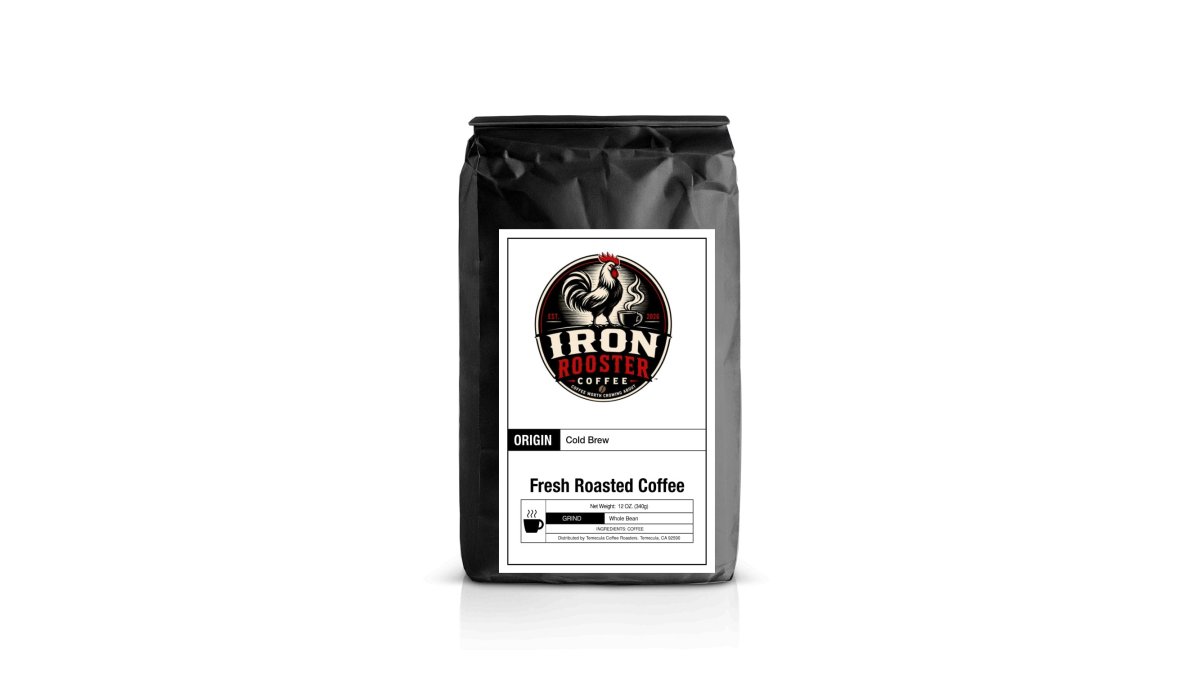
Use a 1:4 coffee-to-water ratio: combine coarse-ground coffee with cold water in a jar or pitcher. Stir to ensure all grounds are saturated, then cover and let steep at room temperature for 12-24 hours. Strain through a fine-mesh filter or cheesecloth into a clean container. The result is a concentrate you can dilute with water or milk to your preferred strength. For best results, use freshly roasted beans like Iron Rooster's Cold Brew Coffee blend, which features chocolate, toffee, and floral tones.
Does cold brew have more caffeine than iced coffee?
If you're sensitive to acidity but want caffeine, cold brew's lower acidity combined with its natural sweetness makes it the better choice.