

Table of Contents
- Why Fresh Roasted Coffee Alternatives Belong in Your Rotation
- Caffeine-Free Coffee Substitutes That Still Taste Like Coffee
- How to Brew Coffee Alternatives at Home
- Artisan Coffee Variety Packs: Build a Rotation That Stays Fresh
- How to Store Coffee Alternatives So Flavor Holds Up
- Managing Caffeine Withdrawal When You Cut Back
- Conclusion: Finding Your Fresh Roasted Coffee Alternative
- Frequently Asked Questions
Last Updated: September 14, 2026
Why Fresh Roasted Coffee Alternatives Belong in Your Rotation
Fresh roasted coffee alternatives are roasted, ground, and brewed much like coffee beans, but they come from roots, grains, or herbs instead of the coffee plant. At Iron Rooster Coffee Co., we think of them less as a replacement and more as a rotation: a way to keep your morning interesting while dialing caffeine up or down. The category has quietly matured. Roasters now treat chicory and dandelion root with the same care they give single-origin beans, which changes what ends up in your cup.
The payoff is variety without compromise. A cereal coffee gives you body and bitterness. A mushroom blend gives you a slower lift. Neither asks you to give up the ritual you actually enjoy.
Caffeine-Free Coffee Substitutes That Still Taste Like Coffee
The best caffeine-free coffee substitutes mimic coffee's roasted bitterness and full mouthfeel rather than its caffeine. Three families do this well: roasted roots, roasted grains, and herbal or mushroom blends. Each brings a different roast profile and a different kind of energy lift, and each brews differently.
| Substitute | Flavor Profile | Caffeine | Best Brewing Method |
|---|---|---|---|
| Roasted dandelion root | Earthy, nutty, gentle bitterness | None | French press, drip |
| Chicory root | Deep, caramelized, coffee-like | None | Espresso-style, drip |
| Barley-based cereal coffee | Toasty, malty, mild | None | Drip, stovetop |
| Rye and wheat cereal blends | Bready, slightly sweet | None | Drip, cold brew |
| Matcha and green tea | Grassy, umami, astringent | Moderate | Whisked, not steeped |
| Mushroom blends | Smooth, low bitterness | Varies | Drip, instant |
Roasted Dandelion Root, Chicory, and Barley: The Cereal Coffee Trio
Roasted dandelion root is the closest thing to a drop-in coffee substitute for people who drink their coffee black. It has a nutty, earthy bitterness that reads as "roasted" rather than "herbal," and it takes milk well. Chicory root goes further: its inulin content caramelizes during roasting, producing the deep, slightly sweet bitterness that gives New Orleans-style coffee its backbone (Chicory: Understanding the Effects and Effectors of This Functional Food). Barley-based cereal coffee is the mildest of the three, with a malty, toasty character that suits anyone who finds chicory too intense. Rye and wheat blends sit between barley and chicory, bready and faintly sweet, with a body that holds up to milk without turning chalky.
A common mistake is treating all three the same at the grinder. Dandelion and chicory are denser than coffee beans, so a grind that works for beans can under-extract them. Go one setting finer than you would for coffee, and expect a slightly longer steeping time. Barley and rye, by contrast, are more porous and extract fast, grind them closer to a standard drip setting or they turn porridge-like in a French press.
Roast level matters as much as the root or grain itself. A light roast keeps the grassy, herbal top notes of dandelion intact; a dark roast pushes chicory toward bittersweet chocolate and molasses. If you are coming off a dark-roasted coffee habit, start with a dark-roasted chicory or a dark barley blend, the flavor bridge is shorter, and the swap feels less like a downgrade.
Herbal and Mushroom Blends for an Energy Lift Without the Jitters
Mushroom-based coffee blends sit in a different category entirely, because many of them still contain coffee. Lion's Mane, Cordyceps, and Reishi are the functional mushrooms most often paired with roasted beans, and the goal is a smoother curve rather than a hard spike (pubmed.ncbi.nlm.nih.gov). The result is a cup that still tastes like coffee but tends to feel less jittery.
Read the label carefully. A "mushroom coffee" that lists roasted coffee first is a coffee with mushrooms added, it still delivers a full caffeine dose. A blend that lists the mushroom extract first and coffee second, or omits coffee entirely, is the one to choose if the goal is genuinely cutting caffeine. The distinction is the single most common source of confusion in this category, and most listicles gloss over it.

Beyond the Mug: Using These Substitutes in the Kitchen
Most guides stop at the hot cup, but roasted roots and grains earn their keep in the kitchen too. Chicory and dandelion grounds can be steeped into a concentrate and used anywhere a recipe calls for strong brewed coffee, think brownies, banana bread, or a dry rub for pork. Barley and rye cereal blends make an excellent base for a warm breakfast drink: brew strong, then whisk in cocoa, cinnamon, and a splash of milk for a caffeine-free mocha. Matcha and green tea powders blend cleanly into smoothies and overnight oats, where their grassy notes pair well with banana and almond butter. Mushroom blends dissolve easily into a protein shake, which is often the easiest way to work them into a routine you already keep.
A simple starting ratio: brew your substitute at double strength (roughly 1:8 by weight), cool it, and substitute it one-for-one for brewed coffee in any baking recipe. The roast notes survive the oven better than tea would, and the result tastes intentional rather than like a compromise.
How to Brew Coffee Alternatives at Home
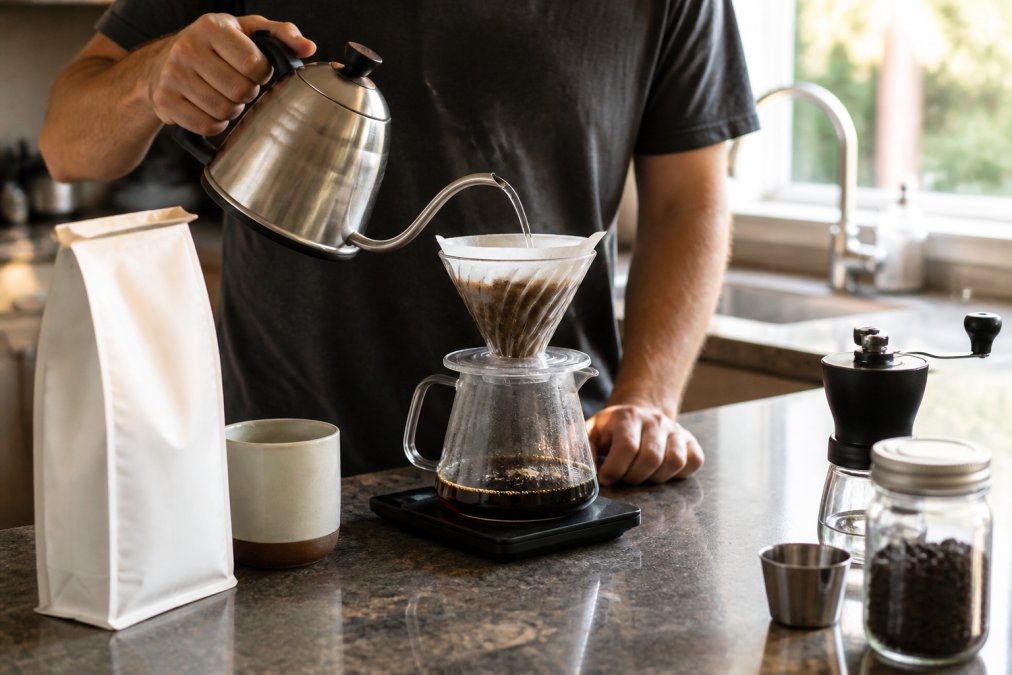
Brewing coffee alternatives at home follows the same logic as brewing coffee, with two adjustments: grind finer, and expect less resistance in the bed. Dandelion and chicory release their flavor quickly, so over-extraction turns them harsh faster than it would a coffee bean. Start with a 1:15 ratio by weight and adjust from there.
Matching Brewing Method to Grind and Roast Profile
Brewing method compatibility is where most guides stop short, and it is the single biggest lever on how a substitute tastes. A dark roast profile wants a method that controls temperature; a light, grassy herbal infusion wants one that preserves aromatics.

- French press: Best for coarse-ground dandelion and chicory. Full immersion builds body and mouthfeel.
- Pour-over: Best for medium grinds. Keeps bitterness in check and highlights nutty, earthy notes.
- Espresso-style: Works with finely ground chicory, which produces a crema-like foam.
- Cold brew: Ideal for barley-based blends. Low acidity, and the cereal sweetness comes forward.
- Instant: Convenient for mushroom blends when you want a single cup without equipment.
Artisan Coffee Variety Packs: Build a Rotation That Stays Fresh
Artisan coffee variety packs solve the real problem with coffee alternatives: a single bag gets boring before you finish it. A rotation built around small quantities keeps every cup fresh and lets you match the drink to the moment. That logic applies to coffee too, which is why we built our own lineup around roast variety rather than one flagship blend.
A workable rotation looks like this:
- Weekday mornings: a smooth, medium roast for a reliable, non-bitter start
- Weekend slow mornings: a flavored or barrel-aged option for something different
- Afternoon: a caffeine-free substitute so the lift does not follow you into the evening
- Evening or dessert: a decaf or mushroom blend brewed strong and paired with something sweet
How to Sequence a Rotation So Nothing Goes Stale
The mistake most people make with variety packs is opening everything at once. Roasted roots and grains lose their aromatics faster than coffee beans because they carry less oil to protect them, so a bag that sits open for three weeks tastes flat no matter how good the roast was. A better pattern is to keep one bag open at a time and let the rotation cycle through the rest unopened. If you want two open at once, make one a dark roast (which holds up longer) and one a light or flavored option you will finish within a week or two.
Label each bag with the roast date when it arrives. Freshness is the whole point of buying from a roaster that ships to order, and a date on the bag is the only way to know whether you are drinking something three days off the roaster or three months off a warehouse shelf.
Pairing Brew Method to Each Slot in the Rotation
A rotation is more interesting when the brew method changes with the bean. A medium roast shines in a pour-over, where the nutty and caramel notes come forward without the bitterness that a long immersion can pull out. A dark roast or a chicory blend rewards a French press, where full immersion builds the body that makes the cup feel like coffee. A flavored blend is often best as a drip or a cold brew, since the flavoring compounds extract cleanly at lower temperatures and cold brew keeps the sweetness from turning cloying. And an afternoon caffeine-free substitute is the natural candidate for a stovetop or instant preparation, when convenience matters more than ceremony.
If you want the variety without the guesswork, our Coffee with Mushrooms Medium Roast and Coffee with Mushrooms Dark Roast both come in at $19.99 and give you two roast profiles to rotate. For a flavored change of pace, the Pecan Pie and Turtle blends use all-natural flavoring and are roasted to order.

How to Store Coffee Alternatives So Flavor Holds Up
Roasted roots and grains go stale faster than most people expect, because they have less oil to protect them. The fix is the same one specialty roasters use for beans: keep them away from oxygen, light, heat, and moisture. An opaque, airtight container in a cool cupboard outperforms any decorative jar on the counter.
- Transfer to an airtight, opaque container within a day of opening
- Store whole and grind just before brewing
- Keep away from the stove, the window, and the top of the fridge
- Buy in quantities you will finish within a few weeks
- Label the roast date so you know what is fresh
Freezing works for larger quantities, but only in a sealed bag with the air pressed out. Every time you open it, condensation forms, and that moisture is what kills the flavor.
Managing Caffeine Withdrawal When You Cut Back
Caffeine withdrawal is the part of switching that nobody warns you about, and it is usually why people abandon a good substitute after three days. Headaches, fatigue, and low mood typically show up within a day of a sharp reduction and ease over the following week (Caffeine Withdrawal). The mistake is going cold turkey on a Monday.
Matching the ritual matters as much as matching the flavor. If you grind beans, grind your substitute. If you use a pour-over, keep using it. The habit is what your brain is actually reaching for, and keeping the steps intact makes the swap feel like continuity rather than loss.
Conclusion: Finding Your Fresh Roasted Coffee Alternative
The challenge with coffee alternatives is not finding one that works. It is finding several that work together, so your rotation stays fresh and your mornings stay interesting. Iron Rooster Coffee Co. roasts to order and ships straight to your door, so what arrives is genuinely fresh rather than warehouse inventory. Choose a roast, a flavor, or a mushroom blend, and build the rotation around what you actually drink.
Most people default to a single bag and then wonder why they drift back to the same old cup. Iron Rooster Coffee Co. makes the rotation easy: freshly roasted blends, carefully selected beans, and fast, automated fulfillment that puts a new roast at your door before the last one runs out. Start with the Coffee with Mushrooms Medium Roast or browse the full lineup, and get a smoother, more varied morning without the guesswork.
Frequently Asked Questions
What are the best coffee alternatives that taste like coffee?
Roasted chicory root and dandelion root come closest, with a dark, earthy, slightly bitter profile that mimics a medium-dark roast. Barley and rye-based cereal coffees add a nutty, toasted note. For a cup that keeps the coffee experience intact, mushroom-infused coffee blends use real coffee as the base, so the flavor stays familiar while the mushroom blend adds a smoother finish. Each option has its own mouthfeel, so try a few side by side before committing to a full bag.
Can you find fresh roasted coffee alternatives that are caffeine-free?
Yes. Roasted dandelion root, chicory root, and barley-based cereal coffees are naturally caffeine-free and are roasted in small batches, so freshness matters just as much as it does with beans. Check the roast date on the bag rather than a best-by date. If you want a decaffeinated option that still tastes like coffee, look for blends that start with specialty-grade coffee, then store the bag away from light and heat.
How do coffee alternatives compare to traditional fresh roasted beans?
Fresh roasted beans deliver the fullest flavor complexity and the widest range of roast profiles, but they also carry caffeine that can trigger jitters for people with caffeine sensitivity. Coffee alternatives trade some of that intensity for a gentler energy lift. Many drinkers keep both on hand: beans for the first cup, a caffeine-free substitute for the afternoon, so the ritual stays intact without a second caffeine hit.
Are there variety packs available for coffee alternatives?
Artisan coffee variety packs are the easiest way to sample several roast profiles without buying full bags of each. Look for packs that ship in small quantities, list a roast date, and include both flavored and single-origin options. Iron Rooster Coffee Co. offers flavored varieties like Pecan Pie and Turtle alongside blends such as Whiskey Barrel Aged, so you can build a rotation that covers sweet, nutty, and earthy notes in one order.
What is the best way to store coffee alternatives?
Keep them in an opaque, airtight container stored in a cool, dark cabinet, away from the stove, and buy only as much as you will drink in two to three weeks. Whole grounds hold flavor longer than pre-ground, so grind just before brewing when you can. For how to store coffee alternatives that arrive as roasted roots or cereal blends, the same rules apply: moisture, heat, light, and oxygen are the four things that flatten flavor fastest.