

Table of Contents
- What a Coffee Roast Profile Actually Means for Your Cup
- Light vs Dark Roast Flavor Profile: Which One Fits Your Taste
- Reading a Coffee Roast Level Chart Before You Buy
- Matching Roast Profile to Your Brewing Method
- Best Coffee Roast for Cold Brew and Iced Coffee
- Home Roasting vs Commercial Roasting Profiles
- Troubleshooting Roast Defects and Tasting Like a Pro
- Frequently Asked Questions
Last Updated: September 12, 2026
What a Coffee Roast Profile Actually Means for Your Cup
A coffee roast profile is the recorded timeline of bean temperature, environmental temperature, and airflow applied to green coffee during roasting, and it determines how the final cup tastes. Two roasters can start with identical green beans and produce completely different results. This guide from Iron Rooster Coffee Co. explains how to choose coffee roast profile decisions that match your taste and your brewer.
The roast curve is the map. It tracks bean temperature from charge temperature through first crack and second crack, logging rate of rise and development time along the way. Specialty Coffee Association roasting resources describes these milestones as the shared vocabulary roasters use to compare results.
Here's what most buying guides get wrong: they treat roast level as a single flavor switch. It isn't. Roast degree interacts with bean density, moisture loss, and your brewing method. Get that relationship right and you stop guessing.
Light vs Dark Roast Flavor Profile: Which One Fits Your Taste
Light roasts taste bright, acidic, and tea-like; dark roasts taste bittersweet, smoky, and heavy. The light vs dark roast flavor profile question really comes down to how much heat application you want the roaster to apply before the bean's origin character gets buried.
How roast degree changes acidity, body, and sweetness
Roast degree shifts three things at once. Acidity falls as roast duration lengthens. Body rises as moisture loss and caramelization progress. Sweetness peaks in the middle, then fades toward bitterness as the Maillard reaction gives way to carbonization.
- Light roast: high acidity, light body, floral and fruity flavor notes
- Medium roast: balanced acidity, medium body, caramel and cocoa sweetness
- Dark roast: low acidity, full body, bittersweet and smoky notes
If you drink your coffee black and want the origin to show through, a light or medium-light bean like Iron Rooster Coffee Co.'s Ethiopia Natural delivers milk chocolate, fruity, and caramel notes without harshness.

Reading a Coffee Roast Level Chart Before You Buy
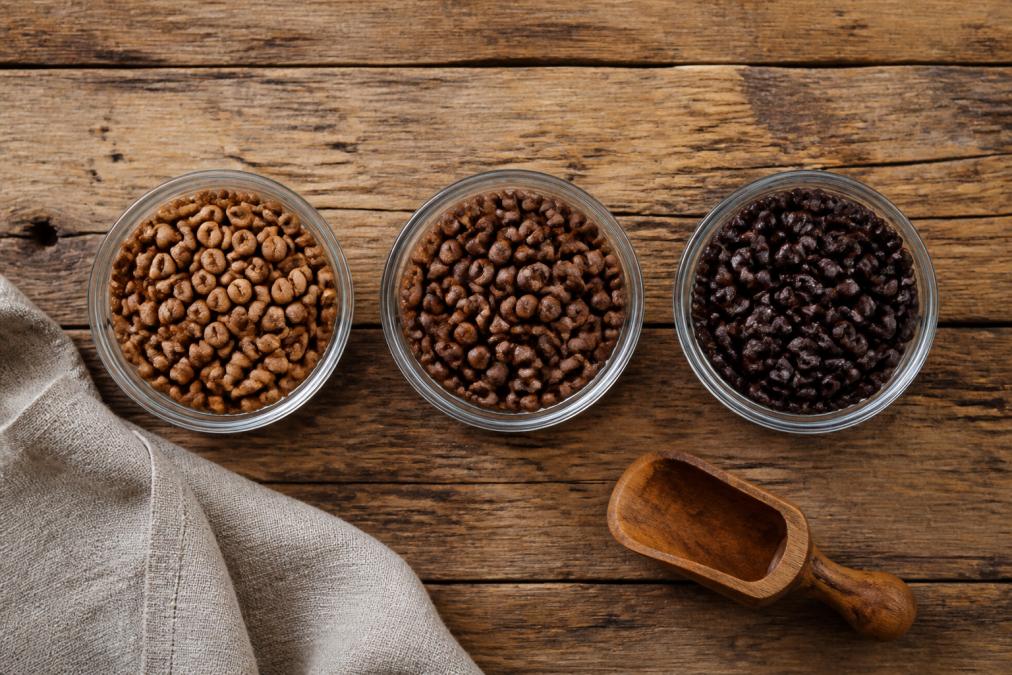
A coffee roast level chart maps roast names to bean color, surface oil, and typical flavor outcomes. Use it as a starting point, not a verdict, roast names are marketing language, not a regulated standard, so "medium" from one roaster can land closer to another roaster's "medium-dark."
| Roast Level | Bean Color | Surface Oil | Acidity | Body | Best For |
|---|---|---|---|---|---|
| Light | Cinnamon to light brown | None | High | Light | Pour-over, drip |
| Medium | Medium brown | Little to none | Medium | Medium | Drip, espresso |
| Medium-Dark | Rich brown | Some | Low-medium | Full | Espresso, moka |
| Dark | Dark brown to near-black | Oily | Low | Very full | Espresso, cold brew |
Bean color, surface oil, and what they tell you
Bean color and surface oil are the two fastest visual signals of roast degree. Oily beans mean the roast went far enough to push oils to the surface, which usually means lower acidity and more bitterness. The Agtron scale gives a numeric reading for that color, and professional roasters use it to keep roast consistency across batches. On the Agtron Gourmet scale, most light roasts land in the 70s to low 80s, medium roasts in the 50s to 60s, and dark roasts below 45, a range wide enough that two bags labeled "medium" can taste nothing alike (sca.coffee).
What most guides miss is that oil on the surface doesn't automatically mean stale. It means the roast is darker. Freshness is a separate question, tied to degassing and shelf life.
How to read a roast label without a color chart
You rarely have beans in front of you when you buy. Here's how to translate a bag label into a roast level before you commit:
- "City" or "Cinnamon", light roast, stopped shortly after first crack. Expect high acidity and origin-forward flavor.
- "City+ / Full City", medium to medium-dark, first crack finished and second crack just beginning. Balanced sweetness and body.
- "Full City+ / Vienna", dark roast entering second crack. Low acidity, heavy body, some surface oil.
- "French" or "Italian", very dark, deep into or past second crack. Smoky, bittersweet, oily.
If the label lists an Agtron number, treat anything above 70 as light, 50-70 as medium, and below 50 as dark. If it lists no number and no roast name, look at the tasting notes: "citrus," "floral," and "berry" almost always signal a lighter roast, while "baking chocolate," "molasses," and "smoke" signal a darker one.
Matching Roast Profile to Your Brewing Method
Match the roast to the brewer, not the other way around. Extraction method determines how much of the bean's acidity and body you actually taste, and the same green coffee can be roasted two different ways to suit two different brewers.
- Pour-over and drip: light to medium roasts, where clarity and acidity shine. Paper filters trap oils, so a darker roast loses the body that made it worth buying.
- Espresso: medium to medium-dark roasts, which resist the pressure and produce crema. Very light roasts can pull, but they often taste sour and thin because the shot finishes before the bean's sugars fully caramelize.
- French press: medium to dark roasts, since the metal filter keeps oils in the cup and amplifies body.
- Moka pot: medium-dark roasts, which hold up to the higher heat and pressure of stovetop brewing.
- Cold brew: medium to dark roasts, because cold water extracts slowly and favors chocolate, nut, and caramel notes over delicate floral acidity.
Why the same bean tastes different in different brewers
Extraction is a function of time, temperature, turbulence, and pressure. A pour-over runs 195-205°F water through a paper filter for three to four minutes at roughly a 1:16 coffee-to-water ratio. Espresso pushes 200-205°F water through a compacted puck at nine bars of pressure in 25-30 seconds at a 1:2 ratio. Those two environments pull different compounds out of the same grounds.
Light roasts are denser and less soluble, so they need more contact time and hotter water to extract fully. Dark roasts are more porous and more soluble, so they give up their flavor fast, which is why a dark roast that tastes rich in a French press can taste ashy and bitter in a pour-over that runs long.

A quick starting grid
| Brewer | Roast Level | Water Temp | Ratio | Target Time |
|---|---|---|---|---|
| Pour-over | Light-Medium | 195-205°F | 1:15-1:17 | 3-4 min |
| Drip | Medium | 195-205°F | 1:16-1:18 | 4-6 min |
| Espresso | Medium-Medium-Dark | 200-205°F | 1:2 | 25-30 sec |
| French press | Medium-Dark | 195-205°F | 1:14-1:16 | 4 min steep |
| Moka pot | Medium-Dark | 195-205°F | 1:10 | 3-5 min |
| Cold brew | Medium-Dark | Cold | 1:8 concentrate | 12-18 hr |
Treat the grid as a launch point. If a light roast tastes sour in your pour-over, grind finer or raise the water temperature before you blame the bean. If a dark roast tastes bitter in your drip machine, coarsen the grind or shorten the brew cycle.
Best Coffee Roast for Cold Brew and Iced Coffee
The best coffee roast for cold brew is a medium to dark roast. Cold water extracts slowly and favors chocolate, nut, and caramel notes over delicate floral acidity, so a darker development time produces a rounder, sweeter concentrate.
Light roasts can work in cold brew, but the result often reads thin and sharply acidic. If you want brightness in an iced drink, brew a light roast hot and chill it fast instead.
Home Roasting vs Commercial Roasting Profiles
Home roasting and commercial roasting profiles diverge on control and repeatability. A home roaster works in small batches with a popcorn popper or drum machine, watching bean temperature by ear and eye. A commercial roaster logs the roast curve digitally and repeats it batch after batch.
The trade-off is thermal energy. Commercial drums hold heat more evenly, so conduction and convection stay stable through first crack. Home setups swing, which makes roast consistency harder to hit without practice.
What separates the two isn't skill. It's instrumentation. A home roaster without a probe is guessing at development time. A commercial roaster with airflow control and drum speed settings is measuring it.
Troubleshooting Roast Defects and Tasting Like a Pro
Roast defects show up in the cup long before you name them. Baking, tipping, scorching, and underdevelopment each leave a signature, and cupping is how you catch them.
- Baked: flat, papery, no sweetness. Caused by a slow, dragged-out roast curve.
- Tipped or scorched: burnt spots on the bean. Caused by too much heat at charge temperature.
- Underdeveloped: grassy, sour, sharp. Caused by pulling the roast before first crack finishes.
- Ashy: smoky and bitter. Caused by pushing into second crack.
Sensory evaluation starts with slurping a cooled sample from a spoon, which spreads the liquid across the palate and releases aromatics. Compare acidity, body, sweetness, and mouthfeel side by side rather than in isolation. Coffee Quality Institute cupping protocols outlines the standard scoring approach professionals use.
Sustainability matters here too. Longer roasts and repeated reheat cycles burn more thermal energy, so tightening your roast curve isn't just a quality move. It's an efficiency one.
Frequently Asked Questions
What are the primary differences between light, medium, and dark roast profiles?
Light roasts stop shortly after first crack, keeping bright acidity and origin-specific flavor notes like fruit and floral tones. Medium roasts develop longer, balancing acidity with caramelized sweetness and cocoa notes. Dark roasts push past second crack, where oils surface and smoky, bittersweet flavors take over. Each level changes acidity, body, and sweetness, so the right coffee roast profile depends on whether you want brightness, balance, or boldness in the cup.
How does roast profile affect the acidity and bitterness of coffee?
Longer roasting breaks down chlorogenic acids, so dark roasts taste less acidic and more bitter than light roasts. Light roasts retain more of those acids, which reads as brightness or tartness rather than harshness. If you want smooth, non-bitter coffee, a medium or medium-light roast from a quality single origin often lands in the sweet spot. Brazil Santos, a medium roast, delivers a smooth cup with cocoa notes and low perceived bitterness.
Which coffee roast is the smoothest?
Medium roasts tend to taste smoothest because they balance the bright acidity of light roasts with the smoky bitterness of dark roasts. A medium roast like Brazil Santos, with its elegant, smooth cup and cocoa notes, avoids the harsh edges some drinkers associate with artisan coffee. If you prefer a heavier, richer body with low acidity, a dark roast blend also works well, especially in milk-based drinks or espresso.
Does the roast profile change the caffeine content of the coffee?
Roast level changes caffeine content only slightly. Dark roasts lose a small amount of mass during longer roasting, so if you measure by scoop rather than weight, a dark roast can deliver marginally less caffeine per scoop. Measured by weight, the difference is minimal. Your brewing method, dose, and grind size affect caffeine far more than whether you pick a light or dark coffee roast profile.
Which coffee roast profile is best for beginners?
Start with a medium roast. It forgives small brewing mistakes, works in drip machines, pour-over, and French press, and tastes balanced without extreme acidity or bitterness. A medium roast like Brazil Santos is a reliable entry point. Once you know whether you lean toward brighter or bolder flavors, try a medium-light single origin like Ethiopia Natural or a dark roast blend to see which direction suits your morning routine.
How do I match a roast profile to my preferred brewing method?
Cold brew and French press favor medium to dark roasts because longer extraction pulls sweetness and body without amplifying acidity. Pour-over and drip highlight light to medium roasts, where delicate flavor notes and acidity shine. Espresso works best with medium to dark roasts that hold up under pressure and produce a thick crema. Match the roast to the method, then adjust grind and ratio to fine-tune the cup.
Choosing a coffee roast profile is a skill you build by tasting deliberately, not by memorizing a chart. Iron Rooster Coffee Co. roasts in small batches and ships freshly roasted beans straight to your door, so the profile you pick arrives at its best. Start with the Ethiopia Natural for brightness, the Brazil Santos for balance, or the 6 Bean Blend for espresso. Get started with Iron Rooster Coffee Co. and taste the difference a well-developed roast makes in your morning cup.