

Table of Contents
- What You'll Need: Essential Coffee Tools for Beginners
- How to Froth Milk Without a Machine
- Mastering Espresso Shots and Espresso-Based Drinks
- Cold Brew vs Iced Coffee Flavor Profile: Which One for Your Drink
- Simple Coffee Syrup Recipes to Customize Your Drinks
- Specialty Coffee Drinks You Can Recreate at Home
- Common Home-Barista Mistakes to Avoid
- Frequently Asked Questions
Last Updated: September 22, 2026
What You'll Need: Essential Coffee Tools for Beginners
Making specialty coffee drinks at home doesn't require expensive equipment. You can make excellent specialty coffee with items in your kitchen right now, an espresso machine costs $300-$2,000, but you don't need one.
What you actually need:
- A way to brew strong coffee, French press, pour-over, Aeropress, or even a regular drip machine works. The Aeropress ($30-$40) is the best budget entry point for espresso-like concentration.
- A kettle, You likely own this. Any kettle works; an electric kettle with temperature control ($25-$50) is nice but not required.
- A grinder, This matters more than anything else. A burr grinder ($30-$80 for manual, $80-$150 for electric) produces consistent grounds. Blade grinders ($10-$20) are unreliable and create uneven extraction.
- A thermometer, A simple instant-read thermometer ($8-$15) tells you when water and milk hit the right temperature. Essential for consistency.
- A kitchen scale, Optional but valuable. A basic digital scale ($10-$20) helps you dial in coffee-to-water ratios precisely.
Budget-friendly alternatives for common tools:
If you don't own a milk frother, use a mason jar with a tight lid (shake 30 seconds), a whisk, or an immersion blender, all produce usable foam in under 2 minutes.
An Aeropress ($35-$40) or Moka pot ($20-$35) produces concentrated coffee that works identically to espresso in lattes, cappuccinos, and mochas.
If you can't afford a burr grinder immediately, ask a local coffee shop to grind beans for you (most do this free). Grind only what you'll use in 3-5 days, since pre-ground coffee loses flavor fast. A burr grinder is the single best investment you'll make.
Quality beans matter more than equipment.
Fresh, whole beans from a specialty roaster ($12-$16 per pound) will taste better than expensive equipment with stale supermarket coffee. Buy beans roasted within the past 2 weeks. Check the roast date on the bag. Use them within 3 weeks of that date. Grind just before brewing.
[Iron Rooster Coffee Co.'s Blonde blend works beautifully for espresso-based drinks](/products/blonde), and the 6 Bean Blend is designed specifically for espresso.


The realistic progression:
Month 1: Kettle + grinder + brewing method (French press or pour-over) = $50-$100 total. You can make excellent black coffee and cold brew.
Month 2-3: Add a thermometer and scale ($20-$30). Now you can dial in ratios and temperature for consistency.
Month 4+: Add a frother or Aeropress ($30-$50) when you're ready for milk-based drinks.
Start with a grinder and brewing method. A kettle, grinder, and brewing method get you 90% of the way to specialty coffee at home.
How to Froth Milk Without a Machine
You don't need an espresso machine to froth milk. The technique differs for dairy and plant-based milk.
Dairy milk frothing (standard methods):
Method 1: Jar and Shake (30 seconds) Pour cold milk into a jar with a tight lid and shake hard for 30 seconds. The foam rises naturally. Works best with whole or 2% milk.
Method 2: Whisk (1-2 minutes) Heat milk to 150-155°F and whisk vigorously for 60-90 seconds. Tilt the pot and whisk fast to build foam.
Method 3: Immersion Blender (45 seconds) Heat milk in a mug and insert an immersion blender just below the surface.
Plant-based milk frothing (dairy-free alternatives):
Best plant milks for frothing (in order):
-
Oat milk, The easiest plant-based option. Contains natural starches and oils that mimic dairy milk's frothing behavior. Heat to 150-155°F and whisk or blend. Barista-blend versions (like Oatly) froth more reliably.
-
Soy milk, Has protein that stabilizes foam. Use unsweetened soy milk; heat to 150-155°F and whisk for 90 seconds.
-
Almond milk, Produces less stable, larger bubbles. Use immersion blender method. Barista-blend versions work better.
-
Coconut milk, Produces thin foam. Use full-fat canned coconut milk and whisk longer.
Technique for plant-based milk:
- Heat plant milk to 150-155°F in a mug or small pitcher.
- Insert the immersion blender just below the surface (not fully submerged).
- Turn on high speed and hold steady for 45-60 seconds.
- The foam will be thinner than dairy milk but usable for lattes and cappuccinos.
- Pour immediately; plant-based foam breaks down faster than dairy foam.
Alternatively, use the whisk method:
- Heat plant milk to 150-155°F.
- Tilt the pot and whisk hard for 90-120 seconds (longer than dairy milk).
- The foam will build more slowly but will stabilize.
- Use immediately in your drink.
Mastering Espresso Shots and Espresso-Based Drinks
An espresso shot is concentrated coffee forced through finely ground beans under pressure. Without an espresso machine, you can't make true espresso, but an Aeropress or Moka pot produces strong, concentrated coffee that works perfectly for lattes, mochas, and cappuccinos.
Aeropress method (3 minutes):
- Grind coffee fine (like sand)
- Use a 1:2 ratio (1 part coffee, 2 parts water by weight)
- Brew at 200°F water temperature
- Press slowly for 30 seconds
- You get a shot-like concentrate
Moka pot method (5 minutes):
- Fill the bottom chamber with water
- Add finely ground coffee to the basket
- Screw on the top chamber
- Heat on medium until you hear a hiss
- Remove from heat immediately
- The result mimics espresso's intensity
Cold Brew vs Iced Coffee Flavor Profile: Which One for Your Drink
Cold brew steeps coarse grounds in cold water for 12-24 hours, producing naturally sweet, mellow coffee with less acidity. Iced coffee is hot-brewed coffee poured over ice, staying bright and sharp with more acidity and caffeine extraction.
Simple Coffee Syrup Recipes to Customize Your Drinks
Syrups transform basic coffee into specialty drinks. Make them at home in 5 minutes.
Vanilla Syrup
- 1 cup sugar
- 1 cup water
- 1 vanilla bean (or 1 teaspoon extract)
Caramel Syrup
- 1 cup sugar
- 6 tablespoons butter
- ½ cup heavy cream
- 1 teaspoon vanilla
Hazelnut Syrup
- 1 cup sugar
- 1 cup water
- ½ cup hazelnut butter
Cinnamon Syrup
- 1 cup sugar
- 1 cup water
- 3 cinnamon sticks
Specialty Coffee Drinks You Can Recreate at Home
Latte and Mocha Variations
A latte is espresso plus steamed milk; a mocha adds chocolate.
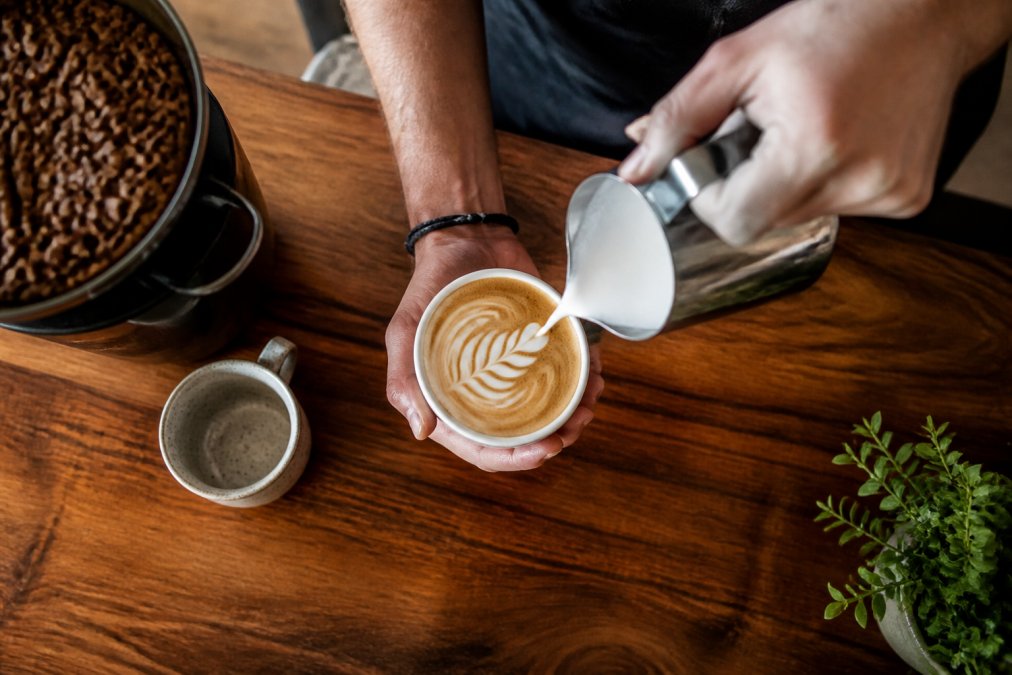
Latte recipe (2 minutes):
- Brew 2 ounces concentrated coffee (Aeropress or Moka pot)
- Heat 8 ounces milk to 150°F
- Pour coffee into a mug
- Froth the milk using one of the methods above
- Pour milk into the coffee
- Top with a thin layer of foam
Mocha recipe (3 minutes):
- Follow the latte steps
- Add 1 tablespoon chocolate syrup or cocoa powder to the mug first
- Stir the hot espresso into the chocolate
- Add the steamed milk
Variations to try:
- Vanilla latte, add 1 tablespoon vanilla syrup
- Caramel mocha, add caramel syrup instead of chocolate
- Cinnamon latte, sprinkle cinnamon on top
- Hazelnut mocha, add hazelnut syrup
Seasonal and Specialty Beverages
Seasonal drinks change with the weather and available flavors.
Fall: Pumpkin Spice Latte
- 2 ounces concentrated coffee
- 8 ounces steamed milk
- 1 tablespoon pumpkin puree
- ½ teaspoon pumpkin pie spice
- 1 tablespoon maple syrup
Mix pumpkin, spice, and syrup in the mug. Add hot coffee. Stir. Add steamed milk and foam.
Winter: Peppermint Mocha
- 2 ounces concentrated coffee
- 8 ounces steamed milk
- 1 tablespoon chocolate syrup
- ½ teaspoon peppermint extract
- Whipped cream on top
Spring: Honey Lavender Latte
- 2 ounces concentrated coffee
- 8 ounces steamed milk
- 1 tablespoon honey
- ¼ teaspoon dried lavender
Summer: Iced Vanilla Cream
- 8 ounces cold brew (chilled)
- 4 ounces heavy cream
- 1 tablespoon vanilla syrup
- Ice
Common Home-Barista Mistakes to Avoid
Mistake 1: Stale beans, Buy whole beans and use them within 3 weeks of the roast date. Grind just before brewing.
Frequently Asked Questions
What basic equipment do I need to make specialty coffee drinks at home?
Start with a burr grinder, a way to brew coffee (pour-over, French press, or Moka pot), a milk frother or pitcher, and a kitchen scale. You don't need an expensive espresso machine, many specialty drinks work with strong brewed coffee and properly frothed milk. A fine mesh strainer helps with cold brew and pour-over methods. Quality beans from a fresh roaster like Iron Rooster Coffee Co. matter more than fancy equipment.
How do I froth milk at home without an expensive machine?
Use the jar-and-shake method, whisking by hand, or an immersion blender. These methods create the milk texture you need for lattes and cappuccinos without professional equipment.
What's the difference between cold brew and iced coffee in terms of flavor?
Cold brew steeps grounds in cold water for 12-24 hours, creating a smooth, naturally sweet flavor with lower acidity and less bitterness. Iced coffee is hot-brewed coffee poured over ice, which cools it quickly but retains the original flavor profile. Cold brew has a richer, less acidic taste ideal for those who find hot coffee too harsh. Iced coffee tastes closer to what you'd get in a hot cup. Choose cold brew for smoother mornings, iced coffee for familiar café flavor.
How can I make my home coffee taste like a coffee shop?
Use freshly roasted beans from a quality roaster, grind just before brewing, dial in your brewing ratios (typically 1:16 coffee to water), and invest in proper technique. Steam or froth milk correctly for texture. Add simple syrups or flavoring for complexity. Most importantly, start with excellent beans, Iron Rooster Coffee Co.'s blends are roasted fresh and designed for smooth, flavorful results that rival café drinks made at home.
Making specialty coffee drinks at home easy is about mastering a few core skills, not collecting equipment. Start with quality beans from Iron Rooster Coffee Co., learn to froth milk properly, and practice your ratios. Within a week, you'll make drinks that rival your local coffee shop. The real difference is fresh beans and attention to detail. Both are in your control at home.