

Table of Contents
- Medici Roasting vs Lucky Goat Coffee: The Quick Comparison
- Roast Style and Flavor Profile: How the Two Roasters Differ
- Single Origin vs Blend Coffee: Which Approach Each Roaster Takes
- How to Choose Fresh Roasted Coffee That Fits Your Routine
- Best Artisan Coffee Beans for Espresso, Cold Brew, and Drip
- Value Per Ounce and Home Brewing Compatibility
- Where Medici Roasting vs Lucky Goat Coffee Leaves You
- Conclusion
- Frequently Asked Questions
Last Updated: September 16, 2026
Medici Roasting vs Lucky Goat Coffee: The Quick Comparison
Medici Roasting vs Lucky Goat Coffee compares two small-batch roasters; the practical difference comes down to roast style, sourcing model, and how easily you get beans at peak freshness. This guide from Iron Rooster Coffee Co. breaks down each.
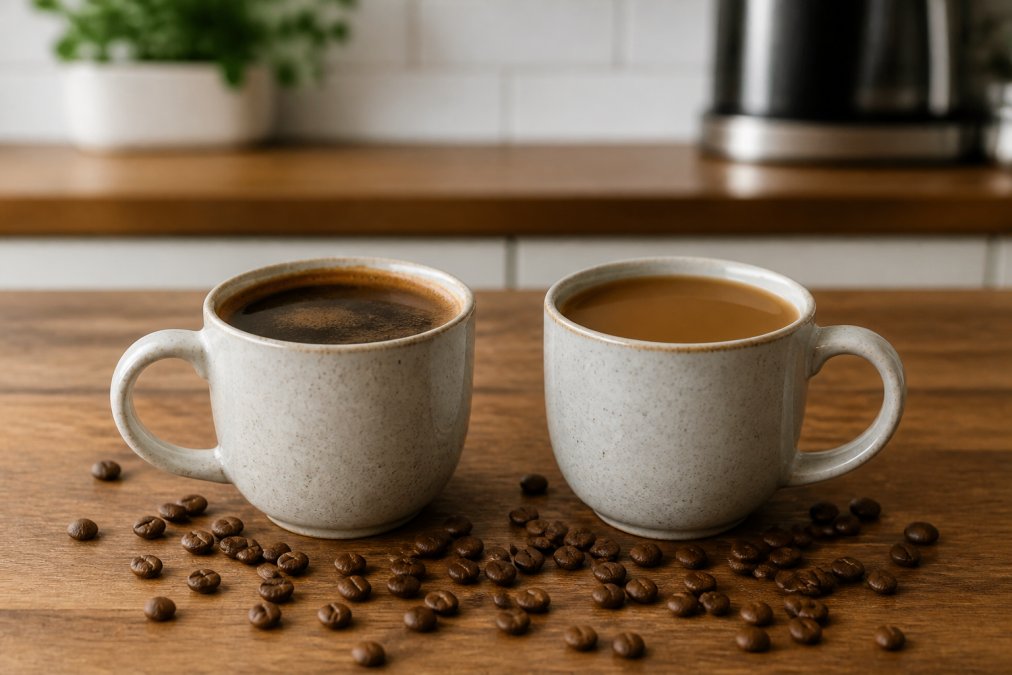
| Factor | Medici Roasting | Lucky Goat Coffee |
|---|---|---|
| Roast style | Medium to dark, espresso-forward | Medium to dark, approachable blends |
| Sourcing | Small-batch, rotating origins | Small-batch, blend-focused |
| Best for | Espresso and milk drinks | Drip and everyday brewing |
| Availability | Regional distribution, online | Regional distribution, online |
| Freshness window | Roast-to-order batches | Roast-to-order batches |
Roast Style and Flavor Profile: How the Two Roasters Differ
Roast style is the biggest variable in how coffee tastes, and both roasters sit on the darker end of the specialty spectrum. Medici Roasting pushes espresso toward fuller body and lower acidity, while Lucky Goat builds smoother blends for drip and cold brew.
Reading roast level as a range, not a category
Roast level is defined by how far the bean develops past first crack, the audible popping that signals moisture escaping. Light and medium roasts stop between first and second crack; a dark roast goes into or past second crack, where sugars caramelize and oils surface.
Development time and the acidity-to-body trade-off
Roast development is the stretch after first crack, where the acidity-to-body trade-off is decided. Longer development lowers brightness and increases body; shorter development preserves acidity for a livelier cup.
Profile roasting versus a single house curve
Profile roasting, adjusting time and temperature curves to a bean's density, moisture, and processing method, is where small-batch roasters differentiate themselves. A dense washed bean and a softer natural-process bean need different charge temperatures and rates of rise. Profiling each origin separately yields more consistent flavor than one roast curve for everything.
What this means for your cup
- If you drink espresso or milk drinks: a darker, longer-developed roast with cocoa and caramel tones extracts cleanly and stands up to milk without turning sour.
- If you drink drip or batch brew: a medium roast with nutty and sweet chocolate notes brews consistently and forgives small grind errors.
- If you drink pour-over: a medium roast with mild citrus and a clean bright finish rewards a careful pour and a coarser grind.
- If you drink cold brew: a medium or dark blend with low acidity and a heavier body holds sweetness over a long, cold steep.
Single Origin vs Blend Coffee: Which Approach Each Roaster Takes
Blends dominate both roasters' core lineups, and that's not a knock: a well-built blend delivers consistency, which matters more than novelty for a daily cup.
- Choose single origin if you want to taste how growing region, altitude, and processing method change a coffee
- Choose a blend if you want the same cup every morning without recalibrating your grind size each time
- Choose a blend for espresso if you want repeatable extraction without chasing dial-in every bag
How to Choose Fresh Roasted Coffee That Fits Your Routine
Freshly roasted coffee is the highest-use variable you control, more than grinder brand or brewer model. Beans hit peak flavor a few days after roasting and decline after that. How to choose fresh roasted coffee comes down to three checks: roast date, packaging, and storage.
- Does the bag list an actual roast date, not just a "best by" date?
- Is the coffee packaged with a one-way degassing valve?
- Was it shipped within days of roasting, not weeks?
- Does the roaster describe the processing method (washed, natural, sun-dried)?
- Can you buy in a size that matches how fast you drink it?
Specialty Coffee Association's freshness and storage guidance
Best Artisan Coffee Beans for Espresso, Cold Brew, and Drip
The best artisan coffee beans for a given method share one trait: they were roasted with that method in mind. Espresso needs a bean that holds up to pressure, cold brew needs sweetness and body for a long cold extraction, and drip needs balance.
Here's how to match bean quality to brewing method:
- Espresso: a dark roast blend with cocoa and caramel tones extracts cleanly and stands up to milk
- Cold brew: a medium or dark blend with low acidity and a heavier body holds sweetness over a long steep
- Drip: a medium roast with nutty and sweet chocolate notes brews consistently without bitterness
- Pour-over: a medium roast with mild citrus and a clean bright finish rewards a careful pour
Value Per Ounce and Home Brewing Compatibility
Value per ounce is where the comparison gets honest. A bag costing more per ounce can still be the better buy if it's roasted to order, shipped fast, and brewed at a ratio yielding more cups per bag. A cheaper bag that arrives stale is the expensive option.
How to run the math yourself
The only fair comparison is cost per brewed cup, not per bag:
- Find the net weight. A 12-ounce bag and a 16-ounce bag are not the same product, and single-serve capsules are a different format entirely.
- Divide price by net weight to get cost per ounce.
- Divide by the dose you actually use. A typical drip dose runs about 0.6 to 0.7 ounces of ground coffee per 6-ounce cup; a double espresso shot uses roughly 0.6 to 0.7 ounces of coffee for about 2 ounces of liquid.
- Multiply by cups per day to get a real monthly figure.
Equipment compatibility: match the bean to the brewer
Equipment compatibility matters as much as price. The bean has to fit the brewer, or you'll spend mornings fighting the grinder instead of drinking coffee.
- Drip machine: a medium roast blend is the straightforward match. It brews consistently, forgives small grind errors, and doesn't demand a precise pour. This is the lowest-friction pairing for a 6 a.m. routine.
- Espresso machine: you need a bean that can be dialed in without endless grind adjustments. Darker, longer-developed blends with cocoa and caramel tones are the safer bet because they extract predictably under pressure and hold up to milk.
- Pour-over (V60, Chemex, and similar): a medium roast with mild citrus and a clean bright finish rewards a careful pour and a coarser grind. A dark, oily espresso roast tends to taste muddy here.
- French press: a medium or medium-dark roast with a heavier body works well because the full-immersion method extracts evenly and the metal filter lets more oils through.
- AeroPress: the most forgiving of the manual methods. A medium roast with balanced sweetness and acidity gives you room to adjust steep time and pressure without wrecking the cup.
- Cold brew: a medium or dark blend with low acidity and a heavier body holds sweetness over a long, cold steep, and the concentrate stretches further per ounce than any hot method.
- Single-serve capsules: you're locked into whatever format the roaster offers, so compatibility is a packaging question, not a roast question.
The freshness multiplier
Freshness changes the value math more than price does. Roast-to-order models ship closer to the roast date than warehouse-stocked bags, and beans peak a few days after roasting. A bag arriving two weeks post-roast spent most of its useful window in transit, a hidden cost per-ounce math won't show.
USDA coffee market and import data
Where Medici Roasting vs Lucky Goat Coffee Leaves You
Iron Rooster Coffee Co. builds its lineup around that match. Freshly roasted blends, carefully selected beans, and fast, automated fulfillment mean the coffee arrives close to its roast date, not sitting in a warehouse. The subscription model delivers straight to your door.
Conclusion
Choosing between two craft roasters gets easier once you compare roast profiles to your brewing method instead of brand names. The roaster matching your equipment, grind routine, and taste will outperform the one with the better reputation.
Frequently Asked Questions
Is Medici coffee considered high-quality artisan coffee?
Medici Roasting is generally regarded as a high-quality artisan roaster, known for small-batch roasting and a focus on single origin beans. That said, quality depends on how fresh the bag is when it reaches you. Check the roast date, not just the brand name. A bag roasted two weeks ago will taste flatter than one roasted five days ago, regardless of which roaster produced it.
What makes Lucky Goat Coffee unique in its roasting process?
Lucky Goat Coffee is known for its craft coffee approach and a rotating selection of blends and single origin offerings. The specifics of its profile roasting vary by release, so the roast date on the bag matters more than the marketing language. If you want a consistent everyday cup, look for a roaster that prints the roast date clearly and ships within days of roasting.
How do the flavor profiles of Medici and Lucky Goat compare?
Both roasters lean toward craft coffee with distinct tasting notes, though Medici tends to emphasize brighter, fruit-forward single origin profiles while Lucky Goat often highlights smoother, balanced blends. If you prefer a mellow morning cup without harsh acidity, a medium roast blend is usually the safer pick. Look for flavor notes like nutty, sweet chocolate, or mild citrus rather than sharp, wine-like acidity.
How do I choose fresh roasted coffee without wasting money on a bag I dislike?
Start with a small bag or sample pack before committing to a subscription. Check three things: the roast date (ideally within two weeks), the roast level (medium for smooth, dark for bold), and the flavor notes listed on the bag. If a roaster does not print a roast date, that is a red flag. Buying from a roaster that roasts to order is the most reliable way to get a fresh, flavorful cup.
Are Medici and Lucky Goat available for nationwide shipping?
Both roasters offer online ordering with shipping across the United States, though delivery times and freshness guarantees vary. If fast, automated fulfillment matters to you, compare how quickly each roaster ships after roasting. A subscription model that ships within days of the roast date is a good way to avoid stale beans arriving at your door.