

Table of Contents
- Check the Roast Date on the Bag
- Perform the Bloom Test for Carbon Dioxide Release
- Inspect the Beans Visually
- Evaluate Aroma and Fragrance
- Taste and Assess Flavor Profile
- How to Store Coffee Beans for Maximum Freshness
- Recognize Signs of Stale Coffee Beans
- Order Fresh Roasted Beans Online
- Frequently Asked Questions
Last Updated: September 2, 2026
Check the Roast Date on the Bag
The roast date is your most reliable indicator of coffee freshness. Unlike "best by" dates, which are conservative estimates, the roast date tells you exactly when beans entered their optimal flavor window.
Most specialty roasters print the roast date directly on the bag. Look for labels saying "Roasted on," "Roast Date," or a date stamp, this is different from "best by" or "use by" dates. Fresh beans peak for about two to four weeks after roasting, when degassing is complete and flavor compounds are fully developed but haven't yet oxidized noticeably (peer-reviewed research).
When shopping, prioritize bags roasted within the last seven to ten days for the freshest product with the longest shelf life ahead. If a bag lacks a roast date, that's a red flag suggesting either low confidence in freshness or extended inventory storage.
At Iron Rooster Coffee Co., we roast to order and ship within 48 hours, ensuring your beans arrive in that critical early freshness window.
Perform the Bloom Test for Carbon Dioxide Release
The bloom test reveals whether beans still contain trapped carbon dioxide, indicating freshness. Grind beans coarsely and pour hot water (195-205°F) over them, watching the first 30 seconds (ncausa.org). Fresh beans bubble and foam immediately as CO2 escapes.
Vigorous, aggressive bubbling lasting 10-15 seconds indicates beans roasted within two weeks (peer-reviewed research). A gentle, slow bloom suggests older beans with most CO2 already escaped. Stale beans produce little to no bloom, water simply absorbs without foaming.
This works because roasting produces carbon dioxide that gets trapped inside bean structures. As beans age, they naturally degas, releasing gas into the air. By observing CO2 release, you're measuring freshness directly.
Perform this test within days of receiving online orders to verify quality upon arrival. Weak or nonexistent bloom suggests the roast date may be misrepresented or beans were stored improperly during shipping.
Inspect the Beans Visually
Visual inspection provides quick freshness clues without special equipment.
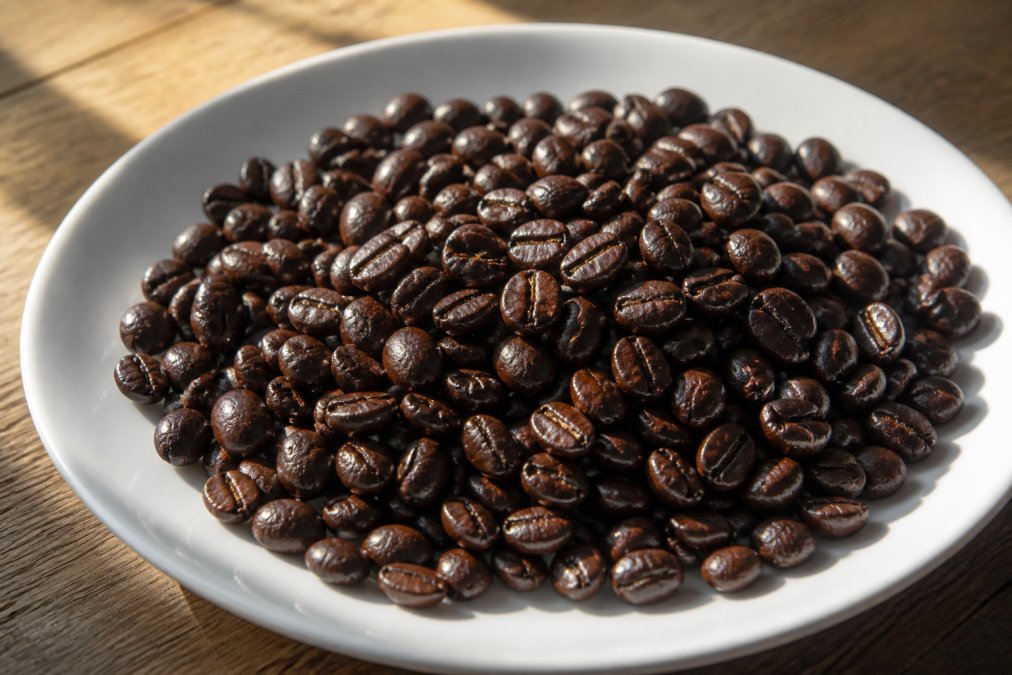
Look for a glossy, oily sheen on bean surfaces, particularly in dark roasts. This oil residue indicates beans are still releasing natural oils containing much of the flavor and aroma. Light and medium roasts may show less visible oil but should have vibrant, rich color without dull or faded appearance.
Examine color consistency across all beans. Fresh beans have uniform coloring appropriate to their roast level: deep brown or nearly black for dark roasts, medium-to-dark brown for medium roasts, tan to light brown for light roasts. Significantly varied colors suggest uneven roasting or age-related degradation.
Avoid beans appearing hollow or papery, signs of oxidation and moisture loss. Hold a bean to light; fresh beans appear solid and dense, while older beans look slightly shriveled.
Check for visible mold, discoloration, or damage. These indicate storage or roasting problems.
Evaluate Aroma and Fragrance
Aroma is one of the most telling freshness signs. Volatile compounds responsible for coffee's fragrance degrade quickly as beans age.
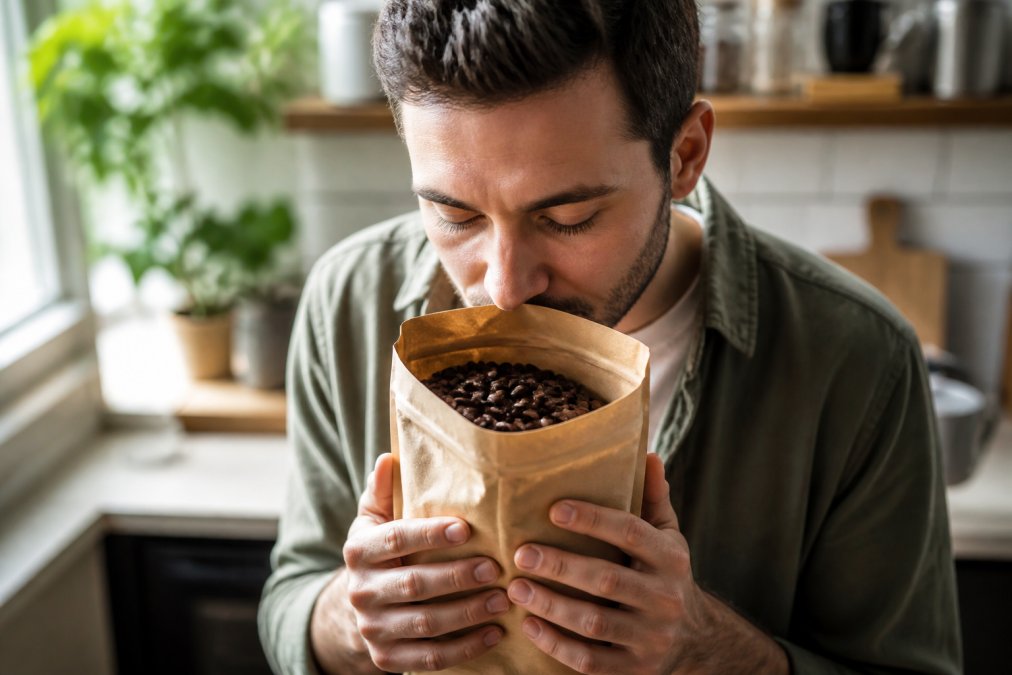
Fresh beans hit you with strong, pleasant aroma immediately upon opening. The smell should be complex, chocolate, caramel, fruit, or flowers depending on origin and roast level. This fragrance comes from hundreds of volatile compounds still present and active in fresh beans.
As beans age, aroma gradually fades. Older beans have noticeably weaker smell, sometimes almost none when opened. The complexity diminishes; instead of multiple layers, stale beans smell flat or one-dimensional.
A rancid or musty smell indicates serious age or improper storage, occurring when bean oils oxidize. If your beans smell off, they've passed their peak freshness window.
This test requires no equipment and is immediate. When receiving fresh roasted beans online, open the bag and take a deep breath. You should smell a vibrant, inviting aroma matching the origin or flavor profile description.
Taste and Assess Flavor Profile
The ultimate freshness test is taste. Fresh beans produce a clean, bright cup with clear flavor notes and smooth mouthfeel. Older beans taste flat, bitter, or hollow.
Fresh beans show:
- Clarity of flavor: Distinct taste notes, acidity, sweetness, body, and specific characteristics. These are muted in stale coffee.
- Smooth mouthfeel: Pleasant palate feel. Older beans taste papery, thin, or harsh.
- Bright acidity: Pleasant, lively acidity enhancing flavor, different from sourness. Stale beans lose this brightness.
- Absence of bitterness: Excessive bitterness or burnt taste suggests staleness, as oxidation intensifies bitter compounds.
Use consistent brewing methods when evaluating freshness. Brew the same beans multiple times over weeks and note flavor changes. Taste is brightest in the first two weeks, remains good through week four, then gradually dulls.
When ordering fresh roasted beans online, brew a test cup within three days of arrival to establish a baseline for that specific roast at its peak.
How to Store Coffee Beans for Maximum Freshness
Proper storage extends freshness significantly. Coffee beans are vulnerable to oxygen, light, heat, and moisture.
Use an airtight container. Transfer beans to airtight, opaque containers with one-way valves, allowing carbon dioxide escape without oxygen intrusion. This matters most during the first two weeks when degassing is most active.
Keep beans away from light. Store in dark cupboards or pantries. Light accelerates oxidation and degrades flavor compounds.
Maintain cool temperature. Room temperature (around 70°F) is acceptable, but cooler is better. Avoid heat sources and temperature fluctuations, which cause condensation and moisture damage.
Avoid moisture. Never refrigerate or freeze beans. Temperature fluctuations cause condensation; room temperature in dry locations is ideal.
Keep beans whole. Grind immediately before brewing. Ground coffee has vastly more surface area exposed to oxygen, accelerating oxidation.
Beans typically remain at good quality for about four weeks from roast date with proper storage. After that, flavor noticeably diminishes. Buy smaller quantities more frequently rather than stockpiling large amounts.
Recognize Signs of Stale Coffee Beans
Stale beans show unmistakable signs:
- Lack of bloom during brewing: Little to no bubbling indicates staleness, the most reliable technical indicator.
- Weak or absent aroma: Barely any scent or musty rather than pleasant aroma indicates lost freshness.
- Dull, faded color: Stale beans look less vibrant. Dark roasts appear grayish rather than deep brown.
- Flat or bitter taste: Muted flavors and prominent bitterness from oxidation.
- Papery or hollow texture: Beans appear less substantial, having lost internal moisture and density.
- Rancid smell: Off, musty, or unpleasant aroma indicates oxidized oils.
- No roast date on the bag: A major red flag that the roaster won't provide freshness information.
These signs often appear together. Multiple indicators confirm staleness. When ordering fresh roasted beans online, contact the roaster if beans arrive showing staleness signs despite recent roast dates. Reputable businesses stand behind their products.
Order Fresh Roasted Beans Online
Ordering fresh roasted beans online eliminates guesswork about roast dates and handling conditions. Choose roasters who:
- Display roast dates prominently on every bag
- Ship within 48 hours of roasting to minimize time between roasting and arrival
- Use proper packaging with one-way valves and airtight seals
- Offer single-origin and blended options with detailed flavor profiles
- Provide clear brewing recommendations for each coffee
Iron Rooster Coffee Co. specializes in freshly roasted artisan blends for home enthusiasts. Every bag is roasted to order and shipped within 48 hours, ensuring peak freshness. Our carefully selected beans are roasted to bring out smooth, flavorful profiles without common bitterness or harshness.
Consider subscription services that deliver regular shipments, guaranteeing fresh beans before you run out and ensuring you always drink coffee within the optimal freshness window. Many online roasters allow customization and pause options.
Our Whiskey Barrel Aged single-origin Guatemalan coffee is roasted to order and aged 30 days in bourbon barrel before roasting, creating unique flavor profiles showcasing how freshness and careful processing combine. At $20.99 per bag, it delivers noticeably better results than grocery store alternatives.

When your order arrives, immediately check the roast date, perform a quick aroma test, and brew a test cup. This confirms fresh arrival and establishes a baseline for how that specific roast should taste at its peak.
Knowing how to tell if coffee beans are fresh transforms your morning routine from a gamble into a guarantee. The roast date is your starting point, but the bloom test, visual inspection, aroma evaluation, and taste assessment together give you a complete freshness picture. Proper storage keeps beans at peak quality as long as possible.
When ordering fresh roasted beans online from Iron Rooster Coffee Co., you start with beans roasted within days of shipment. Apply these freshness checks upon arrival, and you'll experience the difference truly fresh, carefully roasted coffee makes in your cup.
Frequently Asked Questions
What is the bloom test for fresh coffee beans?
The bloom test measures carbon dioxide release when hot water first contacts fresh coffee grounds. Pour hot water over grounds and watch for bubbling and expansion for 30-45 seconds. Strong blooming indicates fresh beans with active degassing. Stale beans produce minimal bloom because they've already lost most carbon dioxide during storage. This is one of the most reliable indicators of freshness.
How long do fresh roasted beans stay at peak flavor?
Fresh roasted coffee beans typically reach peak flavor 5-7 days after the roast date and remain excellent for 2-4 weeks with proper storage. The freshness window depends on the roast level and storage conditions. Light roasts develop more complex flavor notes over the first week, while darker roasts peak slightly sooner. After 4 weeks, oxidation and moisture exposure begin degrading the flavor profile noticeably.
Does roast date matter more than expiration date?
Roast date is far more important than expiration date for determining freshness. Coffee doesn't expire in the traditional sense, but it stales through oxidation and degassing. A bag roasted 2 weeks ago is fresher than one roasted 3 months ago, regardless of printed expiration dates. Always prioritize the roast date when selecting beans, and aim for bags roasted within the past 2-3 weeks for optimal flavor.
What does rancid coffee taste like?
Rancid or stale coffee tastes flat, hollow, and sometimes papery or musty. You may notice a bitter, astringent finish that lingers unpleasantly. Stale beans lack the bright, complex flavors of fresh coffee and often produce a thin body with minimal crema during brewing. If your coffee tastes off despite correct brewing technique, the beans have likely oxidized or absorbed moisture, making them unsuitable for quality brewing.
This article was written using GrandRanker