

Table of Contents
- What a Freshness Guarantee Really Covers
- Coffee Roast Date vs Best By Date: Why the Difference Matters
- The Optimal Coffee Resting Period and the Science of Degassing
- How to Store Roasted Coffee Beans for Maximum Freshness
- How to Spot Stale Beans: A Sensory Evaluation Guide
- What a Real Freshness Guarantee Looks Like in Practice
- Conclusion: Trust the Roast Date, Not the Marketing
- Frequently Asked Questions
Last Updated: September 6, 2026
What a Freshness Guarantee Really Covers
A freshness guarantee for specialty coffee is a roaster's commitment that the beans you receive were roasted recently and will arrive at peak flavor, not a vague promise printed on a bag. In the specialty market, this means the roaster controls the entire chain from roast date to your door. At Iron Rooster Coffee Co., we focus on quality and care, selecting the finest beans to ensure every cup delivers a smooth, flavorful experience. We offer fast, automated fulfillment, ensuring your coffee is delivered straight to your door.
Most mass-market coffee carries no real freshness guarantee because the product is already stale before it reaches the store. The beans you buy at the grocery store were likely roasted months ago, ground, and sealed in a bag designed for a year-long shelf life. That is not freshness; that is preservation. A genuine freshness guarantee hinges on two things: a visible roast date and a shipping process fast enough to deliver the beans while they are still in their prime window.
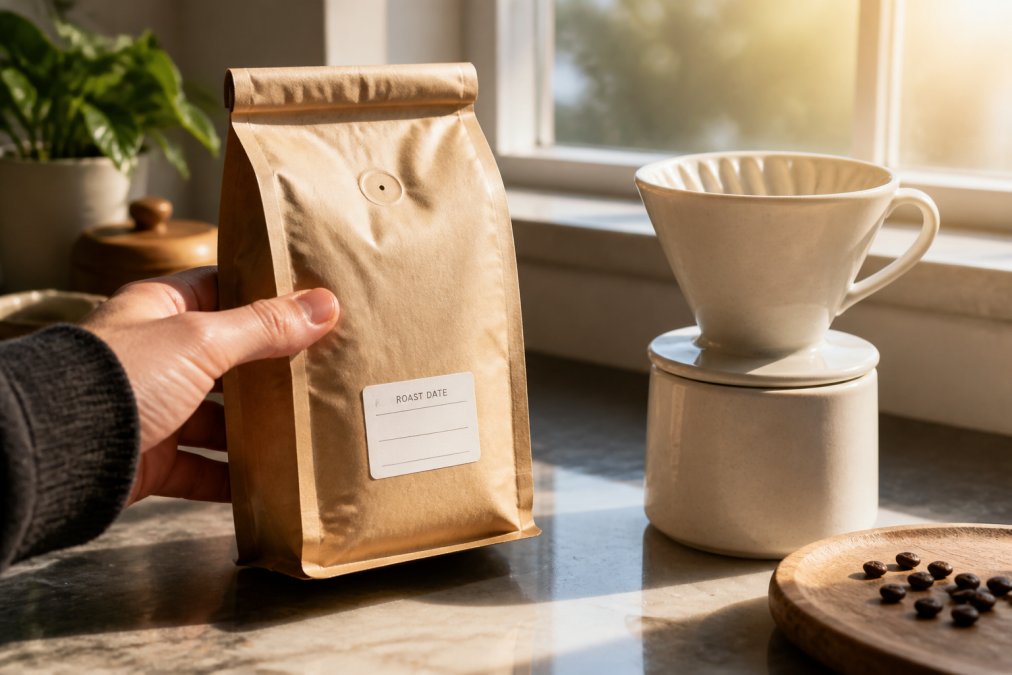
Coffee Roast Date vs Best By Date: Why the Difference Matters
The roast date tells you when the beans were actually roasted. The best-by date tells you when the roaster or retailer thinks the product will no longer be acceptable, which is often a conservative estimate designed for inventory management rather than flavor. For specialty coffee, the roast date is the only number that matters.
But why is the gap between these two dates so wide? The answer lies in how the federal regulatory framework treats coffee. The FDA guidance on food labeling requires a best-by date for many food products to indicate peak quality, not safety. Coffee is not a potentially hazardous food, so the FDA does not mandate a specific shelf-life testing protocol. This leaves manufacturers free to set dates based on their own commercial goals. A mass-market roaster aiming for national distribution might set a best-by date 12 to 18 months out to ensure the product remains on store shelves for a full retail cycle. That date is a logistical target, not a flavor benchmark.
In contrast, the chemistry of roasted coffee operates on a much shorter clock. The volatile aromatic compounds that define a coffee's origin, the floral notes of a Kenyan AA, the chocolatey depth of a Colombian, begin oxidizing and evaporating the moment the bean exits the roaster. The Specialty Coffee Association's guidance is clear: for optimal flavor, coffee should be consumed within weeks of roasting, not months (sca.coffee). The difference between the best-by date and the roast date is the difference between a product designed for a warehouse and a product designed for a cup.
A roaster that prints only a best-by date is hiding the information you actually need. A roaster that prints a roast date is inviting you to hold them accountable. A best-by date is a prediction; a roast date is a fact. When a roaster offers a freshness guarantee, the roast date is the objective evidence that the guarantee is being honored. Without it, you are relying on a marketing claim with no way to audit the product's journey from roaster to your door.
A roast date printed on a bag is meaningless if the beans then sit in a distributor's warehouse for three weeks. The guarantee is only as strong as the logistics that follow the roast. A roaster that ships quickly after roasting is making a different promise than one that ships from a central warehouse. The former is a freshness guarantee; the latter is a shelf-life prediction.
The Optimal Coffee Resting Period and the Science of Degassing
Freshly roasted coffee needs time to rest before brewing. The optimal coffee resting period typically falls between 3 and 14 days after the roast date, depending on the roast profile and brewing method. This counterintuitive fact surprises many home brewers who assume fresher is always better.
During roasting, beans trap carbon dioxide gas. Immediately after roasting, that gas is still escaping rapidly, which interferes with proper extraction. If you brew beans just 24 hours off the roaster, the gas pushes water away from the coffee grounds, leading to under-extraction and a flat, sour cup. The degassing process peaks in the first few days and then tapers off. Espresso drinkers often wait longer, up to two weeks, while pour-over enthusiasts may find beans hit their stride at around day five.
This is why the roast date matters so much in a freshness guarantee for specialty coffee. If a roaster ships beans quickly after roasting, they arrive at your door right as they are entering that optimal window. If a roaster ships inventory roasted a month ago, you have already missed the peak.
How to Store Roasted Coffee Beans for Maximum Freshness
Proper storage extends the life of your beans and protects the flavor you paid for. The enemy is oxygen, moisture, heat, and light. Your goal is to slow oxidation and keep the beans dry and cool. But the storage strategy you choose must also respect the fact that your beans are still alive, chemically speaking, for the first few weeks after roasting.
The most critical piece of equipment on your bag is the one-way valve. This small plastic disc is not a packaging afterthought; it is a degassing port. During roasting, each bean can trap up to 10 times its volume in carbon dioxide. In the days following the roast, that gas must escape or the bag would balloon and burst. The one-way valve allows CO2 to exit while preventing oxygen from entering. This is why you should keep your beans in the original bag if it has a valve, rather than transferring them to a decorative canister, which traps CO2 and stalls degassing, leading to a muted cup.
If you do transfer to a canister, choose one with an airtight lid and use it within a few weeks. Every time you open the container, you introduce fresh oxygen, accelerating the oxidation of the delicate oils on the bean's surface. Opening the bag multiple times a day to smell the beans is a pleasure, but it is also a cost, every open is a small hit to the bean's aromatic life.
What you should not do is refrigerate or freeze beans you plan to use soon. Condensation forms when you open the container, introducing moisture that degrades the beans. Freezing can work for long-term storage, but only if the beans are sealed in an airtight, moisture-proof container and you remove only what you need without letting the rest thaw. The freeze-thaw cycle is brutal on the cellular structure of the bean, and the moisture that condenses on the surface will pull soluble flavors out of the grounds when you brew.
The storage question is also a degassing question. If you receive beans that are only 3 days off the roast, they are still releasing a significant amount of CO2. Storing them in a completely airtight container without a valve will trap that gas, and when you open the container, you will get a rush of CO2 that has carried away some of the volatile aromatics. This is why the original bag with its one-way valve is the best storage vessel for the first week to ten days. Once the beans have largely finished degassing, typically after day 10, you can transfer them to an airtight canister without losing much.
The final piece of the storage puzzle is portioning. If you buy a 12-ounce bag and brew one cup a day, the beans are exposed to oxygen every time you open the bag. A practical strategy is to divide your beans into smaller, airtight containers for the week, opening only one at a time. This limits oxygen exposure for the majority of the beans, a simple version of what commercial roasters do when they package in smaller batches.
How to Spot Stale Beans: A Sensory Evaluation Guide
You do not need a lab to tell if coffee has gone stale. Your senses will tell you, once you know what to look for. Stale beans lose the vibrant characteristics that define specialty coffee and take on flat, papery, or even woody notes.
Start with the aroma. Fresh beans should smell intensely of their origin: fruity, floral, nutty, or chocolatey. Stale beans smell muted, like old cereal or cardboard. Next, look at the beans themselves. Freshly roasted beans have a matte, slightly oily surface depending on the roast level, while very old beans can look dry and dull or, conversely, excessively oily as oils migrate to the surface over time.
The most reliable test is the bloom. When you pour hot water over freshly ground coffee, the grounds should bubble and expand as trapped carbon dioxide escapes. A vigorous bloom indicates fresh coffee. If the grounds barely react, the degassing process finished long ago, and the coffee is past its prime. In the cup, stale coffee tastes flat and lifeless with muted acidity and a hollow body. The aftertaste fades quickly rather than lingering pleasantly.
What a Real Freshness Guarantee Looks Like in Practice
A real freshness guarantee for specialty coffee is verifiable. It includes a roast date printed on the bag and a shipping process that moves beans from roaster to customer quickly. Small batch roasting is a common practice in this model because it allows roasters to roast frequently and ship what is actually fresh.
When you order from a quality roaster, you should see the roast date on the bag when it arrives. The beans should be within that 3 to 14 day resting window, ready to brew or nearly ready. At Iron Rooster Coffee Co., our single origin Guatemalan beans in the Whiskey Barrel Aged blend, aged for 30 days in a Bourbon barrel and then roasted to order, carry a clear roast date so you know exactly when they were roasted. We rely on fast, automated fulfillment to get the bags out the door quickly, so the coffee arrives at peak flavor rather than after weeks in a warehouse.

Consumer transparency is the missing piece in most coffee marketing. A roaster that will not print a roast date is asking you to trust them blindly. A roaster that prints one is inviting scrutiny. The FDA guidance on food labeling requires a best-by date for many food products, but it does not require a roast date for coffee. That date is a voluntary commitment to quality, and it is the single best indicator of whether a roaster stands behind its product.
Conclusion: Trust the Roast Date, Not the Marketing
The coffee industry is full of romantic language about mountains, small farms, and artisanal craft. None of it matters if the beans are stale. A freshness guarantee is only as good as the roast date printed on the bag and the speed with which that bag reaches your door.
Ask yourself three questions before buying from any roaster: Is there a roast date on the bag? Is the shipping fast enough that the beans arrive within their optimal resting window? Does the roaster prioritize fresh delivery rather than warehousing inventory? If the answer to any of these is no, the guarantee is marketing, not substance.
When you order from Iron Rooster Coffee Co., you get freshly roasted beans, a visible roast date, and fast fulfillment designed to deliver coffee at its peak. We select beans carefully to ensure every cup delivers the smooth, flavorful experience specialty coffee should offer. If you want coffee that tastes like the roaster intended, get started with Iron Rooster Coffee Co. and taste the difference a real freshness guarantee makes.
Frequently Asked Questions
Does a freshness guarantee cover the roast date or the delivery date?
A meaningful freshness guarantee for specialty coffee is based on the roast date, not the delivery date. The roast date tells you when the coffee was actually processed, while the delivery date only reflects shipping. Roasters who stand behind their product print the roast date on the bag and guarantee that beans reach you within a specific window, usually a few weeks of leaving the roaster. If a roaster only references a best-before date, they may be less transparent about the true age of the beans.
Why is the roast date more important than a best-by date?
The roast date is the single most reliable indicator of coffee freshness. A best-by date is often a conservative estimate set by the manufacturer, sometimes months after roasting. Specialty coffee peaks in flavor within a few weeks of its roast date, so a best-by date can be misleading. For example, beans roasted three months ago might still fall within a best-by window but have already lost their aromatic complexity and sweetness. Always look for a roast date to judge how fresh the coffee truly is.
What are the signs of stale coffee beans?
Stale coffee beans lose their aromatic intensity. When you open a fresh bag, you should smell a strong, sweet fragrance. Stale beans smell flat, musty, or even like cardboard. After brewing, the coffee will lack sweetness and complexity, tasting bitter or hollow. Another sign is the bloom: fresh beans release carbon dioxide and bubble vigorously when hot water hits them. If there is little to no bloom, the coffee has likely degassed and gone stale. Grinding stale beans also produces a dusty, rather than fragrant, aroma.
How can you tell if specialty coffee is truly fresh?
Check the bag for a roast date, not just a best-by date. Quality roasters print this clearly. The optimal coffee resting period means you want beans that were roasted one to three weeks ago. Avoid bags roasted more than two months prior. Look for a one-way valve on the bag, which allows carbon dioxide to escape without letting oxygen in. Before brewing, smell the beans and watch for a bloom. Specialty coffee that is truly fresh will have a vibrant aroma and an active bloom when brewed.
Fresh coffee is not a luxury; it is the standard. The challenge is finding a roaster willing to prove it with a date on the bag. Iron Rooster Coffee Co. roasts to order, prints the roast date, and ships fast so your beans arrive in that sweet spot between day 3 and day 14. Add a bag of our single origin or flavored blends to your next order and experience coffee as it should taste: fresh, smooth, and full of life.